
The cheapest CP12 isn’t necessarily the best value if the check leaves you unsure what was inspected or what to do next. For landlords arranging a CP12 certificate in Ewell, a gas safety check is required every 12 months for each rental property, according to legislation.gov.uk.
It’s understandable to want a clear idea of the cost before booking. The price depends on the appliances included and the work involved, and is provided after a quote request. This guide explains what affects the cost, what a landlord gas safety check covers, and what to do if an appliance fails. You’ll also learn how the CP12 fits with a boiler service, so you can plan the right checks and maintenance for your rental property.
Key Takeaways
- Plan a gas safety check every 12 months for each rental property, and make sure tenants receive the record within the required timeframe.
- The cost depends on the appliances included and the work involved, so understand what the quoted check covers.
- A CP12 covers fixed gas appliances, pipework and flues. It is not a substitute for other property checks.
- If an appliance fails, the check can identify unsafe conditions and the remedial work needed before it can be used safely.
- A CP12 records gas safety checks; a boiler service is separate maintenance. Knowing the difference helps you arrange the right work.
How much is a gas safety certificate for landlords?
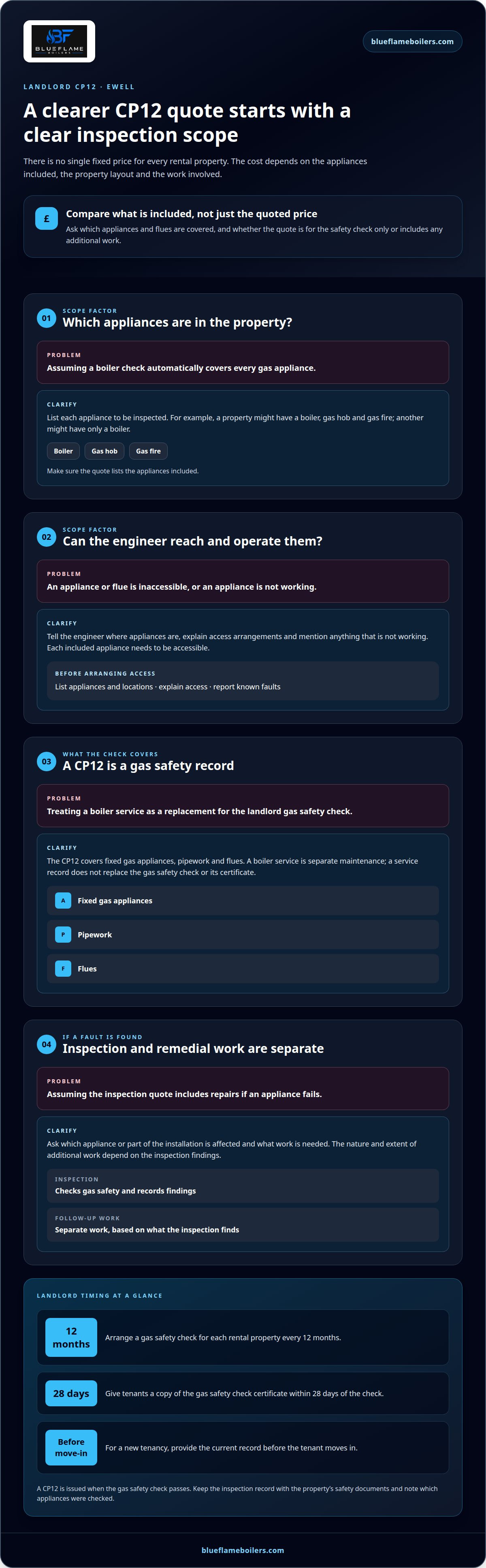
There isn’t one fixed price for every rental property in Ewell. The amount depends on the appliances included, the property’s layout and the work involved. A quote should make clear which appliances and flues are covered, and whether it includes only the safety check or any additional work. This helps you understand what the inspection covers before arranging access.
For an Ewell landlord, compare the inspection scope rather than focusing only on the quoted price. A home with just a boiler has a different scope from one with a boiler, gas hob and gas fire. Every appliance included needs to be accessible. If an appliance cannot be reached or operated, that may affect how the engineer completes the inspection.
Start by listing the property’s gas appliances and where they are located. Include items such as a gas hob or fire instead of assuming the boiler check covers them. Tell the engineer about access arrangements and any appliance that is not working. These details help define the job and clarify whether the quote covers all relevant appliances, fittings and flues.
Landlord gas safety duties apply in Ewell and across Great Britain. According to UK legislation.gov.uk, landlords must arrange a gas safety check every 12 months for each rental property they own. The record must relate to the required safety checks, rather than simply documenting a boiler service. A CP12 is issued when the gas safety check passes; any remedial work is separate from the inspection.
The cost of additional work depends on the inspection findings and what is needed to address them. A safety inspection and a repair are separate tasks, so don’t assume the inspection quote includes repairs. If the engineer identifies a fault, find out which appliance or part of the installation is affected and what work is required.
For example, a landlord preparing a rental home in Ewell might need the boiler, hob and gas fire inspected. A property with only a boiler has a different inspection scope. In either case, check that the quote lists the appliances included. If follow-up work is needed, its nature and extent will depend on the findings.
Keep the inspection record with the property’s safety documents and note which appliances were checked. This gives you a clear reference when planning the next inspection or managing a tenancy change. For landlords with properties in Ewell and nearby Epsom, keeping each address’s records separate also helps avoid confusing one home’s inspection details with another’s.
Landlord gas safety checks: what the law requires
Landlords in Ewell have a few important gas safety duties: arrange inspections, keep records and give tenants a copy of the certificate. The deadlines apply to each rental property, not just each boiler, so it’s worth keeping on top of every one.
Renewal deadlines and early checks
According to UK legislation.gov.uk, landlords must arrange a gas safety check every 12 months for each rental property they own. The Gas Safety (Installation and Use) Regulations 1998 require UK landlords to arrange annual gas safety checks, according to UK legislation.gov.uk. Add the inspection date to your property records, then use it to plan the next check before its renewal deadline.
In qualifying circumstances in Great Britain, UK legislation.gov.uk allows the check up to two months early whilst retaining the existing renewal deadline. This can make it easier to organise access or coordinate checks across several properties. If using regulation 36A’s early-renewal flexibility, keep the relevant record until two further gas safety checks have been carried out, according to UK legislation.gov.uk. There is no grace period after the deadline, so plan ahead.
Appliances, systems and safety devices checked
A landlord gas safety check covers fixed gas appliances, pipework and flues in the rental property. The inspection must examine the matters required by regulation 26(9), and the record should confirm that those matters were checked. So, it’s not just about whether the boiler works: other fixed gas appliances and their associated flues are part of the property’s gas safety picture too.
Pipework and safety devices matter because the check considers the gas installation and appliance safety, not simply heat output. Help the engineer by providing access to each relevant appliance and its flue, including a gas hob or fire where fitted. A service record alone doesn’t replace the gas safety check or its certificate.
Providing tenants with valid certificates
According to UK legislation.gov.uk, landlords must give tenants a copy of the gas safety check certificate within 28 days of the check. For a new tenancy, provide the current record before the tenant moves in. Keep the inspection date and delivery date together in your records, so it’s easy to show when the certificate was issued.
What happens if you don’t provide tenants with a valid CP12 certificate? Failure to meet landlord gas safety requirements can lead to enforcement action, including fines or prosecution. A simple way to stay prepared is to keep a clear record of each inspection and certificate delivery, rather than waiting for a tenant or officer to ask for proof.
If a check is due, organise access and certificate delivery as part of the same process. A properly timed inspection gives you the information needed to address any findings and keep the property’s records current. Arrange a landlord gas safety check before the renewal deadline approaches, and visit blueflameboilers.com to find out more.
What Does a CP12 Not Include?
A CP12 records a gas safety check, but it doesn’t cover every inspection or maintenance task your rental property may need. In Ewell, knowing the difference helps landlords understand what’s included in the visit and what needs separate attention.
Which Gas Safe registered engineers provide CP12 checks in Ewell? A Gas Safe registered engineer must carry out the check, and only such an engineer can issue a UK Gas Safety Certificate. The certificate should cover the appliances and gas installation actually inspected, rather than being treated as a general property-safety document.
A landlord’s gas safety check covers fixed gas appliances, pipework and flues. The record of the annual check must confirm examination of the matters required by regulation 26(9) of the Gas Safety (Installation and Use) Regulations 1998. So, a CP12 isn’t a full boiler service, an electrical inspection or a survey of the whole home. Those cover different parts of the property or different kinds of work.
Flues and ventilation are vital for the safe operation of gas appliances. Keep access clear around each appliance, its flue and ventilation openings so the engineer can inspect the relevant areas. For example, don’t block a vent with furniture or store belongings directly in front of an appliance. If access is blocked, the engineer may be unable to complete that part of the inspection.
Before the appointment, make sure there’s access to each fixed gas appliance and tell the engineer about any known operating issue, such as a boiler that repeatedly switches off. The engineer examines the relevant appliances and installation, records the checks and notes any issues found. A straightforward check often takes around 30-60 minutes, though the number of appliances and access conditions can affect the visit.
How can tenants check whether a landlord’s CP12 certificate is valid? Check the inspection date and make sure the record relates to the property’s gas appliances; a gas safety certificate lasts 12 months from the inspection. If you haven’t received a copy, you can ask your landlord for the current gas safety record.
A CP12 is evidence of the check recorded on it, not a guarantee that every appliance will stay fault-free. It also doesn’t replace attention to a new fault or a separate boiler service. For landlords, keeping the inspection record with property documents makes it easier to track the next renewal and see which appliances the engineer checked. For more help with your boiler, visit blueflameboilers.com.
What happens if my appliance fails the gas safety check?
If an appliance fails its check, the engineer has found a safety concern or a fault that needs attention. They’ll record what they’ve found and explain which appliance or part of the installation is affected. A CP12 is issued when the check passes, so an appliance that fails can’t be treated as having passed just because the other checks were satisfactory.
The inspection covers fixed gas appliances, fittings, flues and pipework. For example, your boiler may pass whilst a gas fire or its flue raises a concern. The record should clearly show which items were checked and what the engineer found. This helps the landlord understand whether the issue affects one appliance or a wider part of the gas installation.
Unsafe situations are classified using the two principal categories in the current IGEM/G/11 procedure: At Risk and Immediately Dangerous. These categories describe the nature and seriousness of the situation. The engineer can talk you through their findings and the action needed, so the landlord knows what must be addressed before relying on the affected appliance.
If you’re a tenant, your priority is to follow the engineer’s instructions about the affected appliance. Don’t assume a fault is resolved just because the appliance still appears to work. If the engineer identifies a safety concern, the landlord should arrange the necessary follow-up work and keep the inspection record. If anyone smells gas, call the National Gas Emergency line on 0800 111 999 immediately.
The gas safety check and remedial work are separate tasks. A blocked flue, faulty safety device or damaged pipework may need different work from an appliance repair. The cost of remedial work depends on the fault’s nature and severity, so the inspection findings help determine what needs to be done. The check does not automatically include repairs.
The number and type of appliances also affect the scope of a CP12 visit. A property with a boiler, hob and gas fire needs checks across those appliances and their relevant fittings and flues. An additional appliance adds to the inspection workload, so don’t assume a boiler-only check covers it. When arranging the visit, make sure you clarify which appliances are included.
Once any required work is complete, the affected equipment needs appropriate follow-up before it can be treated as safe. Keep the engineer’s findings and records of any subsequent work together. This gives you a clear account of the original fault, the action taken and the outcome, useful for both landlord and tenant. For more gas safety guidance, visit blueflameboilers.com.
Difference between a CP12 and a boiler service
A CP12 and a boiler service each have a different job, even when they involve the same boiler. The CP12 records gas safety checks, while a boiler service is separate maintenance carried out in line with the appliance manufacturer’s instructions. Knowing the difference helps Ewell landlords book the right work, rather than assuming one appointment covers both.
During a landlord gas safety check, the engineer examines the fixed gas appliances, pipework and flues in the rental property. They assess safety and record their findings. A service is different: it focuses on the boiler and follows the manufacturer’s instructions. So, a CP12 doesn’t confirm that every servicing task has been completed.
A boiler service is recommended once a year. Regular maintenance focuses on the boiler’s condition and operation, while the annual gas safety check looks at the safety of the property’s gas appliances and installation. Your boiler might pass its gas safety check but still need a service. And a recent service record doesn’t replace the landlord’s separate gas safety inspection.
How quickly can you arrange a CP12 inspection and certificate in Ewell? A straightforward gas safety check often takes around 30-60 minutes, though timing depends on access and scheduling. If the check passes, the CP12 is issued. If the engineer finds an issue, further work may be needed before the appliance can pass.
For a rental property in Ewell, plan the check around the appliances that need inspecting and arrange access in advance. The number and location of appliances affect the work involved during the visit. If you’re booking a boiler service too, treat it as a separate task and clarify the work requested before the engineer arrives.
Keep the CP12 record and boiler service documentation together, but remember they do different things. The gas safety record shows the outcome of the safety check, while the service record relates to maintenance carried out under the manufacturer’s instructions. If a boiler fault appears during either appointment, it may need separate repair work; neither document proves that unrelated repairs have been completed.
If you manage several Ewell properties, track each home’s gas safety check and boiler service separately. It’s easier to see which record belongs to each property and appliance, and a clear schedule helps you spot a missed service or an overdue gas safety check. That way, you can quickly identify what needs doing next.
Ready to book? Arrange a landlord gas safety check for your Ewell rental property with Blueflame Boilers Ltd.
Blueflame Boilers: Landlords Gas Safety Checks - CP12
Need a gas safety check for your rental property? Blueflame Boilers Ltd provides Landlords Gas Safety Checks - CP12, recording the findings for the appliances and installation inspected, so you can see whether any follow-up is needed.
If the inspection uncovers a boiler fault, Blueflame Boilers Ltd can also help with boiler repairs. And if a replacement is needed, the company offers gas boiler installation. Your inspection findings will help you decide which next step is right for you.
Ready to arrange a CP12 check or find out what to do next? Contact Blueflame Boilers Ltd-or visit blueflameboilers.com to find out more.
Keep your next step clear
Arranging a CP12 certificate in Ewell can be part of a straightforward property-management routine. Keep the inspection record with any follow-up documents and note which appliance needs attention. This gives you a useful reference when planning maintenance or organising property records for a tenancy change.
Blueflame Boilers provides Landlords Gas Safety Checks - CP12. If an inspection identifies a boiler fault, Boiler Repair may address the issue; if a replacement is needed, Gas Boiler Installation is available. Emergency Callouts are also offered for urgent boiler problems. The appropriate next step depends on what the engineer finds and the work required.
Acting on the inspection findings helps you move from a safety check to a clear maintenance plan for your property.
A clear next step can make managing your rental property more organised.
Frequently Asked Questions
How long is a CP12 valid?
A CP12 gas safety record lasts 12 months from its inspection date. Mark that date in your calendar to plan the next inspection, rather than relying on when the paperwork was filed or forwarded. In qualifying circumstances, an early check can preserve the existing renewal date. Make sure the record relates to the appliances inspected at the property, and keep it with the correct rental-home documents.
What is a CP12 Certificate?
A CP12 is the record of a landlord’s gas safety check. It documents the inspection and findings for the rental property, including the gas appliances and installation examined. A CP12 is issued when the check passes. If an appliance does not pass, the findings help identify what needs attention before a passing record can be issued.
Is a CP12 a Legal Requirement?
Yes. According to UK legislation.gov.uk, the Gas Safety (Installation and Use) Regulations 1998 require UK landlords to arrange annual gas safety checks. The requirement applies to each rental property they own. If you have more than one home, keep a separate inspection record for each address, so there’s no mix-up between properties.
When Do You Have to Give Tenants a Copy of the CP12?
According to UK legislation.gov.uk, landlords must give tenants a copy of the gas safety check certificate within 28 days of the check. A new tenant must receive the current record before moving in. Make a note of when you provide the copy and keep it with the property’s inspection documents. That way, you’ll have a clear record if a tenant asks about the certificate later.
Why is this important for landlords?
A current gas safety record helps you document the condition of your rental property’s gas appliances and show that you’ve arranged the required checks. Inspections also help protect tenants from hazards such as gas leaks, fires and carbon monoxide poisoning. If the engineer identifies a fault, keep the findings and any follow-up paperwork together, so your safety records tell the full story.
Who needs a CP12 certificate in Ewell?
Landlords renting out homes with gas appliances in Ewell need to arrange the required checks for their rental properties. A CP12 certificate in Ewell records the inspection at the relevant address, not your entire portfolio. Keep each property’s paperwork separate, especially if you manage homes elsewhere around Epsom. It makes matching the right record to each tenancy much easier.
How much does a CP12 certificate cost in Ewell?
The price depends on the property and inspection scope, including how many gas appliances need checking and whether follow-up work is required. A CP12 certificate in Ewell for a boiler-only inspection involves different work from a visit covering a boiler, hob and gas fire. A safety check and remedial repairs are separate tasks, so request a quote based on the property’s appliances and requirements. Visit blueflameboilers.com to find out more.
What does a landlord gas safety inspection include?
A landlord gas safety inspection covers the fixed gas appliances, pipework and flues in the rental property. The engineer records the checks and findings for the appliances included in the inspection. If the home has a boiler, hob and gas fire, for example, make sure the visit covers each relevant appliance. Don’t assume a boiler check covers them all.


