

Could a boiler service keep your rental property compliant on its own? No: landlords need a separate gas safety check every 12 months for each gas appliance and flue they provide. According to the Health and Safety Executive, that check must be carried out by a Gas Safe registered engineer. A CP12 certificate in Cobham records the result for your property.
It’s easy to confuse a gas safety check with a boiler service, but they serve different purposes. A gas safety check records whether the gas appliances and flues are safe; a boiler service focuses on maintaining the boiler. Understanding the difference helps landlords plan ahead and provide tenants with the right paperwork.
This guide explains what an inspection involves, how often to arrange it, what records tenants receive and how certificate and boiler service pricing is handled. You’ll also see where a dedicated landlord gas safety check fits into a practical maintenance plan for a Cobham rental.
Key Takeaways
- Keep things safe: plan a gas safety check every 12 months for each gas appliance and flue you provide, as advised by the Health and Safety Executive.
- Know what to expect: checks cover everything from appliances and pipework to flue operation and safety devices.
- Stay on top of paperwork by giving tenants their gas safety record within 28 days, according to the Health and Safety Executive.
- Remember, a gas safety check and routine boiler servicing have different purposes, so keep them separate.
- Find out what can affect the cost of a check or service, and explore planning tips for your rental property at blueflameboilers.com.
What does a gas safety certificate check involve?
A gas safety check takes a close look at your property’s gas appliances, flues and relevant pipework. The engineer checks how everything is working and records any safety concerns, so you know what needs attention.
Appliances included in the inspection
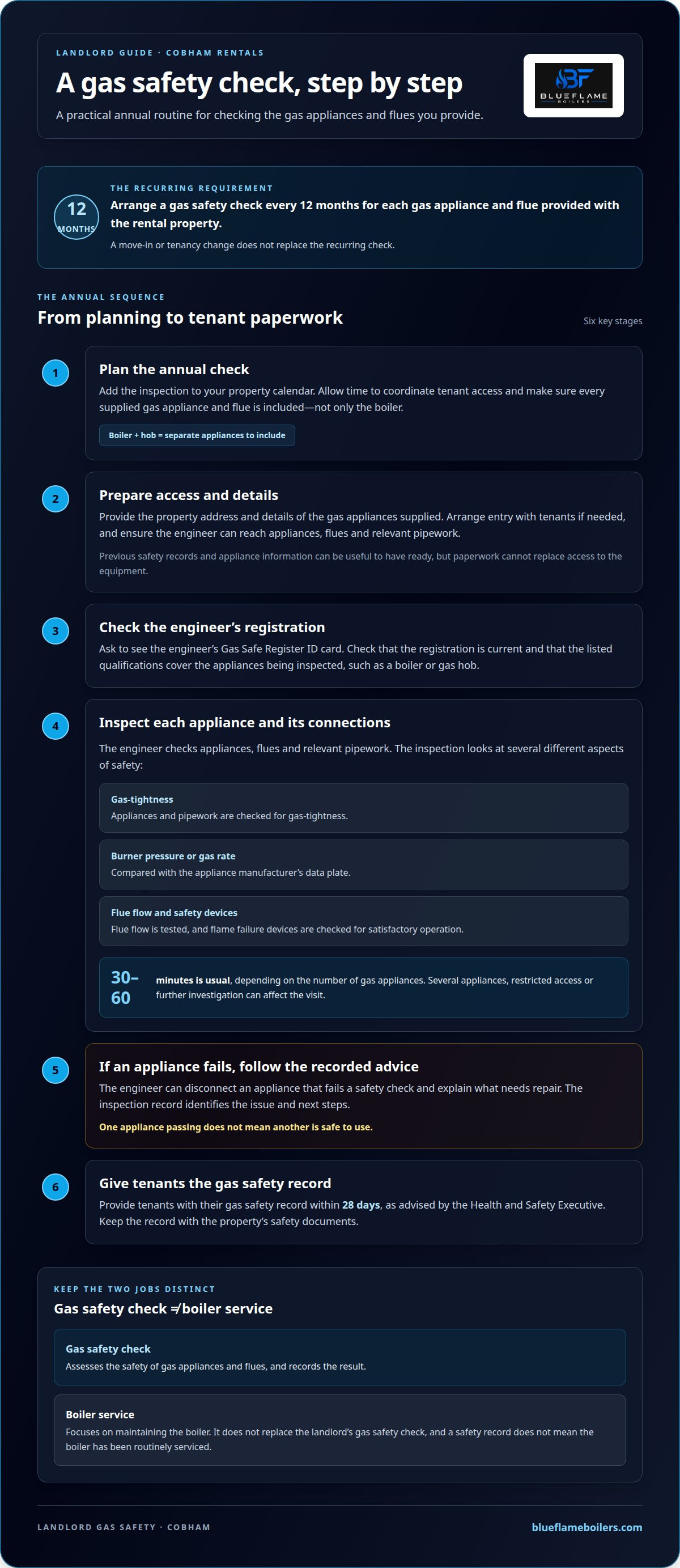
The inspection covers gas appliances provided with the property, such as boilers, ranges and hobs, along with their flues and connected pipework. Make sure the engineer can reach each item, including appliances in kitchens, utility rooms and cupboards. A hob and a boiler are separate appliances, so both need to be included.
The engineer checks that appliances and pipework are gas-tight. Burner pressure or gas rate is compared with the appliance manufacturer’s data plate, and flue flow is tested to assess whether products of combustion are removed. The engineer also checks that flame failure devices operate satisfactorily. These checks look at different aspects of safety, not just whether an appliance switches on.
A gas safety inspection usually takes between 30 and 60 minutes, depending on the number of gas appliances. Several appliances, restricted access or further investigation can affect how the visit goes. The engineer tests each appliance and its relevant connections; a working boiler does not mean a separate hob or flue has passed its checks.
If an appliance fails a safety check, the engineer can disconnect it and explain what needs repair. Don’t assume it is safe to use just because another appliance passed. The inspection record will identify the issue and the next steps. Once the fault has been addressed, the appliance’s safety can be assessed through appropriate follow-up work.
Documents and access for the inspection
Make sure the engineer can reach every gas appliance, flue and section of pipework being inspected. This may involve opening rooms, cupboards or other spaces containing equipment. Keep previous gas safety records and appliance information handy, if you have them, as they can help show what was inspected before. Paperwork can’t replace access to the appliances themselves.
For a rental property, provide the property address and details of the gas appliances supplied. If a tenant has the keys or needs to let the engineer in, arrange access with them in advance. This helps make sure a hob, boiler or flue isn’t missed because it couldn’t be reached.
Checking an engineer’s registration and qualifications
Ask to see the engineer’s Gas Safe Register ID card and check that the registration is current. The card identifies the engineer and the types of gas work they are qualified to carry out. Check that the listed categories cover the appliances being inspected, such as a boiler or gas hob. The relevant appliance type must be covered.
You can use the Gas Safe Register to check an engineer’s registration and qualifications. Compare the details with the ID card shown at the visit. This helps you check that the engineer is registered and qualified to work on the gas appliances at your property.
Annual gas safety checks for rental properties in Cobham
For landlords, gas safety is an ongoing responsibility, not a one-off task. In Cobham, make it easy to stay on top of each rental property’s inspection by planning around its appliances and tenancy dates, keeping records current and arranging access in good time.
Landlords in the UK need a gas safety check every 12 months for every gas appliance and flue they provide, according to the Health and Safety Executive. That means checking all the gas equipment supplied with a rental home, not just the boiler. Add the annual inspection to your property calendar, then give yourself time to coordinate entry with tenants and reach every included appliance. A move-in or tenancy change doesn’t replace the recurring check, so keep that reminder in place.
A gas safety check and a boiler service are different inspections, so it’s worth keeping both on your checklist. The safety check assesses gas appliances and flues; a service focuses on maintaining the boiler. A boiler service does not replace a landlord’s gas safety check, and a completed safety record does not mean the boiler has been routinely serviced. For example, a property with a boiler and gas hob needs both appliances included in the safety inspection. Servicing the boiler does not cover the hob.
Owner-occupiers aren’t legally required to hold a gas safety certificate, but an annual check is still a sensible way to keep an eye on things. It gives homeowners a planned opportunity to have gas appliances and flues assessed, even without a tenancy. If you’re buying a Cobham home, ask about available gas safety records and the condition of its appliances. A record shows what was inspected, but it doesn’t replace an assessment of the property’s current condition.
Sellers can gather existing records for prospective buyers, and buyers can review them as part of their property checks. Check which appliances and flues each record covers and whether it relates to the property being sold. For example, a record covering a boiler may not include a separate hob. If the home is rented before or after a sale, the landlord’s duties apply to the appliances and flues provided.
Holiday lets need a little planning, too. If you let a property with gas appliances, plan the inspection around bookings and arrange entry when the property is available. Keep the record with the property’s safety documents, so it’s easy to find when needed. For a Cobham holiday home with a boiler and gas cooker, include both in the inspection arrangements rather than focusing only on heating.
Make staying organised simple: set an annual reminder, note which appliances are included and arrange access before the inspection is due. For a rental property, plan the visit around tenancy dates and tenant access.
Do landlords need a gas safety certificate every year?
Yes. Landlords need to keep gas safety checks and records up to date for the appliances and flues they provide. Staying on top of them helps keep everyone safer.
Landlord certificate costs in Cobham
The cost of a landlord gas safety certificate depends on your property and the work involved. The number and type of appliances, how easy they are to access and whether any further work is needed after inspection can all affect your quote. A home with a boiler, hob and gas fire has more equipment to inspect than one with a single gas appliance.
For a helpful quote, describe the property’s gas appliances and any access restrictions. The inspection covers each included appliance and flue, not just the boiler. If a fault needs repair, that work is separate from recording the safety check. Sharing these details makes it easier to see what the inspection includes and what additional work might be needed.
What the CP12 record covers
A CP12, commonly called a landlord gas safety record, documents the engineer’s inspection findings. It relates to the gas appliances and flues provided at the rental property, so the record should identify what was inspected and note the outcome. It gives landlords a handy written account of the visit and its findings.
According to the Health and Safety Executive, a gas safety certificate remains valid for 12 months. Landlords in the UK need a gas safety check every 12 months for every gas appliance and flue they provide, according to the Health and Safety Executive. Make a note to plan your next inspection around that annual cycle.
Certificate issue and inspection timing
A CP12 record is issued after a Gas Safe registered engineer completes the inspection and documents its findings. In Cobham, choose an engineer whose registration covers the appliances at your property. Appointment timing depends on scheduling and access, while the number of appliances can affect how long the inspection takes.
Use the Gas Safe Register to check current registration and appliance qualifications. The engineer’s ID card shows the work categories they’re qualified to undertake. If an inspection identifies a fault, boiler repair work may be a separate next step. Visit blueflameboilers.com to find out more.
Who needs a gas safety certificate
The annual certificate requirement applies to landlords who provide gas appliances or flues in UK rental properties. It covers each supplied item, not just the main boiler. For example, a landlord providing a gas boiler and hob needs both included in the check. A tenant’s own appliance is different from equipment supplied by the landlord.
Owner-occupiers aren’t legally required to hold a gas safety certificate, although a check can still be sensible. For a rental home, keep the record with the property details and the appliances inspected. When tenants or ownership change, confirm which gas equipment is provided and plan the inspection using the property’s records.
Written CP12 reports for landlords and tenants
A written gas safety record is a handy snapshot of the inspection of a rental property’s gas appliances and flues. Landlords must share it with tenants and keep a copy for their own files.
How long landlords keep the record
The Health and Safety Executive says landlords must keep a gas safety record for two years. Pop each record with the property’s tenancy documents, rather than relying on a tenant’s copy. That way, you’ll have a clear history of completed checks when responsibilities change or another inspection is arranged.
For example, file the latest record alongside the previous one for the same Cobham property. Check that each document shows the property address and inspection date. A digital folder or paper file makes it easier to find the right record when a tenant asks for it or a new tenancy begins.
Keep the record legible and complete, including the engineer’s findings for the appliances inspected. If a later check flags a concern, an earlier document can show what was recorded before. It won’t replace the current inspection, but it will help keep your gas safety records in order.
Landlord legal requirements
Landlords in the UK must give tenants a copy of the gas safety record within 28 days, according to the Health and Safety Executive. Share it after the inspection and keep a copy for your own records. Tenants need the written record, not just a quick confirmation that an engineer has visited.
Give a new tenant a copy before they move in. For an existing tenancy, provide the record within the required period after the check. These are two separate steps: the move-in requirement applies before occupation, while the 28-day period applies to tenants receiving the record after an inspection.
Before sending the record, check that its property address matches the tenancy and that it reflects the inspection completed. If the property has a boiler and gas hob, the document should cover the appliances checked, not just the heating system. Note when and how you shared the copy, such as the date of an email or handover.
A Gas Safe registered engineer completes the inspection and records the findings. If the record flags a problem, arrange the necessary follow-up work and keep the related paperwork with the inspection documents. The written record helps landlords and tenants stay on the same page, while the inspection checks the gas appliances and flues provided at the property.
Boiler service and gas certificate prices
Gas safety checks and boiler services have separate costs because they cover different work. A gas safety check records findings for supplied appliances and flues, while a boiler service focuses on keeping the boiler in good shape. For Cobham landlords and homeowners, knowing which visit you need helps you budget confidently, without paying for work you don’t need.
What affects the certificate price?
Your quote depends on the property and work involved. Factors include the number and type of gas appliances, how easy they are to access and whether further work is needed after inspection. A property with a boiler and hob involves more equipment than one with a single appliance. Sharing these details helps define the inspection and gives you a clearer quote.
For a clear quote, describe the property and list its gas appliances. Include access details, such as equipment inside a locked cupboard. If the engineer identifies a fault, repairs are separate from the safety check. The inspection records its findings; remedial work is an additional task. Keeping these costs distinct helps landlords plan compliance checks and maintenance without surprises.
Boiler servicing is a separate cost
A boiler service has a different purpose from a gas safety certificate, so it’s worth considering the costs separately. Servicing focuses on the boiler, while the certificate inspection covers the relevant gas appliances and flues provided at a rental property. Need both? Describe both tasks when requesting a quote, so it’s clear what work is required.
Homeowners may want boiler servicing without needing a landlord gas safety record. Landlords may need the record and also want to plan boiler maintenance. For example, a rental property might need its safety inspection and routine boiler servicing as separate tasks. One doesn’t automatically include the other, so remember to budget for both in your maintenance plan.
Compare the work, not just the label
Before proceeding, make sure the quote describes the work you need: a safety inspection, boiler service or both. Check that the appliance list matches the property. A quote based on one boiler may not include a separate hob or gas fire. A clear scope makes it easier to see what the quoted price covers and what would cost extra.
If a safety check identifies a fault, the engineer can explain what needs fixing. That may lead to separate boiler repair work, rather than changing what the original inspection covered. Keep inspection and repair costs distinct in your property records. This gives landlords a clearer view of compliance work and homeowners a practical way to plan boiler maintenance.
Blueflame Boilers Ltd: Landlords Gas Safety Checks - CP12
Blueflame Boilers Ltd provides Landlords Gas Safety Checks - CP12 for landlords who need an inspection and written record for a rental property. Arrange a check when the annual inspection is due, a tenancy is changing, or supplied gas appliances need assessing. If the inspection identifies a fault, a separate boiler repair may be needed before the appliance is used again.
For a Cobham rental, have the property details and appliance access ready when arranging the visit. This helps the engineer understand what needs inspecting and plan the appointment. The record gives you documentation to share with tenants and keep with your property files.
Contact Blueflame Boilers Ltd about a CP12 check.
Keep your property’s gas safety plan moving
Use the inspection as a prompt to keep gas paperwork connected to the wider maintenance plan for each rental. A clear record of appliances, completed checks and follow-up work helps you see what needs attention before a tenancy change or planned maintenance visit. For landlords arranging a CP12 certificate in Cobham, keeping these property details together can make future planning more straightforward. Just as gas appliances require routine verification, thorough property upkeep also relies on dependable electrical systems, with trade specialists such as Banner Power highlighting the importance of dedicated electrical maintenance across residential and commercial settings.
Blueflame Boilers Ltd carries out landlord gas safety checks and offers boiler repairs, emergency callouts and gas boiler installation. If an inspection identifies an issue, the appropriate next step depends on the findings. A repair or installation is separate from recording the gas safety check, so you can plan the response around the property’s needs.
Take the next step with a clear plan for the property, its records and any work that needs attention.
Frequently Asked Questions
How often do landlords need one?
Landlords need a gas safety check every 12 months for each gas appliance and flue they provide, according to the Health and Safety Executive. Treat each rental property separately: an inspection date for one home won’t set the schedule for another. A practical approach is to record each property’s next due date alongside its tenancy and maintenance notes, then arrange access before that date arrives.
What is a CP12?
CP12 is the common name for a landlord gas safety record issued after an engineer’s inspection. It provides a written record connected to the property’s gas appliances and flues. Keep the document with that home’s tenancy records, rather than filing it only under a tenant’s name. That way, the information stays with the property if occupants or management arrangements change.
What does a gas safety inspection include?
A gas safety inspection checks the gas appliances, flues and pipework provided at the property. For example, a home with a boiler, gas hob and gas fire has several separate items to assess. The engineer checks gas tightness, burner pressure or gas rate against the manufacturer’s data plate, flue flow and flame failure devices. Make sure all included appliances are accessible during the visit.
What is a CP12 gas safety certificate and who needs one in Cobham?
A CP12 is the written gas safety record landlords need for rental properties with supplied gas appliances or flues. In Cobham, this applies to landlords of homes with equipment such as a boiler or gas cooker. A CP12 certificate in Cobham should relate to the correct rental address and the appliances inspected there. Owner-occupiers aren’t legally required to hold a certificate, though a check can be sensible.
How much does a CP12 gas safety inspection cost in Cobham, Surrey?
The cost depends on the property and inspection requirements, and is provided in a quote. Factors include the number and type of appliances, access to them and whether separate repair work is needed after inspection. A boiler and hob require more inspection work than a single appliance. Keep any repair costs separate from the inspection when planning property maintenance.
What does a landlord gas safety check include?
The inspection covers the gas appliances and flues the landlord provides, along with relevant pipework. The engineer checks that the system is gas-tight and assesses appliance operation and flue performance. A separate gas hob matters even when the boiler is the main heating appliance. If an item fails, the engineer can disconnect it and explain the necessary repair. Don’t assume another appliance’s pass covers it.
How often must landlords renew a CP12 certificate in England?
Landlords must arrange the gas safety check every 12 months for each appliance and flue they provide, according to the Health and Safety Executive. A certificate remains valid for 12 months, according to the Health and Safety Executive. Set reminders against the inspection date for each property, not just a general portfolio calendar. That helps prevent one home’s record being mistaken for another’s.
What are the landlord’s legal responsibilities for gas safety and CP12 records?
Landlords must arrange checks, give tenants the written record, and retain it. The Health and Safety Executive says tenants must receive a copy within 28 days, and landlords must keep the record for two years. Give new tenants their copy before they move in. Keep a note of when it was provided, such as an email date, with the matching property record.


