

The biggest boiler isn’t automatically the best fit: choosing the right size boiler depends on your home’s heat demand and how much hot water you use. As a starting point, a system boiler for a home with 10-15 radiators may be around 18-24 kW, while one with 16-20 radiators may need around 30 kW. These are ballpark figures, not a one-size-fits-all answer.
It’s easy to focus on the number of bedrooms, but radiators, insulation and bathrooms all affect boiler sizing. The boiler type matters too: a system boiler stores hot water in a cylinder, which can supply several taps or showers at once.
This guide explains how combi, system and regular boilers differ, how radiator requirements help indicate the heating output you may need, and why bathroom use can affect the choice. You’ll get a clearer picture of what could suit your home and why the boiler must match both heating and hot-water demand.
Key Takeaways
- Choose a boiler type to match your hot-water habits: stored hot water can suit homes where several outlets may be used at once.
- Use radiator numbers as a starting point, then factor in insulation and heat loss to understand your home’s heating demand.
- Boiler output is measured in kilowatts, but a higher figure isn’t automatically a better fit for your home.
- Bathroom numbers and simultaneous shower use can influence whether a combi or a boiler with a hot-water cylinder is more suitable.
- Use the recommendations as a guide to narrow down your options; the right combination of boiler type and output depends on your home’s heating and hot-water needs.
Combi, system and regular boiler types
Boiler type affects how a home receives hot water, so consider household demand as well as radiator requirements. A combi boiler heats water from the mains on demand and needs no separate hot-water cylinder or cold-water tank. It’s compact, but its hot-water supply depends on mains pressure and flow. A system boiler heats water for a storage cylinder, while a regular boiler uses a cylinder and a feed tank, usually in the loft.
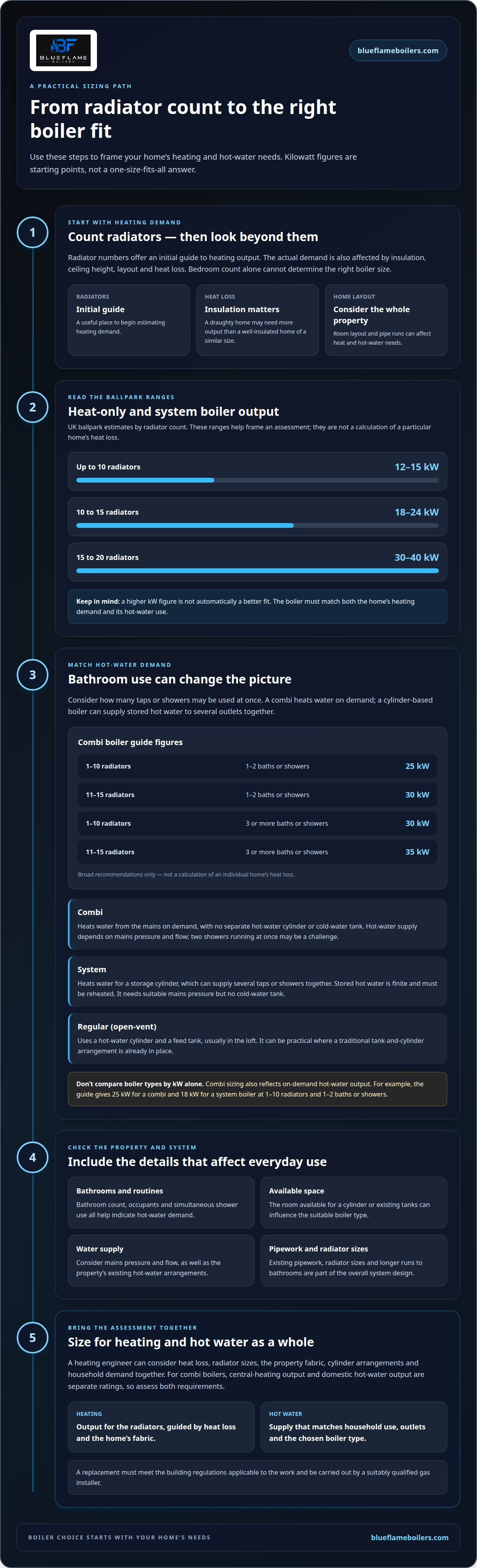
For a combi, radiator and bathroom counts offer a starting point. A UK sizing guide suggests 25 kW for 1-10 radiators and 1-2 baths or showers, and 30 kW for 11-15 radiators with 1-2 baths or showers. For 3 or more baths or showers, its guide suggests 30 kW with 1-10 radiators and 35 kW with 11-15. These are broad recommendations, not a calculation of a particular home’s heat loss.
How do system and regular boiler sizes compare with combi boiler sizes? Their output recommendations aren’t directly interchangeable: combi sizing also reflects its on-demand hot-water output, while system and regular boilers store hot water in a cylinder. For example, a system boiler guide suggests 18 kW for 1-10 radiators and 1-2 baths or showers, compared with the 25 kW combi guide figure for that radiator and bathroom range.
Simultaneous use is an important difference. A combi may struggle to supply two showers running at once. A system boiler’s cylinder can supply several taps or showers together, although stored hot water is finite and must be reheated. A system boiler needs suitable mains pressure but no cold-water tank. A regular boiler may suit an older home that already has a traditional tank-and-cylinder arrangement.
Choosing between combi, open-vent and system boilers means matching the setup to the property. A combi may suit a home with one bathroom and modest simultaneous demand. A system boiler may suit a household that uses several outlets together. An open-vent, or regular, boiler can be practical when the loft tank and hot-water cylinder are already part of the system. Bathroom count alone doesn’t decide the best type: usage patterns and available space matter too.
What UK building regulations and installer qualifications apply to boiler replacement? A replacement must meet the building regulations applicable to the work and be carried out by a suitably qualified gas installer. The system type, existing pipework and hot-water arrangements all affect the design, so consider the boiler and installation together.
To calculate a suitable choice, assess radiator demand, bathroom use, mains supply and the existing system. A 30 kW combi recommendation, for example, doesn’t mean a 30 kW system boiler will suit the same home: the stored-water cylinder changes how hot water is supplied.
What boiler type is right for my home?
The best fit depends on how your household uses heating and hot water, not just the floor area. Radiators, insulation, layout and simultaneous bathroom use all influence the choice.
Matching Boiler Types to Hot-Water Demand
Hot-water demand means how much water your household needs and whether several outlets are used at once. A combi heats water on demand and may suit a household with one bathroom and staggered use. If two showers may run together, a system or regular boiler with a cylinder can supply stored hot water to multiple outlets. The right type depends on usage patterns and available space.
Balancing Heating and Hot-Water Outputs
A boiler’s central-heating output serves radiators, while its domestic hot-water output serves taps and showers. Combi boilers have separate ratings for these jobs, so a strong hot-water rating doesn’t automatically mean the heating output suits the property. Consider both demands together. For example, a home with several radiators and frequent shower use needs an assessment of each requirement, rather than a choice based on one output figure.
Property Size and Layout in Boiler Choice
Property size and layout affect how heat travels and how quickly hot water reaches each outlet. A three-bedroom home with one bathroom has different demands from a three-bedroom home with two bathrooms and an en-suite. Long pipe runs between the boiler and bathroom can also affect everyday use. The number of occupants and their routines help show whether stored hot water could be useful.
Insulation and ceiling height affect how much heat escapes. A draughty three-bedroom Victorian terrace may need more heating output than a well-insulated home of a similar size. A larger property with multiple bathrooms may suit a cylinder-based system, particularly when occupants use hot water at the same time. These examples show why bedroom count alone can’t determine boiler type or output.
Sizing Around Heat Loss and Radiators
Heat loss estimates how much warmth a home loses through its structure, while radiator count gives an initial guide to heating demand. UK ballpark estimates for heat-only or system boilers are 12-15 kW for up to 10 radiators, 18-24 kW for 10 to 15, and 30-40 kW for 15 to 20. These ranges help frame the assessment, but insulation and hot-water demand also matter.
A heating engineer can calculate heat loss and consider radiator sizes, property fabric, cylinder arrangements and household demand together. This avoids selecting a boiler solely from a bedroom count or a radiator total. For a home with unusual layouts, substantial heat loss or several bathrooms, a tailored assessment can connect the heating and hot-water requirements. Discuss your home’s heating requirements to explore a suitable system design.
What size boiler do I need?
Boiler output is a useful starting point, but it doesn’t settle the choice on its own. Match the kilowatt rating to the home’s heat demand, hot-water use and boiler type.
Understanding Boiler Output in Kilowatts
A kilowatt (kW) measures the rate at which a boiler supplies heat. This rating helps compare boilers with the heating and hot-water demands of a property. For example, UK ballpark combi outputs are 28-34 kW for homes with 10 to 15 radiators, and 32-40 kW for homes with 15 to 20. These ranges are starting points, not a direct measure of how many rooms a boiler can heat.
Combi boilers have separate central-heating and domestic hot-water output ratings. A higher hot-water output may help supply showers, but the heating output must still match the home’s heat loss. A system boiler’s heating output must also suit the radiators, while its cylinder stores hot water for later use. Compare the output for each job rather than relying on one headline kW figure.
Recommended Output by Home Size
Recommended output by home size is a broad estimate linking property characteristics to a boiler’s capacity. A guide suggests 24-27 kW for a flat or home with up to two bedrooms, one bathroom and up to 10 radiators. For a two- to three-bedroom home with one shower and up to 15 radiators, it suggests 28-34 kW.
A larger home with at least four bedrooms, two or more showers and up to 28 radiators may need 35-42 kW. Yet a draughty Victorian terrace could need more output than a well-insulated home of similar size. Bedrooms provide context; insulation, radiator demand and hot-water use refine the estimate. The best comparison uses the same boiler type and accounts for the property’s actual layout.
Boiler Input, Output and Efficiency
Boiler input is the energy supplied to the appliance, while output is the useful heat it delivers. Efficiency describes the relationship between those figures, which matters because some input energy escapes rather than becoming useful heat. Modern boilers are typically around 90% efficient, so input and useful output aren’t identical.
A boiler’s output rating tells you about the heat it can deliver, not the full amount of energy it consumes. Efficiency alone doesn’t show whether a boiler suits a home, either. The rating must meet the property’s heating demand and hot-water requirements, whether the boiler heats water on demand or uses a cylinder.
Output and Energy Use
Output affects how much heat a boiler can supply, but a higher rating doesn’t automatically mean greater efficiency. A boiler much larger than the home needs may cycle on and off, wasting energy—a pitfall that heating specialists such as Comfort Boys Air and Heating frequently highlight when assessing home systems. An undersized boiler may struggle to heat the property on cold days or provide enough hot water.
For instance, a 30 kW boiler is estimated to serve around 15 radiators in a well-insulated home. That example doesn’t make 30 kW the right choice for every home with 15 radiators. Heat loss, insulation, bathroom use and boiler type all affect the result. Consider those factors together to narrow the output range that suits the property.
Conventional boiler recommendations by radiators and bathrooms
For a conventional boiler, radiator count offers a starting point: suggested outputs range from 15 kW for 1-10 radiators to 24 kW for 16-20 radiators, with 1-2 baths or showers. To assess an existing boiler, compare its output with radiator demand, heat loss and whether the home provides enough heating and hot water.
Recommendations by Property and Radiator Count
Radiator-count recommendations estimate the conventional boiler output that may suit a home’s heating demand. A 15 kW boiler is a guide for 1-10 radiators and 1-2 baths or showers; 18 kW is suggested for 11-15 radiators with the same bathroom range. For 16-20 radiators and 1-2 baths or showers, the suggested output is 24 kW.
Bedrooms describe a property, but they don’t replace information about radiators and hot-water use. Two three-bedroom homes may have different radiator totals or insulation levels. A regular boiler also stores hot water in a cylinder, so household demand and how often several outlets are used matter alongside heating output.
Using Sizing Charts and BTU Calculators
A sizing chart offers a quick comparison between radiator or bathroom numbers and a suggested boiler output. A radiator BTU calculator estimates the heat needed for each room, then combines those estimates to help assess the heating system. This gives more detail than counting radiators alone, because rooms vary in size and heat loss.
Use the chart as a broad guide, then compare its result with a room-by-room estimate. A BTU figure describes heat demand, while boiler output is shown in kilowatts, so interpret each value in its own units. Bathroom numbers and hot-water use also affect the choice, particularly when a regular boiler’s cylinder supplies several outlets.
Estimating Capacity from Radiator Numbers
Radiator-count estimates connect a boiler’s kilowatt output with an approximate number of radiators it may serve. The conventional boiler guide ranges here place 15 kW at 1-10 radiators, 18 kW at 11-15, and 24 kW at 16-20, with 1-2 baths or showers. These are recommendations, not a universal radiator-per-kilowatt formula.
A 30 kW boiler is also estimated to run around 15 radiators in a well-insulated home. That example differs from the conventional boiler recommendations because insulation and system type affect capacity. Radiator size and heat requirement matter too, so two homes with 15 radiators may not need identical outputs.
Checking Existing Boiler Size
Check the existing boiler’s output rating and compare it with the home’s radiator count, bathroom use and heating performance. For example, a 15 kW conventional boiler aligns with the guide range for up to 10 radiators, but that match alone doesn’t establish suitability. The building’s heat loss and stored hot-water demand also influence the result.
Notice whether rooms reach a comfortable temperature and whether the hot water meets normal household needs. Persistent cold rooms, insufficient hot water or frequent boiler cycling can indicate a mismatch, although other faults can cause similar problems. An engineer can assess heat loss, radiator requirements, insulation and cylinder demand together before recommending a change.
System boiler recommendations by radiators and bathrooms
A system boiler’s output should match the home’s radiator demand, while its cylinder provides stored hot water. Radiator and bathroom figures are a useful starting point, but don’t capture every property’s heating needs.
For homes with 1-2 baths or showers, typical system boiler recommendations include:
- 18 kW for 1-10 radiators.
- 24 kW for 11-15 radiators.
- 30 kW for 16-20 radiators.
These figures can help narrow the options, but they aren’t a universal formula. Insulation, heat loss, radiator sizes and household hot-water routines all affect the system’s requirements. More radiators may indicate greater heating demand, but the property’s condition and layout matter too.
How radiator count guides system boiler output
Radiator totals offer an initial way to compare a home’s heating demand with a system boiler’s output. For example, a property with 12 radiators falls into the 11-15 radiator range, where 24 kW is a typical recommendation for 1-2 baths or showers. The range is a starting point, not a substitute for assessing the building’s heat loss and radiator requirements.
Other estimates give broader output ranges: 18-24 kW for a system boiler serving 10-15 radiators, and 26-40 kW for 15-20 radiators. These ranges reflect differing assumptions. Use radiator count to shortlist options, then consider the home’s insulation and heat demand.
Why bathrooms and stored hot water matter
A system boiler heats water for a cylinder, where it is stored until needed. This can suit households that use several taps or showers at once, as the outlets draw from the stored hot water. Cylinder capacity and household routines matter alongside the boiler’s kilowatt output.
A three-bedroom home with two bathrooms is one example where a system boiler may be worth considering, particularly if people often use hot water simultaneously. Bathroom count alone doesn’t determine the required output. Radiator demand, heat loss, insulation and overlapping use all help shape the choice.
Choosing a system boiler for the whole heating system
A lower output may suit a well-insulated home with modest radiator demand. A larger property with more radiators may need greater heating capacity, and the cylinder must suit household hot-water habits. Compare system boilers with combi or regular boilers by considering how each type supplies hot water, not output figures alone.
A heating engineer can calculate heat loss and assess radiator demand, bathroom use and cylinder requirements together. This helps avoid choosing a system boiler based only on bedroom count. Use radiator ranges to shortlist possible outputs, then match the boiler and cylinder to the home’s heating and hot-water needs.
Blueflame Boilers: Gas Boiler Installation
Blueflame Boilers Ltd installs gas boilers when an existing boiler needs replacing or a home’s heating requirements change. Radiator demand, insulation, boiler type and hot-water routines all help shape the decision. Choose a boiler to suit the home, not on output alone.
For an installation, the existing heating system and your household’s needs help determine a suitable setup. If the boiler has developed a fault, boiler repair may be the right next step. Boiler servicing can help maintain an existing system.
Contact Blueflame Boilers Ltd to discuss gas boiler installation for your home.
Plan a boiler that fits your home’s next chapter
A boiler decision can affect your home’s comfort as routines, renovations and hot-water needs change. Think beyond the immediate replacement: consider how you want the heating system to serve your household over time, and whether the current setup still suits the property.
Choosing the right size boiler is also an opportunity to plan for how you’ll use your home in the future, rather than simply matching the old appliance. A clear discussion of your priorities can turn technical options into a practical plan.
Blueflame Boilers Ltd offers gas boiler installation, boiler repair and emergency callouts. Whether you’re planning a replacement, dealing with a fault or facing an urgent boiler problem, get in touch to discuss your needs.
A well-considered next step can make the decision more manageable. Your home’s heating deserves a solution that suits the way you live.
Frequently Asked Questions
What happens if a boiler is oversized?
An oversized boiler can waste energy by repeatedly switching on and off, a process called cycling. It may also cost more to buy than a boiler matched to the home’s needs. For example, a boiler sized for a much larger property may exceed the demand from a smaller home’s radiators. A high rating doesn’t automatically mean better comfort. Matching output to actual heat loss helps avoid unnecessary capacity.
How do I choose the right boiler?
When choosing the right size boiler, consider the home’s heat loss, radiator demand, insulation, bathroom use and mains water supply together. Then choose a boiler type suited to the household’s hot-water use. A home where showers often run at the same time has different needs from one where use is staggered. Both the boiler’s heating output and hot-water provision should suit the property.
Is a 24kW boiler big enough for a 3-bedroom house?
Yes, a 24 kW boiler may suit a three-bedroom home with one bathroom and no more than 10 radiators. The bedroom count alone isn’t enough to decide: insulation, heat loss and hot-water routines also affect suitability. A three-bedroom home with two bathrooms or frequent simultaneous hot-water use may need a different output or boiler type. Compare the boiler’s heating needs with the property’s actual layout and daily use.
What is boiler sizing and why is it important?
Boiler sizing means matching an appliance’s heat output to a home’s heating and hot-water requirements. Too little output can leave rooms cold or hot water insufficient, while excess capacity can waste energy through repeated cycling. For example, a well-insulated home and a draughty home with the same number of bedrooms can have different heat demands. Radiators and hot-water habits add further detail to the assessment.
How do you calculate the right boiler size for a UK home?
Assess heat loss, insulation, room layout and radiator requirements to estimate the home’s heating demand. Then account for boiler type, bathroom count, hot-water use and incoming mains flow. A radiator count or online sizing chart can provide an initial estimate, but won’t account for every home’s construction or room sizes. A tailored calculation brings these factors together to establish suitable heating and hot-water output.
What boiler output in kW is suitable for different UK house sizes and bedroom counts?
As broad combi estimates, 24-27 kW may suit a flat or home with up to two bedrooms, one bathroom and up to 10 radiators. A two- to three-bedroom home with one shower and up to 15 radiators may suit 28-34 kW. For a home with at least four bedrooms, two or more showers and up to 28 radiators, the guide range is 35-42 kW. Insulation and demand still affect the choice.
How do hot-water demand and number of bathrooms affect combi boiler sizing?
More bathrooms can increase the chance that several outlets need hot water together, which affects the combi output and boiler type to consider. A combi can serve one hot-water outlet at a time, so a household running two showers together may prefer stored hot water. As a broad guide, a one-bathroom home may use a 24-28 kW combi; a two-bathroom home may need 30-35 kW or a system boiler.
What is a boiler heat-loss survey and why is it needed before choosing a size?
A boiler heat-loss survey assesses how much warmth a home loses and helps calculate the heating output needed for comfortable rooms. It considers insulation, construction, room layout and radiator requirements, rather than relying on bedroom count alone. For example, a draughty older home may need a different output from a well-insulated property with similar room numbers. This assessment helps match boiler capacity to the home’s actual heating demand.


