
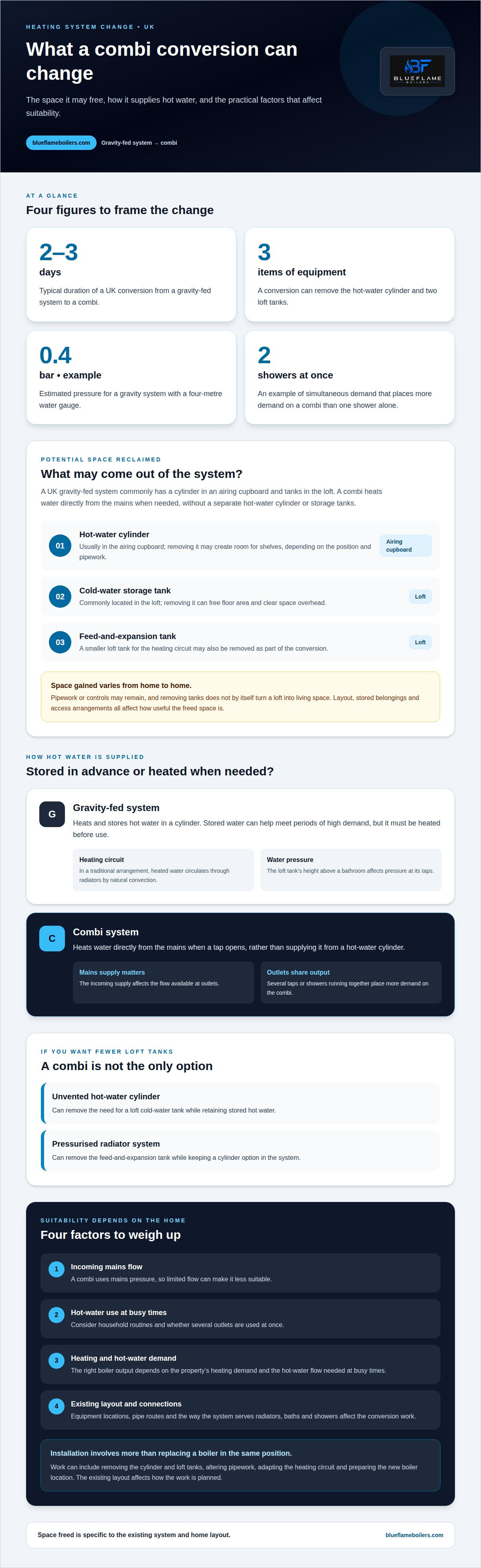
The biggest practical gain from changing to a combi can be space: the change from a gravity-fed system to a combi system can remove the hot-water cylinder and loft storage tanks. A combi heats water directly from the mains when needed, and a UK conversion typically takes two to three days. The space freed depends on how your current system is laid out.
If you’re considering the switch, it’s understandable to focus on a tidier airing cupboard and a loft without tanks. But a combi may be less suitable if your mains water flow is limited or several hot-water outlets are used at once.
This guide explains how gravity-fed heating works, what space a conversion may free up and what the installation involves. It also covers why mains flow, household hot-water use and the condition of your existing heating system matter when deciding whether a combi is suitable.
Key Takeaways
- A combi can free up the airing cupboard and loft by removing the hot-water cylinder and storage tanks.
- Gravity-fed systems store hot water, while a combi heats it from the mains when needed; each setup has different strengths.
- Hot-water demand matters: using several outlets at once can affect a combi’s performance.
- A conversion typically takes two to three days, and the work may involve pipework changes and making good.
- Assessing mains water flow, household needs and the existing heating system helps establish whether a combi is a suitable choice.
Space gained by removing the cylinder and loft tanks
A UK gravity-fed system commonly has a cold-water storage tank in the loft and a hot-water cylinder in an airing cupboard. The loft may also contain a smaller feed-and-expansion tank for the heating circuit. This means a household could have two loft tanks as well as an indoor cylinder. A combi heats water directly from the mains when needed, without a separate hot-water cylinder or storage tanks.
Removing the cylinder can free up the airing cupboard, but the usable space depends on its position and the pipework. For example, removing a cylinder that occupies most of a cupboard may leave room for shelves. Heating pipes or controls may remain, so the whole area will not necessarily be clear. Changes to the cupboard, room or pipe routes are part of the conversion work.
Removing the cold-water storage tank and feed-and-expansion tank can free up loft floor area and clear space overhead. The amount depends on the tanks’ size and the existing system layout. Even with more floor area, stored belongings and access arrangements affect how useful the space is. Removing tanks does not, by itself, turn a loft into living space.
In practical terms, a conversion can remove:
- The hot-water cylinder from an airing cupboard.
- The cold-water storage tank from the loft.
- The smaller feed-and-expansion tank from the loft.
The space benefit varies from home to home. In a flat, removing the cylinder may make the biggest difference to a compact airing cupboard. In a house, clearing both loft tanks may be more useful if they take up valuable storage space.
A combi is not the only way to reduce loft equipment. An unvented hot-water cylinder can remove the need for a loft cold-water tank while retaining stored hot water. A pressurised radiator system can also remove the feed-and-expansion tank. These options may suit households that want fewer loft tanks but prefer to keep a cylinder.
Before planning how to use the space, identify the tanks and cylinders in your existing system. Their locations, connections and condition affect what can be removed and which pipes remain. The Scottish Government says domestic hot-water or heating systems should have fully pumped circulation where compatible with the heat generator. This matters when comparing a combi conversion with an option that retains a cylinder.
How gravity-fed heating systems work
There is no single boiler output that suits every UK home. The right output depends on the property’s heating demand and the hot-water flow needed at busy times, such as during morning showers.
In a traditional gravity-fed arrangement, heated water circulates through the radiators by natural convection. Hot water rises through the pipework, while cooler water falls back towards the heat source. This can happen without a pump driving water around the heating circuit. The loft tank’s height above a bathroom also affects the water pressure at its taps.
For example, a gravity system with a four-metre water gauge has an estimated pressure of 0.4 bar. That helps explain why an upstairs shower may feel weaker than a mains-fed tap. A shower pump can improve flow in some existing gravity-fed systems, but it doesn’t change how the boiler stores and heats domestic hot water.
The system heats and stores hot water in advance. Having water ready in the cylinder can help meet periods of high demand, but it must be heated before use. You may have to wait for the cylinder to warm, unlike with a combi that heats water as needed.
A gravity-fed system also works independently of changes in mains pressure. This can be useful where the incoming supply varies, although taps and showers rely on stored water and gravity-driven flow. Older homes may have unusual pipe connections. For example, a radiator may connect to the hot-water cylinder’s return and heat when its zone valve opens.
When considering a change from gravity-fed heating to a combi, identify which parts of your system serve heating and which serve hot water. A combi heats water directly from the mains when a tap opens, instead of supplying it from a hot-water cylinder. It uses mains pressure, so the incoming supply affects the flow available at your outlets.
That difference affects everyday use. A gravity-fed cylinder stores hot water for several outlets, whereas a combi shares its output when taps or showers run at the same time. Two simultaneous showers, for example, place more demand on a combi than one shower alone. Household routines and incoming mains flow matter alongside the property’s heating demand.
Not every home needs the same arrangement. Compare how your current system supplies radiators, baths and showers, then consider the demand placed on them together. A clear picture of those daily patterns helps frame a useful heating-system discussion. Discuss your heating system as you weigh the options.
There is no single boiler size or output for every UK home. Choose one based on the property’s heating demand, the hot-water flow needed at busy times and the incoming mains supply, particularly if several outlets may run together.
Installation duration and making good
A UK conversion from a gravity-fed system to a combi typically takes two to three days. It involves more work than replacing a boiler in the same position. Tasks can include removing the cylinder and loft tanks, altering pipework, adapting the heating circuit and preparing the new boiler location. The existing layout affects how the work is planned.
Before work begins, the installer needs to understand where the existing equipment is and how the pipes connect. For example, removing a cylinder in an airing cupboard may mean rerouting its connections. The loft tanks are also connected to the system, so their pipework needs to be addressed. The new setup must serve the radiators and supply hot water from the combi.
Installation may affect several parts of your home. The team may need access to the airing cupboard and loft to remove equipment, while work around the boiler can involve changes to nearby pipes. If the new boiler is installed elsewhere, the route for its connections and flue also needs planning. The location and extent of these changes affect any repair or finishing work afterwards.
“Making good” means repairing or finishing surfaces disturbed by the work. Removing a tank, for example, may leave pipe openings or fixings that need attention. Rerouted pipes may also leave visible marks where they pass through walls or floors. The finish depends on which areas are affected and the agreed scope of work, so discuss access and reinstatement before installation begins.
The heating circuit needs attention too. Older gravity-fed systems can contain debris, so the system should be cleaned before installing a new boiler. Manufacturers’ warranties generally depend on this preparation. Cleaning helps clear contaminants from radiators and pipes before they circulate through the replacement boiler. The installer can also assess whether the existing radiators and connections suit the new system.
Heating and hot water may be unavailable while the equipment and pipework are being changed. Plan for this disruption by arranging access to the work areas and moving belongings away from the airing cupboard or loft entrance. A clear route helps the team remove bulky items, including the cylinder, and reach the boiler safely.
Before the work starts, ask for the installation stages and making-good arrangements to be set out. This clarifies which rooms or surfaces may be affected and when the heating system is expected to be ready for use.
Professional assessment before changing systems
A proper assessment considers your water supply, heating circuit and daily hot-water needs. It also identifies work that a like-for-like boiler replacement would not involve.
Assessing the system before conversion
A professional assessment checks whether your property and heating circuit suit a combi. Mains water pressure and flow matter because a combi draws hot water directly from the incoming supply. A flow rate below ten litres a minute starts to limit combi suitability. The usual assessment measures flow at the kitchen cold tap with other outlets closed, and takes about five minutes.
The engineer also considers household demand and the condition of the existing system. A home where people use two showers together, for example, has different hot-water demands from one where showers are staggered. Older radiators and pipework need attention too, because the system’s cleanliness and condition affect how well the new boiler can work.
Choosing an installer and comparing quotes
When choosing an installer, check their relevant gas-work registration and qualifications, then compare quotes for the same conversion work. For gas work, make sure the engineer’s Gas Safe registration covers the work involved. This helps you assess who will carry out the installation, as well as the equipment proposed.
Ask each quote to explain what happens to the cylinder and loft tanks, whether pipework changes are included, and how the heating circuit will be cleaned. It should also cover any proposed gas-supply changes, boiler location and making-good work. Comparing these details helps you see whether the quotes cover the same tasks.
Building regulations and Gas Safe requirements
Installing a new boiler requires Building Regulations approval for safety and energy-efficiency reasons, according to the Welsh Government. That statement applies to Wales; the relevant building-control route depends on where in the UK the property is. For gas work, use an engineer whose Gas Safe registration covers the tasks involved, and check their identity and work categories.
Ask how compliance will be recorded and what documents you will receive. These details matter because a conversion can change water connections, heating pipework and the boiler’s location, not just the appliance. Clear paperwork gives you a record of the completed work.
Risks of converting an older system
An older gravity-fed system may have restricted mains flow, worn pipework or sludge in its radiators. Low mains flow can limit a combi’s hot-water performance, while several open taps or showers share its output. A pumped shower designed for gravity-fed water may also be unusable or unsafe if connected to mains-pressure water.
These issues make testing and preparation important. Clean the heating circuit before installing the new boiler, and check whether the existing gas supply needs upgrading because a combi can draw more gas while heating water. An assessment can identify these practical issues before installation begins.
What does changing from a gravity-fed heating system to a combi boiler involve in the UK?
A conversion replaces stored hot water with water heated directly from the mains. It also changes how the heating circuit operates, so the work involves more than swapping one boiler for another.
First, the installer maps the existing setup: boiler position, radiator circuit, cylinder connections and loft-tank pipework. They then plan the combi’s position and connections, including the route to the flue. Moving the boiler, for example, may mean longer pipe runs or a different flue position.
Next, the cylinder and loft tanks are disconnected and removed if the new design no longer needs them. The redundant pipework is dealt with, and cold-water connections are adapted for the combi’s mains-fed hot water. The boiler heats water when a tap opens instead of drawing it from a preheated cylinder.
The incoming water supply is a key factor. A flow rate of roughly twelve litres a minute is described as workable for a single-bathroom home, while a rate below ten litres a minute starts to limit combi suitability. Flow affects hot-water delivery, especially when several outlets run together, as the combi’s output is shared between them.
The gas supply also needs consideration because a combi can draw more gas while heating hot water than the old boiler did. The existing gas pipework may need checking and upgrading for the new appliance. Boiler output should reflect the home’s heating demand and expected hot-water use, not radiator size alone.
Clean the existing heating circuit before installation, as debris or sludge left in the system can circulate through the new boiler. The installer also needs to assess whether the existing radiators and pipework suit the new setup. A system-to-combi conversion can take two to three days, depending on the work involved.
After installation, the heating and hot-water operation must be tested. A combi does not store hot water in a cylinder, so there is no stored supply if the boiler fails. In contrast, a cylinder with an immersion heater can provide hot water when its boiler fails. This difference is worth considering when weighing convenience against stored backup.
The Welsh Government states that installing a new boiler requires Building Regulations approval for safety and energy-efficiency reasons. This approval is part of the installation process, alongside appropriate checks of the completed boiler and heating system.
Blueflame Boilers Ltd: Gas Boiler Installation
Blueflame Boilers Ltd installs gas boilers for homeowners planning a new heating setup. If an assessment points towards a combi, installation is the next step: the existing system and household hot-water needs help determine the work involved. A conversion may require removing redundant tanks and changing pipework, so careful planning helps set expectations before work begins.
Turn to Blueflame Boilers Ltd to discuss replacing your boiler or changing your heating system. The company also provides boiler repairs, emergency callouts and servicing to support you at different stages of looking after your heating.
For installation details, visit Blueflame Boilers Ltd’s gas boiler installation page, or contact Blueflame Boilers Ltd to discuss your home.
Plan a heating system that fits your home
Choose a system around the way your household uses hot water, not simply the space you hope to reclaim. The decision to change from a gravity-fed system to a combi is a chance to consider everyday routines, future plans for the property and the role each bathroom plays. A household with overlapping morning showers may weigh priorities differently from one where hot-water use is spread throughout the day.
Before deciding on a design, note when taps and showers are commonly used together, which rooms need heating and whether you want to keep stored hot water. These practical details help the installer understand your priorities. A considered plan can align the equipment, layout and installation work with how you want your home to function.
A well-planned heating system starts with the details of your home. You’re in a good position to move forward.
Frequently Asked Questions
Should You Change Your Gravity Fed System to a Combi Boiler?
A combi may suit a home where mains flow meets demand and hot-water outlets are rarely used together. For example, a household with one bathroom and staggered showers may value on-demand hot water and the cupboard space freed up. If people regularly use two showers at once, the combi’s shared output may be a drawback. Weigh these routines against the benefit of keeping a stored hot-water supply before deciding.
How do I know if my water main can support a combi?
Measure the incoming flow at the kitchen cold tap with other outlets closed. The measurement takes about five minutes. A flow below ten litres a minute starts to limit combi suitability; roughly twelve litres a minute is described as workable for a single-bathroom home. Flow rate is only part of the assessment: pressure and the number of outlets running at once also affect performance.
Is it cheaper than a like-for-like replacement?
A conversion is generally more involved than replacing a boiler in the same position. It can include removing tanks and a cylinder, altering pipework and making good affected areas, whereas a like-for-like replacement avoids some of these changes. Compare quotes by checking which tasks, materials and finishing work each includes, rather than comparing boilers alone.
Will my shower still work afterwards?
Your shower can continue to work if its design suits the new water supply and the conversion accounts for its connections. A pumped shower designed for gravity-fed water may be unusable or unsafe on mains-pressure water. A combi also shares its hot-water output between open outlets, so running a shower alongside another hot tap can affect flow and comfort.
How much does it cost to replace a gravity-fed system with a combi boiler in the UK?
The price depends on the work required and is provided in a quote. Factors include the boiler and installation scope, removal of the cylinder and tanks, pipework changes, gas-supply work and making good. The boiler’s location and access to existing connections can also affect the work. A quote should describe the conversion tasks, not just name the appliance.
What factors affect the cost of converting to a combi boiler, including pipework and boiler location?
Conversion quotes for homes in Epsom, Ashtead, Leatherhead, Oxshot, Cobham, Weybridge, Ewell, Worcester Park, Cheam, Sutton, Carshalton, Banstead, Reigate, Tadworth, Woking, Bookham, Effingham, Horsley, Ripley and Kingswood, Surrey, depend on each property’s requirements. Pipe routes, boiler position, flue arrangements, tank removal and system preparation all affect the scope. Moving a boiler can require more changes to connections than installing it near the existing pipework.
What are the advantages and disadvantages of a combi boiler compared with a gravity-fed system?
A combi heats water as needed and removes the need for a separate hot-water cylinder and storage tanks, which can simplify the setup and free space. A gravity-fed system stores hot water in a cylinder for several outlets and works independently of changes in mains pressure. A combi relies on the incoming supply and shares its hot-water output across outlets, so household routines matter.
What happens to the hot-water cylinder, cold-water tank and existing pipework during a combi conversion?
The cylinder and loft tanks are typically removed when the new design no longer needs them. Their redundant connections are disconnected, and the pipework is adapted to supply the combi and heating circuit. Some existing pipes may remain in use, while others need rerouting or alteration. For example, a pipe serving the old cylinder may need a different connection after the system changes.


