
A maintenance plan is useful when it clearly states what will be checked, cleaned and reported. For commercial boiler servicing in Ewell, schedule visits around the building’s heating and hot-water needs. If the manufacturer’s instructions are unavailable, HSE recommends annual servicing of gas appliances and flues, unless a Gas Safe registered engineer advises otherwise.
Reliable heating with minimal disruption matters in a busy workplace or shared building. A clear service schedule helps organise checks and makes it easier to understand what work may need attention.
This guide explains what commercial boiler maintenance can cover, how servicing and safety checks work, and where cleaning fits in. It also outlines the information that helps plan a visit in Ewell, so you can make informed decisions about maintaining your boiler and keeping heating and hot water working smoothly.
Key Takeaways
- Understand what a commercial maintenance plan can cover and how to plan visits around your building’s access and heating needs.
- See how inspection and cleaning help identify issues that may affect boiler operation.
- Learn what happens during service and safety checks, and why qualified expertise matters.
- Find out how regular servicing can support more informed maintenance decisions and when repair or installation may be the next step.
Do you offer maintenance plans for boilers?
Planned maintenance can set out service visits and checks for a commercial or residential boiler. Compare the written scope, repair arrangements and call-out terms to decide whether a plan suits your building.
Planned maintenance arrangements
A planned schedule records when servicing is due and what work each visit covers. For a gas appliance and flue, the UK Government says HSE recommends annual servicing if the manufacturer’s instructions are unavailable, unless a Gas Safe registered engineer advises otherwise. A maintenance record can help managers track completed visits and decide which findings need follow-up.
Commercial boiler servicing in Ewell should suit the site’s use, not just the appliance. A business operating throughout the day may need visits planned around opening hours, while a residential property has different access and heating needs. For schools, healthcare premises and care settings, share safeguarding, sign-in or infection-control procedures before scheduling a visit.
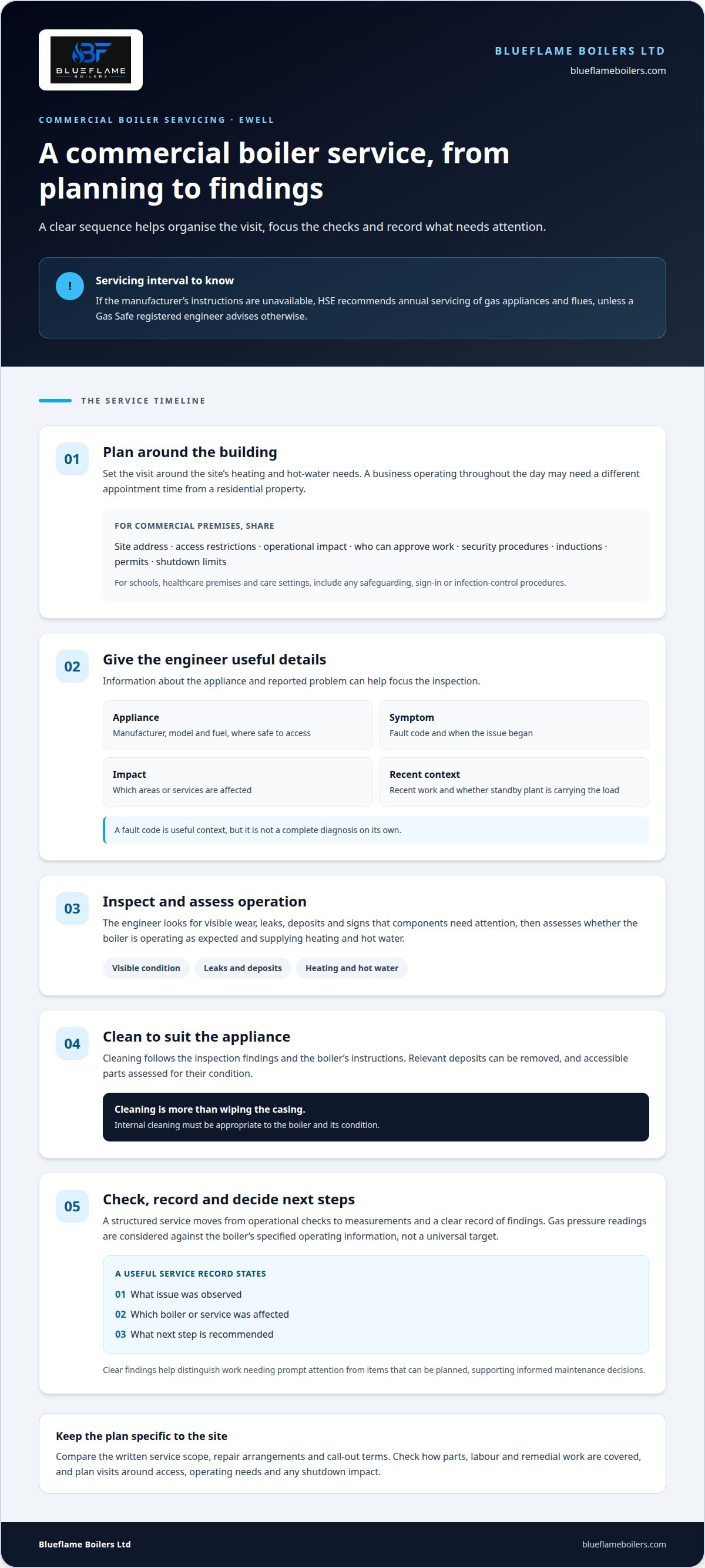
For a commercial visit, provide the site address, access restrictions, operational impact and details of who can approve work. Include any security procedures, inductions, permits or shutdown limits. This helps organise the visit and clarifies who can make decisions if the engineer identifies work that needs approval.
Commercial boiler service plans
Compare plans by checking what a planned service includes and how faults are handled between visits. Find out whether boiler repairs are included, how call-outs are arranged and what response times the terms specify. Check how parts, labour and remedial work are covered, rather than relying on a broad plan label.
Blueflame Boilers Ltd provides boiler servicing and repairs in Ewell. The right arrangement depends on the equipment, site operations and the plan’s terms. For a new boiler installation, check how commissioning and ongoing maintenance are addressed. For existing equipment, service history and the impact of a shutdown can help determine a suitable plan.
Before a visit, organise access to the site, relevant boiler records and contact details for the person who can approve work. Landlords and managing agents can also record tenant access arrangements and the approval process. If the site has standby plant, identify who manages it and how a planned shutdown could affect heating or hot water.
Coverage and travel for commercial boiler appointments depend on the Ewell enquiry address. State the premises location and its operating constraints when arranging a visit, so the service can be planned around the building’s requirements.
Boiler service inspection and cleaning
A service involves inspection, operational checks and cleaning appropriate to the boiler. For a visit in Ewell, details such as the boiler’s make, model, fuel and reported symptoms can help focus the work.
Inspection and diagnostics
An inspection looks for visible wear, leaks, deposits and signs that components need attention. The engineer can also assess whether the boiler is operating as expected and supplying heating and hot water. An inspection gives context to a fault code, which is not a complete diagnosis on its own.
Useful diagnostic details include when the fault occurs, which areas or services are affected, recent work and whether standby plant is carrying the load. For example, a fault affecting hot water but not heating suggests a different operating pattern from a boiler that stops altogether. Recording these details helps the engineer investigate the reported problem.
- Identify the appliance: note the manufacturer, model and fuel where these are safe to access.
- Describe the symptom: give the displayed code and when the issue began.
- Explain the impact: say which areas or services are affected and whether backup equipment is running.
Cleaning should follow the inspection findings and the appliance’s instructions. The engineer can remove relevant deposits and assess whether accessible parts are in suitable condition. This is more than wiping the casing: internal cleaning must suit the boiler and its condition.
Annual boiler inspections
Regular inspections provide a scheduled opportunity to assess the boiler’s condition before a breakdown disrupts heating or hot water. If the manufacturer’s instructions are unavailable, HSE recommends annual servicing of gas appliances and flues, unless a Gas Safe registered engineer advises otherwise. The manufacturer’s maintenance guidance remains a useful reference.
For a commercial site, the inspection plan should account for how the building uses heating and hot water. A care setting, for example, may need a visit arranged around duty and standby plant, quieter periods and the need to maintain hot water. The authorised contact can also help decide how to handle findings and proposed remedial work.
After inspection, clear findings help separate work needing prompt attention from items that can be planned. Ask for the observed issue, the affected boiler or service, and the recommended next step to be recorded. This gives the responsible manager practical information for maintenance decisions, rather than an unexplained list of faults.
Choice Mechanical Services recommends having a commercial boiler inspected at least once a year. For an Ewell service visit, record the manufacturer, model, fuel and fault code when safe.
Boiler servicing process and safety checks
A structured service moves from operational checks to measurements and a clear record of findings. The work depends on the boiler, its instructions and what the engineer observes.
Gas pressure checks
The engineer checks gas pressure as part of assessing how the appliance operates. Readings are considered against the boiler’s specified operating information, rather than treated as a universal target. This helps identify whether pressure may be affecting functioning, such as a boiler struggling to provide consistent heating or hot water.
For a commercial site, the engineer can also consider the system’s operating conditions during the visit. Changes in demand may affect the symptoms reported by staff, so explain when the problem occurs. The service record should distinguish measured results from suspected causes and note any recommended follow-up.
Combustion checks
Combustion checks assess how the boiler burns fuel while operating. The engineer uses suitable test equipment and compares results with the appliance’s specifications. These measurements add evidence to the inspection and can indicate when further investigation or adjustment is needed.
Clear information makes these checks more useful. If a fault appears only when heating demand rises, explain when it happens and which areas are affected. The engineer can relate the reported behaviour to operational checks and record the findings. A service should not rely solely on a general impression that the boiler is working.
Boiler safety checks
Safety checks consider the boiler and its associated components as a working system. The engineer can inspect visible connections, accessible controls and the flue arrangement, and record defects that need attention. The checks depend on the appliance and its instructions, as no single checklist suits every commercial installation.
During the visit, the engineer should explain any issue in plain language, identify the affected equipment and set out the next step. If the boiler cannot be left operating as expected, the responsible site contact needs clear information about the immediate concern and its operational impact. This supports an informed decision and avoids assuming routine maintenance has resolved every fault.
A written service record helps the facilities contact track completed checks, findings and proposed work. For example, a manager can use it to plan follow-up around site access or heating demand. Keep the record with the boiler’s service history, so future visits can account for previous repairs or adjustments. To arrange a service visit, send a boiler service enquiry with the site’s operating constraints.
Gas Safe registration and technician experience
If the manufacturer’s instructions are unavailable, HSE recommends annual servicing of gas appliances and flues, unless a Gas Safe registered engineer advises otherwise. This is a servicing recommendation, not a universal legal interval for every commercial boiler.
Registration and relevant experience are separate considerations. A commercial boiler may serve several areas or connect to standby plant, so experience with the system type helps an engineer understand how it operates. For example, a fault affecting a shared hot-water supply can have a different impact from one in an isolated heating zone.
When choosing a servicing arrangement, match the engineer’s experience to the equipment and site. Useful details include the boiler manufacturer and model, fuel type, control setup, and whether duty and standby plant are present. Sharing this information helps define the work before the visit and makes the findings easier to interpret.
- System familiarity: identify the appliance and connected heating or hot-water services.
- Site demands: explain which spaces depend on the boiler and when demand changes.
- Relevant history: provide previous service findings, repairs and recurring fault symptoms.
Experience also matters during diagnostics. A fault code is a starting point, not a complete explanation. The engineer considers when the issue occurs, which services are affected and whether recent work changed the system’s behaviour. If standby plant is carrying the load, for example, this helps explain current operation and the potential impact of further investigation.
Good reporting makes technical findings useful to those managing the building. A service record should identify the equipment inspected, checks performed, observations and recommended next steps. Separating urgent concerns from priority repairs and planned work helps the responsible contact organise decisions and budgets without conflating different levels of need.
For schools, healthcare premises and care settings, experience also includes working around site procedures. Safeguarding, sign-in and infection-control requirements can affect access and visit planning. The site contact can share those requirements alongside opening hours, security arrangements, permits and shutdown constraints, so the engineer can plan work around building operations.
Use the appliance instructions and HSE guidance to decide on the service interval. A record of the last service, boiler details and known issues gives the engineer a practical starting point. This supports routine maintenance, helps investigate breakdowns and gives managers useful information about the boiler’s condition and energy use.
HSE recommends annual servicing of gas appliances and flues when manufacturer’s instructions are unavailable, unless a Gas Safe registered engineer advises otherwise. This is not a universal legal servicing interval for every commercial boiler. Registration and relevant experience are separate considerations.
Benefits of regular boiler servicing
Regular servicing gives facilities managers a clearer picture of how the heating system is performing. Recorded observations can help distinguish an isolated fault from a recurring issue, such as repeated changes in one heating zone. The team can consider this evidence alongside how the building is used, rather than relying on memory alone.
Planning maintenance before a breakdown can give a site more control over when equipment is inspected or repaired. A facilities manager might arrange access during a quieter period, while a landlord could coordinate with tenants. Servicing cannot prevent every fault, but planned attention can help managers respond to observed changes before they disrupt normal operations.
Service findings can inform energy-efficiency decisions without assuming a particular saving. A business can review recorded boiler performance alongside changes in occupancy, heating schedules or building use. If the system behaves differently after an operational change, that context can help identify what needs further assessment. The service record informs decisions but does not guarantee lower energy use.
- Keep a useful history: file service records with the relevant boiler and note follow-up decisions.
- Capture changes: record recurring symptoms and when they occur.
- Plan around operations: schedule access with the building’s working pattern in mind.
- Review recommendations: distinguish work needing attention from actions that can be scheduled.
In Ewell, clear records help facilities teams maintain continuity when building responsibilities change. A new manager can see which recommendations were actioned and which still need consideration. For properties with several occupied areas, records can also support communication about planned work and its effect on heating services.
Regular servicing provides a structured opportunity to review how the boiler operates and what attention it may need. If the service identifies a fault, a separate repair may be necessary. The findings help the responsible person understand the issue and decide how it fits the site’s maintenance priorities.
Choose an engineer familiar with the appliance and the building’s needs. Sharing the boiler’s service history and describing changes in its operation gives the visit useful context. For example, note whether an issue occurs during a particular operating schedule or after the building’s use has changed. This connects technical observations with day-to-day requirements.
Keep the service record accessible to those responsible for maintenance decisions. Consistent records make it easier to review recommendations, plan follow-up and understand the reasoning behind future work.
Include the next service in the building’s wider maintenance planning. A clear record and a named person responsible for follow-up help keep boiler decisions organised.
Blueflame Boilers: Boiler Servicing
Blueflame Boilers Ltd provides boiler servicing for commercial and residential properties in Ewell. Arrange routine servicing, discuss a boiler fault or plan a gas boiler installation. A service assesses the appliance and records findings, helping you decide whether a follow-up repair is needed.
For an unexpected breakdown, Blueflame Boilers Ltd also provides boiler repairs and emergency callouts. Share the site address, boiler details, access requirements and operational impact. Explain whether the fault affects heating, hot water or both, and whether standby plant is operating.
Whether you manage a workplace or a home, Blueflame Boilers Ltd can help with boiler servicing, repairs and installation. Contact the team to discuss your boiler requirements.
Make your next service visit part of the plan
A practical approach to commercial boiler servicing in Ewell starts with deciding who will manage the next step. Assign a facilities contact to keep service records, note decisions and coordinate access. This helps ensure useful findings remain available when responsibilities change.
Use the next maintenance review to connect boiler decisions with the building’s wider plans. Refurbishment, changes in occupancy or a revised operating schedule can affect when work is practical. Discussing these changes helps shape a service plan around how the premises are used.
Blueflame Boilers Ltd can discuss your requirements and help plan the next step for your property. Share the site details and explain what you need, then agree on a practical approach to boiler care.
A clear next step makes boiler care easier to organise. Contact Blueflame Boilers Ltd to discuss commercial boiler servicing in Ewell.
Frequently Asked Questions
How often should my boiler be inspected?
Follow the inspection schedule in the boiler manufacturer’s instructions. If those instructions are unavailable, HSE recommends annual servicing of gas appliances and flues, unless a Gas Safe registered engineer advises otherwise. For a commercial site, arrange an assessment if new symptoms appear, such as unusual operating noise or inconsistent heating in a particular area. Record when the change began to help explain it.
What does a commercial boiler service include?
A commercial boiler service typically involves examining the appliance, assessing its operation, carrying out relevant checks and recording findings. The exact work depends on the boiler’s design and manufacturer’s instructions. A useful service record identifies the appliance and distinguishes completed work from recommended follow-up. For example, a facilities manager taking over a site can use it to understand the boiler’s maintenance history.
How often should commercial boilers be serviced in the UK?
Follow the manufacturer’s servicing schedule for the commercial boiler. If instructions for a gas appliance and flue are unavailable, HSE recommends annual servicing, unless a Gas Safe registered engineer advises otherwise. Keep the service date and findings with the site’s maintenance records. This gives facilities teams a clear reference when planning future visits or reviewing a change in boiler operation.
Are commercial boiler engineers in Ewell Gas Safe registered and qualified for the boiler type?
Gas Safe registration and relevant appliance experience both matter for gas boiler work. Blueflame Boilers Ltd’s engineers are Gas Safe registered. For a commercial boiler in Ewell, the engineer’s experience should match the appliance and task. Share the boiler’s make, model and fuel type when arranging servicing, especially if the site has more than one system.
What are the risks of skipping commercial boiler maintenance?
Without routine attention, emerging faults may go unnoticed until the boiler stops serving the building. A breakdown can interrupt heating or hot water, affect occupied areas and force managers to reorganise operations. For example, a premises relying on hot water throughout the working day may need to change its routine during an outage. Missed visits and findings also make maintenance records less useful.


