

An older boiler doesn’t automatically need replacing, but it does deserve attentive upkeep. These central heating maintenance tips start with two useful routines: arrange a boiler service annually and bleed radiators twice a year. Regular checks can also help you spot pressure changes or uneven heating before they become harder to ignore.
It’s easy to forget about the heating when everything seems to work. A few practical checks can help you catch early warning signs and recognise when a problem needs a qualified engineer rather than a DIY fix.
Read on to learn how to bleed a radiator, check boiler pressure safely, protect exposed pipes and recognise cold spots that may point to sludge or poor circulation. You’ll also find out what extra attention an ageing boiler may need, and when a professional service or power flush could help keep the system working reliably.
Key Takeaways
- Bleed radiators twice a year, and close the valve as soon as water begins to escape.
- Check boiler pressure against the manufacturer’s instructions; repeated drops or a rising reading need attention.
- Lag exposed pipes to help protect them from freezing, especially during cold weather.
- Cold patches at the bottom of a radiator can point to sludge or poor circulation.
- Older boilers benefit from attentive monitoring, while a heating engineer can assess whether servicing or a power flush is appropriate.
1. Bleeding radiators
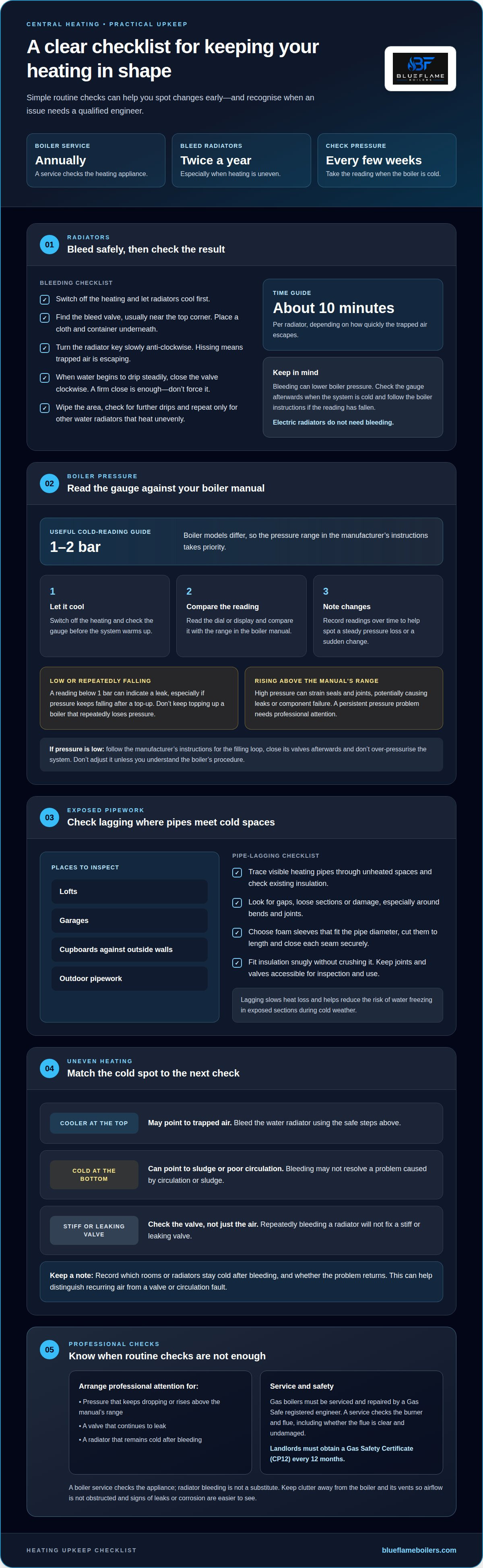
To bleed a water radiator, use a radiator key to open its bleed valve until trapped air stops hissing and water begins to drip. To check central heating pressure, read the boiler gauge when the system is cold, then compare it with the manufacturer’s instructions. A cold reading of 1 to 2 bar is a useful guide, but the boiler manual gives the relevant range for your model.
Air trapped inside a radiator can leave its top cooler than the bottom or make it heat unevenly. Bleeding releases the air so hot water can circulate through the radiator. Before starting, switch off the heating and let the radiators cool. This reduces the chance of hot water escaping onto your hand or floor.
- Find the small bleed valve, usually near the top corner of the radiator. Place an old cloth and a container beneath it to catch drips.
- Fit the radiator key into the valve and turn it slowly anti-clockwise. A hissing sound means air is escaping.
- As soon as water begins to drip steadily, turn the key clockwise to close the valve. Don’t force it; a firm close is enough.
- Wipe the area and check the valve for further drips. Repeat the process for other water radiators that show uneven heating.
Bleeding radiators can be part of routine heating care, particularly if you notice cold spots or bubbling noises. Allow about 10 minutes per radiator, depending on how quickly trapped air escapes. Electric radiators don’t need bleeding because they don’t contain circulating water. If a radiator remains cold after bleeding, the cause may involve circulation or sludge rather than air alone.
Include radiator valves in your seasonal checks. Inspect them before autumn or winter, when you’re preparing the heating for regular use. Look for visible drips and check whether each valve turns without sticking. A stiff or leaking valve is different from trapped air, so repeatedly bleeding the radiator won’t fix it.
Bleeding can lower boiler pressure because releasing air and water changes the amount of water in the system. Afterwards, check the pressure gauge while the system is cold and follow the boiler manufacturer’s instructions if the reading has fallen. Don’t add water or adjust a filling loop unless you understand the boiler’s procedure. If the pressure keeps dropping or a valve continues to leak, arrange professional attention.
An annual boiler service checks the heating appliance; bleeding radiators is not a substitute. Note which rooms or radiators remain cold after bleeding and whether the problem returns. These details can help distinguish recurring air from a valve or circulation fault.
2. Checking boiler pressure
A boiler pressure gauge shows whether enough water is circulating through the heating system. Check it every few weeks when the boiler is cold, and compare the reading with the manufacturer’s instructions. A cold reading between 1 and 2 bar is a useful guide, but your boiler manual takes priority because models can differ.
Find the gauge on the boiler’s front panel or beneath its controls. Some models display pressure digitally, while others use a dial. Take a reading before the heating starts and note it down. Comparing readings over time can help you spot a steady pressure loss or a sudden change.
- Switch the heating off and wait for the boiler to cool before checking the gauge.
- Read the dial or digital display, then compare it with the pressure range in the boiler manual.
- If pressure is low, follow the manufacturer’s instructions for using the filling loop. Close its valves afterwards, and don’t over-pressurise the system.
- Check the gauge again after the system has settled. Record the reading so you can recognise repeated changes.
A reading below 1 bar can indicate a leak, especially if pressure keeps falling after you top up the system. Pressure that rises well above the level in the manual can strain seals and joints, potentially causing leaks or component failure. Don’t keep topping up a boiler that repeatedly loses pressure. A heating engineer can investigate the cause, including leaks and faults within the system.
An annual boiler service checks the appliance and can identify developing problems. Gas boilers must be serviced and repaired by a Gas Safe registered engineer. During a service, the engineer checks the burner and flue, including whether the flue is clear and undamaged. Keep clutter away from the boiler and its vents so airflow isn’t obstructed and signs of leaks or corrosion are easier to see.
Electric boilers have fewer moving parts than gas boilers and need less maintenance, but check pressure if the model has a water-filled heating circuit. Don’t assume every electric boiler uses the same gauge or procedure. The manufacturer’s instructions explain which readings to look for and how to use the controls.
Landlords must obtain a Gas Safety Certificate, also called a CP12, every 12 months. This is a separate legal check from routine pressure monitoring. For a persistent pressure problem or a due service, arrange professional boiler servicing rather than attempting internal repairs or plumbing work yourself.
3. Insulating exposed pipes
Foam insulation, often called pipe lagging, is a practical way to protect exposed heating pipework. It slows heat loss from pipes in places such as lofts, garages and cupboards against outside walls. Insulating system pipes can help your heating operate efficiently and reduce the risk of water freezing in exposed sections during cold weather.
Before fitting insulation, trace the visible heating pipes and note where they pass through unheated spaces. Choose foam sleeves that fit the pipe’s diameter, cut them to length and close each seam securely. Fit the insulation snugly without crushing it. Keep joints and valves accessible so you can inspect them for drips or operate them when needed.
Pay particular attention to pipework outdoors or in a cold loft. Check existing lagging for gaps, loose sections or damage, especially near bends and joints. Replace worn sections and make sure the sleeve edges meet. Insulation won’t repair a leak, so investigate damp patches or water marks rather than covering them up. If persistent leaks or damaged pipework require expert repair, dedicated plumbing services such as Dobrý vodár assist property owners with comprehensive water system maintenance and diagnostics.
A boiler condensate pipe carries acidic wastewater from the boiler to a drain. If an exposed section freezes, the blockage can stop the boiler working. The Heating and Hotwater Industry Council recommends keeping heating constantly on low to help prevent a boiler condensate pipe from freezing. This may be useful during freezing weather, particularly when the pipe runs outside.
If the boiler stops during a cold spell, check whether its display shows an error and look for a frozen condensate pipe outdoors. Don’t try to force the boiler to work by repeatedly resetting it. Avoid using a naked flame or applying sudden, intense heat to pipework. If the pipe remains blocked or you can’t identify the cause, contact a heating engineer.
A thermostat can help you manage the heating setting, but it won’t insulate pipes or clear a blockage. During freezing conditions, keep the system at a steady low setting rather than relying on insulation alone. Repairs to a gas boiler must be carried out by a Gas Safe registered engineer. Leave boiler components and internal pipework to a qualified professional.
After fitting lagging, check exposed pipework during seasonal inspections. Look for loose insulation, leaks at accessible joints and signs that a condensate drain is obstructed. These simple checks can help you spot a developing issue before the boiler stops working when you need heat.
4. Identifying radiator cold spots
Check radiators at the start of the heating season, before winter brings sustained demand. Turn on the heating and give each radiator time to warm, then compare its surface from top to bottom. A cold area towards the bottom can point to sludge or a circulation problem. Note which radiator is affected and where the cold patch appears.
Look for patterns across the home. If one radiator has a cold bottom while the others warm normally, the issue may be local to that radiator. If several radiators heat unevenly, the wider system’s circulation may need attention. Trapped air more often leaves the top of a water radiator cool, so note where the cold area sits before deciding what to do next.
Radiator balancing may be a factor when some rooms heat much faster than others. It adjusts hot water flow through the radiators to help distribute heat more evenly. A common clue is a radiator near the boiler warming quickly while one farther away stays cool. Note the order in which radiators warm instead of repeatedly changing valves at random.
Radiator valves control water flow, and the lockshield valve is usually used for balancing. It may have a cap that needs removing to reach the adjustment. Make small changes only if you understand how your system is set up, and record the original position first. Don’t force a stiff valve or make repeated adjustments without checking the results. Your radiator or boiler manual may provide model-specific guidance.
Dust can also affect electric radiators. Switch one off and let it cool before cleaning dust from its surface and accessible vents. Dust can cause a burning smell when the heater is switched on after sitting unused. Check the power cable for fraying, too: a damaged electrical cord can create a fire risk. Don’t use a radiator with a visibly damaged cord.
If a water radiator remains cold at the bottom or the same cold spots return after routine checks, arrange an assessment by a heating engineer. Sludge can restrict circulation, and repeated valve adjustments won’t remove it. A Gas Safe registered engineer must carry out gas boiler repairs. Share notes about affected radiators, room temperatures and when the problem occurs; these details can help identify whether the issue is local or system-wide.
5. System sludge, flushing and water quality
Sludge forms when corrosion inside a heating system creates dark deposits that collect in the water. These deposits can restrict circulation through radiators and pipework. Cold areas at the bottom of a radiator, slow warming or recurring circulation problems can point to sludge. These signs don’t identify the cause on their own, but they help explain what to report to a heating engineer.
Inhibitor is a chemical added to system water to help limit corrosion and rust. Check its level once every 12 months, as reduced protection can let corrosion develop inside the central heating system. The correct product and method depend on the boiler and system. Follow the manufacturer’s instructions, and have an engineer assess the water if you’re unsure how inhibitor is maintained.
A heating engineer may recommend a power flush if sludge is restricting circulation. The process uses specialist equipment to move water and cleaning solution through the system, helping remove deposits from radiators and pipework. The engineer considers symptoms, system condition and water quality before recommending a flush. It isn’t a routine fix for every unevenly heated radiator, so don’t assume every cold patch needs one.
Run the heating system for 10-15 minutes every few weeks during summer. This keeps components moving and gives you a chance to notice changes before colder weather arrives. Check whether radiators warm evenly and listen for unusual noises. If the boiler struggles to operate or a familiar radiator stays cold, note the symptoms rather than repeatedly resetting the system. Similarly, for property owners overseeing year-round climate systems in warmer regions, technicians such as MountainKlima advise routine checks to ensure heating and cooling units remain fully operational ahead of seasonal changes.
Before leaving home during freezing weather, don’t switch the central heating off completely. Maintaining a low level of heat can help protect pipes and the heating system while you’re away. Use the thermostat’s frost or low-temperature setting if your system has one, and follow the manufacturer’s instructions. A setting that stops rooms becoming very cold can reduce the risk of frozen pipework.
If your system has a magnetic filter, it should be cleaned annually during a boiler service. The filter collects magnetic debris from circulating water, but it doesn’t replace inhibitor checks or remove all system sludge. Keep a record of service findings, inhibitor checks and any power flush. That history can help an engineer distinguish recurring water-quality issues from a separate boiler or circulation fault.
Blueflame Boilers: Gas Boiler Installation
Blueflame Boilers Ltd can help when routine checks uncover a fault, recurring pressure loss or heating that no longer warms your home evenly. A boiler service assesses the appliance, while boiler repairs address faults that need attention. If an older boiler keeps causing problems, gas boiler installation may be a practical next step to consider.
For advice on the right next step for your heating system, contact Blueflame Boilers Ltd or visit blueflameboilers.com.
Make your next heating check count
Use these central heating maintenance tips to start a simple record, not as a one-off checklist. Note recurring faults, unusual changes and which rooms feel different. That pattern can help a heating professional understand what’s happening and focus on the right areas. It also gives you a clearer basis for deciding whether your next step is routine care, a repair or a wider system change.
Blueflame Boilers Ltd offers boiler servicing, boiler repairs and emergency callouts when a heating problem needs professional attention. If an older boiler continues to cause trouble, gas boiler installation may be worth discussing as a longer-term option. The right approach depends on the appliance’s condition and your home’s needs, so start with the issue you’ve noticed and the outcome you’re looking for.
A little attention now can make the next heating season easier to manage. Take the next step when you’re ready.
Frequently Asked Questions
Does an older boiler need more maintenance?
An older boiler may need closer monitoring, but its condition matters more than its age alone. Useful central heating maintenance tips for an ageing appliance include keeping a record of past repairs and noting changes in how it operates. If the same fault returns, share that history with a heating engineer. It can help them assess whether a repair is suitable or the boiler’s overall condition calls for a different solution.
Need Help Looking After Your Boiler?
Blueflame Boilers Ltd provides boiler servicing, boiler repairs, emergency callouts and gas boiler installation. If you need help with a boiler fault or routine servicing, contact the team. Its service area includes Epsom, Ashtead, Leatherhead, Oxshot, Cobham, Weybridge, Ewell, Worcester Park, Cheam, Sutton, Carshalton, Banstead, Reigate, Tadworth, Woking, Bookham, Effingham, Horsley, Ripley and Kingswood in Surrey.
What is done in a boiler service?
A boiler service involves inspecting key parts of the appliance, including its burner and flue. The engineer checks whether the flue is clear and undamaged so combustion gases can leave the home. Keep the service record with your boiler paperwork and note any recommendations made during the visit. This gives you a clear reference for future maintenance or when discussing a fault with an engineer.
When do I need to phone for a heating engineer?
Arrange professional help if the boiler makes unusual noises, repeatedly loses pressure, heats intermittently, leaks or displays an error code. Note when the issue occurs and any message shown on the display. A visible orange or yellow flame is also a reason to call a Gas Safe registered engineer. Don’t remove the boiler casing or attempt internal repairs yourself, even if the appliance still appears to work.
What routine central heating maintenance can homeowners do safely in the UK?
Homeowners can check radiator warmth, look for visible drips, keep the area around the boiler clear and inspect exposed pipe insulation. Among practical central heating maintenance tips, keeping a note of new noises, cold rooms or pressure changes can help identify patterns. Follow the boiler manual when using its controls, and leave servicing, repairs and work inside the appliance to a qualified professional.
How often should a boiler and central heating system be serviced in the UK?
Arrange a boiler service annually, as manufacturers and engineers commonly recommend yearly servicing for central heating. A landlord’s Gas Safety Certificate, also called a CP12, is required every 12 months. Keep the service record and certificate with property documents, so dates and findings are easy to locate. A CP12 is a gas safety check, not a substitute for noticing new system problems between visits.
What checks are included in a Gas Safe boiler service?
During a service, a Gas Safe registered engineer checks the boiler’s burner and flue, including whether the flue is clear and undamaged. The engineer assesses the appliance and records any faults or work that needs attention. Ask for the service record and keep it with the boiler manual. This makes it easier to compare future findings and understand which issues have already been addressed.
How can you balance radiators and improve heating efficiency?
Balancing radiators involves adjusting water flow so heat reaches rooms more evenly. Make small changes to the lockshield valves and note which radiators warm first, then compare the results. Avoid changing several valves at once, as that makes it harder to identify what helped. If adjustments don’t improve the pattern, or a valve is stiff or leaking, have a heating engineer assess the system.


