
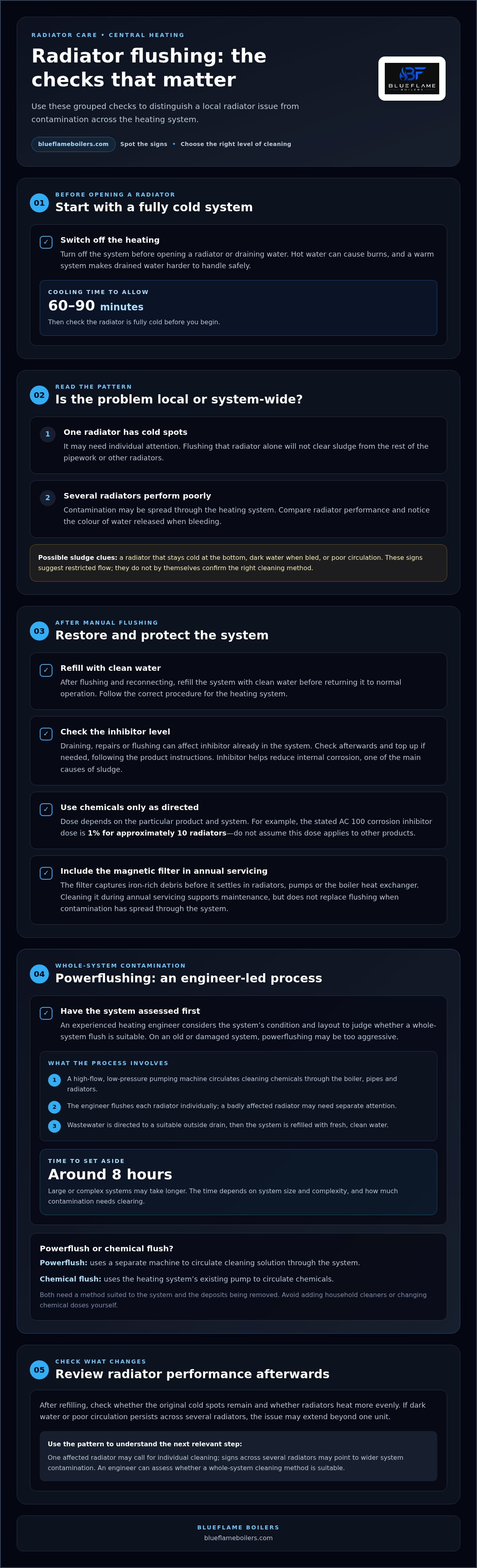
Before manually flushing a radiator, switch off the heating and let it cool fully; allow 60-90 minutes for it to cool. Effective central heating sludge removal starts with spotting the signs of poor circulation, rather than assuming every cold radiator needs the same fix.
A radiator that stays cold at the bottom, or releases dark water when bled, may have sludge restricting the flow. Powerflushing treats the whole heating system, so it’s sensible to have an engineer assess whether it’s suitable rather than tackle it casually.
Here, you’ll learn how to recognise sludge and scale, when flushing may help, and why powerflushing is best left to an engineer. We’ll also explain how deposits can affect your boiler, helping you decide what your system may need next.
Key Takeaways
- After flushing, refill the system with clean water and check whether inhibitor needs topping up to help limit further corrosion.
- A single-radiator flush can address a local problem, but it won’t clear contamination throughout the rest of the heating system.
- Powerflushing uses specialist equipment and treats radiators individually, so it’s a job for an experienced heating engineer.
- Sludge and scale can restrict water flow and affect the boiler; understanding where deposits collect helps explain recurring heating problems.
- Compare radiator performance and the colour of water released when bleeding to spot signs that your system may need attention.
Do I need to turn off the heating system before flushing?
Yes. Before manually flushing a radiator, switch off the heating system and let it become fully cold; allow 60-90 minutes for a radiator to cool. For UK homeowners, the steps here describe maintenance practice, not a specific legal requirement. A magnetic filter should be cleaned during annual servicing.
- Switch off the heating and let it cool. Turn off the system before opening a radiator or draining water. Waiting 60-90 minutes helps the radiator cool, but check it is fully cold before you begin. Hot water can cause burns, and working on a warm system makes it harder to handle drained water safely.
- Decide whether the problem is local or system-wide. If one radiator has cold spots, it may need individual attention. Manually flushing that radiator won’t clean sludge from the rest of the pipework or other radiators. If several radiators perform poorly, contamination may be spread through the heating system.
- Use chemicals only as directed. A central heating inhibitor helps reduce internal corrosion, which is one of the main causes of sludge. Follow the instructions for the particular product and system. For example, the stated AC 100 corrosion inhibitor dose is 1% for approximately 10 radiators; don’t assume that dose applies to other products.
- Refill with clean water after flushing. Once the system has been flushed and reconnected, it needs clean water before returning to normal operation. Flushing removes contaminated water, so follow the correct procedure for the heating system rather than leaving it partly drained.
- Check the inhibitor level after the work. Draining, repairing or flushing can affect the inhibitor already in the system. Check the level afterwards and top it up if needed, following the product instructions. This helps reduce corrosion, one of the conditions that contributes to sludge build-up.
- Clean the magnetic filter during annual servicing. A magnetic filter captures iron-rich debris before it settles in radiators, pumps or the boiler heat exchanger. Cleaning it during annual servicing removes the collected debris. This supports ongoing maintenance, but doesn’t replace flushing when contamination has spread through the system.
- Keep an eye on what happens after refilling. Check whether the original cold spots remain and whether radiators heat more evenly. If dark water or poor circulation persists across several radiators, the issue may extend beyond one unit. This helps determine whether individual radiator cleaning or wider system cleaning is the relevant next step.
Why Powerflushing is best left to an engineer
A powerflush treats contamination across the heating system, not just one radiator. Its equipment, chemicals and sequence require careful handling, so have an experienced heating engineer carry out the work.
- Have an engineer assess the system first. A powerflush uses a high-flow, low-pressure pumping machine, so the engineer needs to consider the system’s condition and layout. This helps establish whether a whole-system flush is suitable, rather than treating one radiator as the answer to wider contamination.
- Understand what the equipment does. The machine circulates cleaning chemicals through the boiler, pipes and radiators to loosen rust, corrosion, sludge and other debris. A chemical flush is different: it uses the existing pump to circulate chemicals, rather than a separate powerflushing machine.
Run the Powerflush with cleaning chemicals
Ask the engineer to explain the three-step chemical process before work begins. During a Powerflush, the machine moves cleaning solution through the system, and each radiator is flushed individually. Avoid adding household cleaners or changing chemical doses yourself; the engineer needs to match the treatment to the system and the deposits being removed.
As debris clears, the engineer can assess the flush water and whether a badly affected radiator needs separate attention. Contamination may not shift evenly through every part of the circuit.
- Let the engineer flush each radiator in turn. Individual flushing targets deposits that remain in a particular radiator, rather than relying on a single pass through the whole circuit. A badly affected radiator may need separate flushing during the process. Cleaning one radiator alone won’t clear sludge elsewhere in the system.
Allow time for the Powerflush
Set aside around 8 hours for a central heating Powerflush. Large or complex heating systems may take longer, because the engineer must work through each radiator and the connected pipework. Don’t treat the expected duration as a reason to rush the process or skip a radiator.
Plan around the work and allow the engineer to complete the full sequence. The time required depends on the system’s size and complexity, as well as how much contamination needs clearing.
- Ensure wastewater is removed and the system refilled. Powerflush wastewater is directed to a suitable outside drain, then replaced with fresh, clean water. An engineer manages the sequence and equipment, helping avoid incomplete cleaning or leaving contaminated water circulating. A clear explanation helps you understand how the process applies to your system.
Potential effects on boiler efficiency and breakdowns
Sludge and corrosion debris can restrict water flow through radiators, pipework and the boiler. On an old or damaged system, a powerflush may be too aggressive. An engineer’s assessment helps determine a suitable cleaning method.
Assess possible effects on boiler efficiency
Check whether restricted circulation could be affecting heat delivery. Sludge can collect in radiators and pipework, making it harder for hot water to move around the system. If the boiler has to operate with restricted flow, heating may become less effective. A flush may remove deposits, but it doesn’t guarantee improved efficiency.
Compare how quickly rooms warm before and after the work. Note whether radiators heat more evenly, too. These observations can help distinguish improved circulation from a boiler fault that still needs attention.
- Watch for debris moving through the system. A powerflush loosens rust, corrosion and sludge so they can be carried out with the wastewater. This can help when deposits obstruct circulation, but material may move across several parts of the circuit before removal. An engineer manages the process and checks how the system responds.
Consider risks to old or damaged systems
Arrange an assessment before cleaning an old system or one with damaged components. The key is to choose a treatment suited to the system’s condition. A chemical flush may suit lighter contamination or a system where a powerflush could be too aggressive.
Tell the engineer about known leaks, unreliable radiators or recurring boiler faults. This information helps inform whether cleaning, further repair or replacement of a badly blocked or very old radiator is appropriate.
- Separate circulation problems from boiler faults. Cold spots on radiators can point to restricted flow, while repeated boiler breakdowns need proper diagnosis. Sludge is one possible cause, not proof that every fault comes from contamination. Record which radiators struggle and whether the boiler’s behaviour changes when heating demand starts.
- Look for a clear change after cleaning. Once the heating system is running again, note whether the same rooms remain cold or the boiler still struggles to heat the property. Persistent symptoms may indicate remaining deposits, a separate component fault or a radiator that needs replacement. These observations give an engineer useful information for the next diagnostic step.
- Keep circulation in view during future servicing. An annual boiler service can help identify poor circulation and early signs of contamination. Mention system behaviour, not just whether the boiler fires. Changes in radiator warmth, recurring cold spots and continued heating problems can all help flag an issue before it becomes a more disruptive breakdown.
Removing stubborn magnetite and scale deposits
Stubborn deposits need a method suited to where they have collected. Magnetite is black iron oxide formed through internal corrosion; sludge can also contain rust, debris and limescale residue.
- Identify whether the problem affects one radiator or the whole system. If one radiator performs poorly, individual cleaning may help. If several radiators have restricted flow, contamination could be spread through the pipework. This distinction matters because flushing one radiator won’t remove deposits elsewhere in the heating system.
- Choose a cleaning method based on the deposits and system condition. A chemical flush may suit lighter sludge contamination, or a system where powerflushing could be too aggressive. Stubborn deposits across multiple radiators call for a broader assessment. A heating engineer can consider the system’s condition and whether individual cleaning or a wider flush is appropriate.
- For an individual radiator, isolate it before removal. Turn off the heating and let the radiator become fully cold. Close both valves, bleed the radiator, then disconnect it from its two connecting pipes. Keep a suitable container and cloths ready for water left inside; don’t force a valve that won’t turn freely.
- Record each valve setting before disconnecting the radiator. Note the position of both valves so you can restore their original settings when reconnecting the radiator. Different settings can affect water flow through that radiator. If you’re unsure how to isolate or reconnect it, stop before undoing the pipe connections.
- Flush the radiator until the outlet water runs clear. Use water to wash out loose magnetite, rust and other debris. Continue until the water leaving the radiator is clear and free from visible sludge. If it remains heavily blocked or water flow stays poor, repeated rinsing may not clear the deposits.
- Reconnect the radiator and release trapped air. Return the valves to their recorded positions, reconnect the pipes and open the bleed valve to release trapped air. Check the connections for leaks as the radiator returns to use. If cold spots remain, the blockage may extend beyond that radiator, or the radiator may be too badly blocked to clean effectively.
- Consider replacement for a very old or badly blocked radiator. Repeated cleaning may not be practical if deposits remain stubborn. A heating engineer can assess whether cleaning is suitable or replacement is the better option. The decision depends on the radiator’s condition and whether contamination affects the rest of the system.
Signs that a central heating system needs cleaning
Look for symptoms across the radiators rather than judging the whole system from one room. Cold areas, slow heating and discoloured water can suggest restricted circulation; a heating engineer can assess whether sludge is the cause.
- Compare how each radiator heats. Turn on the heating and note which radiators warm slowly or stay partly cold. A radiator that’s hot at the top but cold at the bottom may have deposits settled below. If several radiators show this pattern, central heating sludge removal may need to address contamination beyond one radiator.
- Notice whether rooms take longer to warm. Compare familiar rooms during the same heating cycle. If one radiator heats normally while another remains cool, the problem may be local. If several rooms warm unevenly, restricted circulation through shared pipework could be involved. Record which rooms feel different and when symptoms occur.
- Check the water released when bleeding a radiator. Dark brown or black water can indicate sludge and internal contamination. Consider the colour alongside radiator temperatures, rather than treating it as the only clue. Don’t bleed a radiator just to inspect its water if you’re unsure how to do so safely.
- Record which radiators show symptoms. Write down the room, the radiator’s cold area and whether the problem returns during later heating cycles. For example, note if two upstairs radiators stay cool while others heat normally. This record can help show whether central heating sludge removal across the system is worth assessing.
- Arrange an assessment when symptoms repeat. A heating engineer may look for sludge through visual inspection, radiator temperature checks or a water sample. Temperature differences reveal uneven heating, whilst a sample can show discoloured water. Together, these checks can distinguish contamination from a fault that may need boiler repair.
- Use annual servicing to spot changes. A boiler service can help identify poor circulation and early signs of contamination. Mention recurring cold areas or dark water during the appointment. A service assesses the boiler and system behaviour, but doesn’t automatically mean the whole system needs flushing.
- Let system condition guide cleaning frequency. Cleaning frequency can depend on local water quality and the condition of the heating system. Treat recurring cold spots or dark water as reasons to seek assessment; a system heating evenly may not show the same need.
Blueflame Boilers: Gas Boiler Installation
Blueflame Boilers Ltd can help when boiler problems continue after heating-system contamination has been considered. If your boiler is breaking down or not heating your home properly, Boiler Repair can address faults, while Boiler Servicing helps assess its condition and operation.
If your boiler needs replacing, Gas Boiler Installation may be the appropriate next step. Emergency Callouts are available for urgent boiler problems. The right service depends on what’s happening: recurring faults, poor performance and a boiler nearing replacement call for different responses.
Contact Blueflame Boilers Ltd to discuss your boiler or heating concerns and the next practical step.
Choose the right next step for your heating
Use the symptoms you’ve noticed to decide what needs attention next. If uneven heating or recurring boiler trouble continues, a professional assessment can help establish whether central heating sludge removal is relevant or whether the boiler needs separate attention. Cleaning the system and repairing a faulty boiler address different problems.
Blueflame Boilers Ltd offers Boiler Repair for faults, Emergency Callouts for urgent boiler problems, and Gas Boiler Installation when replacing a boiler is the right way forward. Share what you’ve observed, such as rooms that remain cold or a boiler that keeps developing faults. Clear details help keep the conversation practical and focused on your heating needs.
Take the next step at a pace that suits you. A straightforward discussion can help you understand which option fits your situation.
Contact Blueflame Boilers Ltd about boiler repairs
With the right diagnosis, you can move towards a warmer, more dependable home.
Frequently Asked Questions
How much does a Powerflush cost?
The cost depends on your heating system and the work needed, so it’s assessed for each property. Factors include the system’s size and layout, how widespread the deposits are, and whether any radiators need separate attention. Request a free, no-obligation quote for a price based on your situation. If you’re in Epsom or nearby areas such as Ashtead, Leatherhead, Oxshot, Cobham or Weybridge, describe the symptoms and how many radiators seem affected.
What Is Central Heating Sludge?
Central heating sludge is a mixture of material that builds up inside the system, including rust, debris, limescale residue and magnetite. Magnetite is black iron oxide created as metal corrodes internally. Dark, dirty water from a radiator is a practical clue, though one observation alone doesn’t establish how far contamination has spread. Deposits can settle in radiators and pipework, disrupting water flow.
What’s the difference between a Powerflush and a chemical flush?
A powerflush circulates cleaning chemicals with a specialist pumping machine, while a chemical flush uses the heating system’s existing pump. The choice depends on the level and location of contamination and the system’s condition. Lighter contamination, for example, may suit a chemical flush, while deposits affecting several radiators may call for a broader approach. An engineer can assess the system before selecting a method.
How can I check if I need a Powerflush?
Look for a pattern rather than relying on one radiator. Note which rooms heat slowly, whether several radiators have uneven warmth, and whether symptoms return after bleeding. A heating engineer can combine those observations with temperature checks or a water sample to assess contamination. If only one radiator is affected, the cause may be local rather than a system-wide sludge problem.
How does a Powerflush help?
A powerflush is designed to remove sludge, rust and other debris circulating or settled inside a central heating system. Clearing deposits may help water move more freely through the circuit, addressing problems linked to restricted circulation. It won’t repair every boiler fault or make a badly blocked radiator serviceable. The system’s condition and the location of the deposits affect whether flushing is appropriate.
How does a Powerflush work?
An engineer connects a specialist machine to the heating circuit and circulates cleaning chemicals through the system. Radiators are flushed individually to help dislodge deposits from different parts of the circuit. The contaminated water is directed to a suitable outside drain, then the system is refilled with clean water. Because the engineer needs to manage the equipment, chemicals and order of work, this isn’t a casual DIY task.
What is sludge in a central heating system and what causes it?
Sludge is accumulated contamination inside the heating circuit, with magnetite forming as metal corrodes internally. Rust and other debris can join that material, while limescale residue may also be present. For example, corrosion inside metal components can create particles that move with the water before settling in radiators or pipework. A central heating inhibitor helps reduce internal corrosion and, in turn, one main source of sludge.
What are the signs that a central heating system has sludge?
Common clues include radiators that stay cold at the bottom, slow or uneven heating, and dark brown or black water released when bleeding. Similar symptoms across several radiators may point to a wider circulation issue. Note which rooms are affected and when the problem occurs. During annual servicing, mention these observations so the engineer can consider them alongside system checks.


