
Choosing the right boiler help starts with safety and the job itself. A Gas Safe boiler installer in Epsom can help with installation and repairs; gas boiler servicing in the UK must be carried out by a Gas Safe registered engineer, and a boiler should be serviced once a year.
An unreliable boiler, a service that’s due or a planned replacement can leave you weighing up what to do next. The right step depends on the issue: a repair may address a fault, while a new installation is an opportunity to plan a heating system around your home.
This guide explains boiler installation, repairs and servicing, how Gas Safe registration works, and which gas engineer services are available in Epsom. It also helps you understand when each type of work may be relevant, so you can make an informed decision about your boiler.
Key Takeaways
- Match the work to the problem: installation, repair and servicing each address different boiler needs.
- Arrange a boiler service once a year, and use a Gas Safe registered engineer for gas boiler servicing.
- Understand what Gas Safe registration means and why it matters when work involves gas appliances.
- Compare boiler types by considering your home’s heating and hot water requirements.
- Explore the gas engineer services available in Epsom, including installation, repairs and servicing.
Boiler installation, repairs and servicing
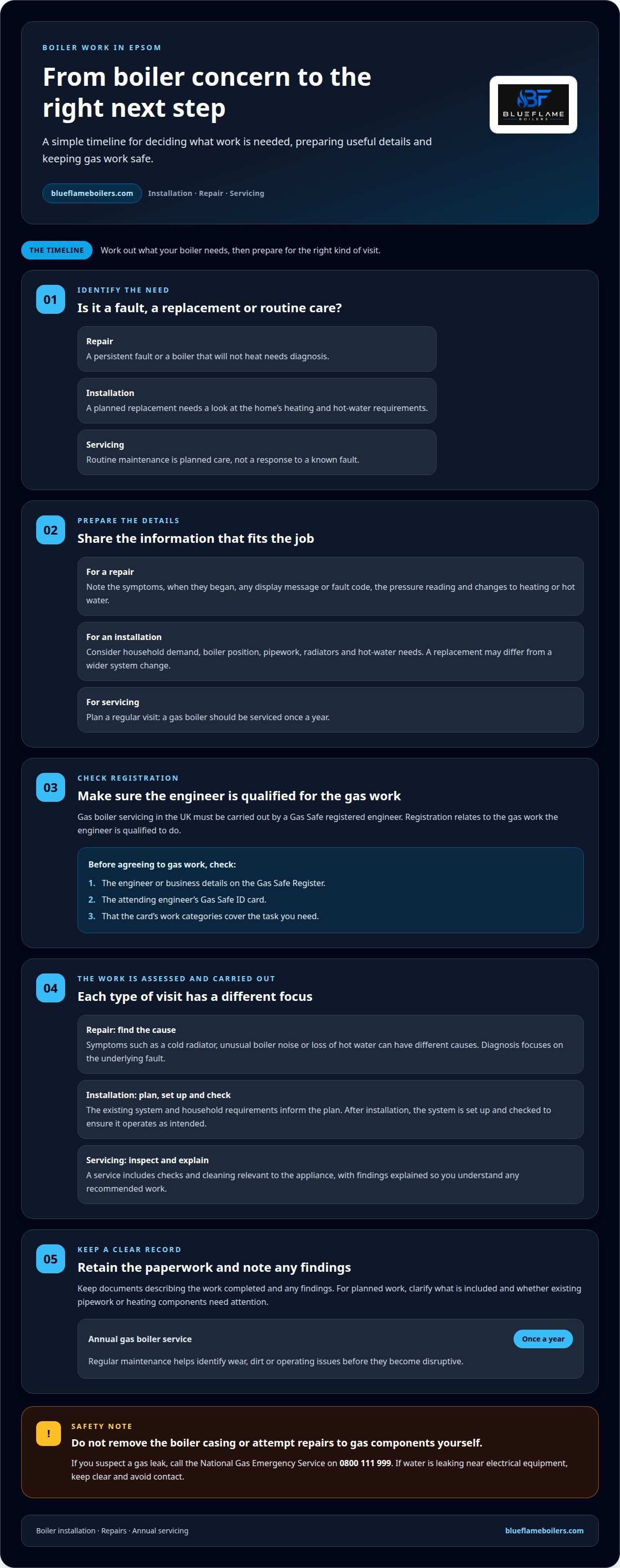
Boiler work in Epsom may mean a planned replacement, a fault repair or routine maintenance, and each starts with different checks. For a repair, note the boiler’s display message, pressure reading and symptoms before arranging an assessment. For installation, consider how your property uses heating and hot water. For servicing, arrange a regular visit to help keep the appliance in working order.
Installation starts with assessing the existing heating system and your household’s requirements. The boiler’s position, pipework, radiators and hot-water demand all affect the work involved. Replacing an appliance may differ from fitting a boiler as part of a wider system change. A clear plan identifies whether connected components need attention. After installation, the system must be set up and checked to ensure it operates as intended.
Boiler repairs focus on finding the cause rather than treating a symptom. A cold radiator, unusual boiler noise or loss of hot water can have different causes. Share when the problem began and whether the display shows a fault code. Avoid removing the boiler casing or attempting repairs to gas components yourself. Gas boiler servicing in the UK must be carried out by a Gas Safe registered engineer.
Plumbing repairs are related, but not every water problem is a boiler fault. A dripping tap, leaking pipe or radiator leak may need plumbing attention, while a boiler that will not heat water needs its own diagnosis. If water is leaking near electrical equipment, keep clear and take appropriate steps to avoid contact. For a suspected gas leak, call the National Gas Emergency Service on 0800 111 999.
Routine servicing helps identify wear, dirt or operating issues before they become disruptive. A gas boiler should be serviced once a year. A service includes checks and cleaning relevant to the appliance, with findings explained so you understand any recommended work. It differs from a repair: servicing is planned maintenance, while a repair responds to a known fault.
- Before a repair: record symptoms, display messages and changes in heating or hot water.
- Before installation: consider household demand, boiler position and the wider heating system.
- For maintenance: schedule the annual service with a Gas Safe registered engineer.
Knowing the difference helps you choose the next step. A persistent fault needs diagnosis, a replacement needs system planning, and routine servicing gives the appliance a regular inspection. This distinction helps homeowners in Epsom describe the issue and arrange the right type of boiler work.
Published cost figures can help with budgeting, although the final amount depends on the work required.
Checkatrade reports an average rating of 9 out of 10 for gas boiler servicing and repairs in Epsom, based on a sample of 3119 customer reviews. Blueflame Boilers Ltd advises that a boiler should be serviced regularly to help avoid problems in cold weather, making regular maintenance a useful part of planning for the colder season.
Gas Safe registration
The Gas Safe Register is the official gas registration body for the United Kingdom, the Isle of Man and Guernsey. It replaced CORGI registration. For Epsom homeowners, the key point is that registration relates to the gas work an engineer is qualified to carry out, not simply general plumbing or heating experience.
Gas boiler servicing in the UK must be carried out by a Gas Safe registered engineer. Registration matters because gas appliances need work performed by someone with the appropriate competence for that appliance and task. A person’s experience with radiators, for example, does not by itself establish that they can safely work on a gas boiler.
What risks come with using an unregistered boiler installer? An unregistered installer may not have the relevant competence for gas work, so you cannot be assured that the boiler has been installed safely. Incorrect work can also create faults that affect heating, hot water or the appliance’s safe operation.
Check registration before agreeing to gas boiler work. Look up the engineer or business on the Gas Safe Register, then compare the details with the person who attends. Ask to see their Gas Safe ID card and check that its work categories cover the job you need. Boiler installation and repair are different tasks, so the relevant category matters.
- Identify the job: state whether you need a new boiler, a repair or servicing.
- Check the engineer: compare their details with the Gas Safe Register entry.
- Match the work: make sure the card’s listed categories are relevant to the task.
- Keep the paperwork: retain documents describing the work completed and any findings.
Registration alone doesn’t explain what the job involves. Before installation begins, ask what’s included, whether existing pipework or heating components need attention, and what checks will follow completion. For a repair, describe the boiler’s symptoms and any displayed fault message. These details help clarify the work.
Gas Safe registration is distinct from a general trade description. A heating engineer may work on radiators or other parts of a central heating system, while gas appliance work requires the relevant registration. If your Epsom project includes both, clarify which tasks involve the boiler and which concern other system components.
For planned boiler work, a straightforward next step is to make an enquiry about your gas work. Sharing whether you need installation, repair or servicing helps describe the job clearly.
Gas engineer services in Epsom
A gas engineer can install, maintain and repair gas appliances, including boilers, cookers and heating systems. In Epsom, the right service depends on the appliance and the work required. A boiler that has stopped heating needs fault diagnosis; a planned replacement involves assessing the existing heating arrangement. A cooker issue is a different job, even though it also involves a gas appliance.
Local service areas matter when arranging a visit. Give the property’s full address and postcode in Epsom, along with a clear description of the job. These details establish where the work is needed and whether it concerns a boiler, cooker or heating system. Nearby addresses can have different access and travel requirements, so location is part of planning the appointment, not just a label for the area.
Boiler servicing is planned maintenance, rather than a response to a particular fault. A gas boiler should be serviced once a year, and a standard gas boiler service in Epsom usually takes around 1 hour. During the visit, the engineer assesses the appliance and explains any issues found. Keeping a note of the service date and the boiler’s make and model helps you organise future maintenance.
Before an appointment, note any changes in performance. For example, record whether the heating works but the hot water doesn’t, or whether the boiler displays a fault message. This gives the engineer a useful starting point for diagnosis. For a cooker or another gas appliance, describe its make, model and symptoms. Specific details help distinguish an appliance fault from an issue elsewhere in the heating system.
Gas engineer work can involve more than the boiler itself. A heating system has connected components, so a radiator problem may need a different assessment from a boiler fault. Be clear about which rooms are affected and whether the issue concerns heating, hot water or both. This practical description helps identify the relevant service before work begins.
- For servicing: note the last service date and boiler model.
- For a repair: record symptoms and any displayed fault message.
- For a local appointment: provide the full Epsom address and describe the appliance.
Whether you need maintenance or help with a fault, a clear description makes the first step more useful. Identify the appliance, explain what has changed and share the property location. Keep the annual boiler service in your calendar. For a specific fault, describe its effect on heating or hot water so the job is clear from the outset.
Boiler installation
Boiler installation starts with your home’s heating and hot-water requirements, not just the appliance. The number and use of radiators, existing pipework, available space and household routines all shape the plan. For example, a home with several bathrooms may have different hot-water demands from one with a single bathroom. Suitable system design considers how heat reaches each room.
Replacing an existing boiler can be more straightforward than changing the system layout. Moving the appliance, altering pipework or adding radiators can increase the work involved. Tell the installer about cold rooms, unreliable hot water and any planned changes to the property. These details help distinguish a like-for-like replacement from a broader central heating project.
In England, ask which building regulations and compliance documents apply to the installation. Request paperwork describing the completed work, commissioning checks and any relevant Building Regulations notification or certificate. Gas work should be carried out by an appropriately qualified Gas Safe registered engineer. Keep the documents with the boiler instructions and future service records.
Installation time depends on the scope of work and the existing system’s condition. A direct replacement differs from a project involving a new boiler position, pipework changes or a full heating redesign, so there is no single duration for every home. Before work starts, agree on the scope and practical arrangements for access, heating and hot water.
Preparation can help the installation run more smoothly. Clear access to the boiler, its controls and the route to the work area. Move furniture or stored items away from the appliance and nearby radiators. Note any rooms that heat poorly and where the main controls are. If you have the boiler manual or details of previous work, keep them available.
- Describe the property: explain the current boiler position, heating layout and hot-water needs.
- Clarify the scope: distinguish a replacement from pipework changes or a wider system redesign.
- Prepare access: clear the work area and note any heating issues to discuss.
- Keep records: retain installation, commissioning and compliance paperwork with the appliance documents.
After installation, the engineer should explain the boiler controls and demonstrate how to use them. Ask how to adjust the heating schedule and temperature settings, and where to find the appliance instructions. A clear handover helps you use the new system confidently and provides useful information for future maintenance.
When choosing a Gas Safe boiler installer in Epsom, compare the proposed work with your home’s needs. A well-planned installation considers the boiler, pipework and radiators together, rather than treating the appliance as a separate component.
What boiler types and brands do Epsom Gas Safe installers recommend?
There isn’t one boiler type or brand that suits every Epsom home. A useful recommendation starts with the property’s heating layout, hot-water use and available space. For example, a compact flat with one bathroom may have different needs from a larger home with several bathrooms. The recommendation should explain why a particular boiler and model suit those requirements.
A combi boiler heats water on demand without a separate hot-water cylinder. It can suit homes where space is limited and household demand is straightforward. However, several taps or showers running at once can place different demands on hot-water delivery. Household routines matter as much as the number of rooms.
A system boiler works with a separate hot-water cylinder, while a regular boiler uses a cylinder and a feed-and-expansion tank. These systems can suit properties that already use stored hot water or have more than one outlet in use. Replacing the existing type may be practical, but changing systems means considering the cylinder, tanks, pipework and available cupboard or loft space.
To compare options, look beyond the manufacturer’s name. Ask how the proposed model suits your hot-water demand, system layout and available installation space. Consider whether everyone in the home can use the controls easily. A clear recommendation should relate the boiler’s type and capacity to real situations, such as using a shower while another tap is running.
Brand choice also depends on the specific model and its suitability for the installation. Blueflame Boilers Ltd offers Worcester Bosch and Vaillant boilers as options to suit customer needs and budget. The recommendation should explain how the model fits the property and existing system, rather than relying on brand familiarity or a feature list.
- Combi: consider it where space and on-demand hot water suit the household.
- System: compare it where a separate cylinder fits the home’s hot-water needs.
- Regular: assess it where the existing arrangement includes a cylinder and tanks.
- Brand and model: weigh suitability for the system above familiarity with the badge.
Before choosing a boiler, note the current appliance type, cylinder or tank arrangement, and any hot-water issues. Share these details during the assessment. They help the installer explain whether a similar replacement or a different system type makes sense for your Epsom property.
Blueflame Boilers: Gas Boiler Installation
Blueflame Boilers Ltd can help with a new gas boiler, a repair or planned servicing. Installation is a practical next step if your current boiler needs replacing or you’re planning changes to your heating system. For a fault, boiler repairs focus on diagnosing the problem, and emergency callouts are available for urgent boiler issues.
Before getting in touch, note what the boiler is doing, any displayed error message, and whether heating or hot water is affected. For an installation enquiry, describe your home’s current system and any changes you’re considering. These details help explain the job and make the conversation more useful.
For help with boiler installation, repairs or servicing in Epsom, contact Blueflame Boilers or visit blueflameboilers.com.
Take the next step towards a heating plan that suits your home
Before arranging work, turn your boiler decision into a short, practical brief. Decide what matters most in daily use: warmth throughout the rooms, hot water that suits your household routine, or controls everyone can use easily. Clear priorities keep the conversation focused on what you want from the finished system.
When you’re ready to discuss the job, explain what you want to change and what you want the finished system to do. A Gas Safe boiler installer in Epsom can discuss the proposed work in relation to your home’s needs. You don’t need to settle every technical detail beforehand; start with the issue or improvement that matters most.
A considered next step can make a complex decision feel more manageable. Start with your priorities, then choose an approach that suits your home.
Here’s to a warmer, more comfortable home.
Frequently Asked Questions
How to find a Gas Safe registered boiler installer in Epsom?
Use the Gas Safe Register to find engineers or businesses serving Epsom, then compare the listed details with your enquiry. The engineer attending should be able to show a Gas Safe ID card. Before arranging work, explain whether you need an installation, repair or service. This helps you identify an engineer whose registered work categories match the job.
Which Gas Safe boiler installers serve Epsom and nearby areas?
Blueflame Boilers Ltd serves Epsom and nearby Surrey areas, including Ewell, Ashtead, Cobham, Tadworth, Weybridge and Reigate. Its gas boiler services include installation, repairs, emergency callouts and servicing. Share your postcode and the type of boiler work you need when making an enquiry. This is a clear starting point for discussing a local job, whether it concerns a new appliance or an existing fault.
How can I check a boiler installer's Gas Safe registration and qualifications?
Check the engineer or business on the Gas Safe Register, then compare the listing with the engineer’s photo ID card when they arrive. Check the work categories on the card and make sure they cover your task, such as boiler installation rather than work on a different gas appliance. For a repair, check that the listed scope applies to boiler work.
What warranties and aftercare do Epsom boiler installers offer?
Warranty coverage and aftercare are set out in the boiler and installation paperwork. Read the documents for the coverage period, exclusions and any servicing conditions, and keep them with your commissioning records. These terms are separate from ongoing maintenance. Blueflame Boilers Ltd offers boiler servicing and repairs for routine maintenance or a later boiler fault. Keep the installation records accessible for future work.


