

What needs doing each year: the gas safety check, the boiler service, or both? For landlords, a gas safety inspection is required every 12 months, according to the Health and Safety Executive. A CP12 certificate in Ashtead records the inspection, while a boiler service is a separate task focused on checking and cleaning the boiler.
It’s easy to treat these as the same appointment, but understanding the difference helps you plan the right work and keep your records up to date. Regular attention also gives an engineer the chance to identify issues with gas appliances and explain what needs attention.
This guide explains how often rented-property gas checks are due, how boiler servicing fits into the schedule, and what a CP12 covers. You’ll also learn how the certificate relates to the landlord gas safety record and what to expect from the inspection, so you can make a clear plan for your Ashtead property.
Key Takeaways
- See how the Gas Safety (Installation and Use) Regulations 1998 require landlords to ensure annual gas safety checks.
- Understand which gas appliances, fittings and flues an inspection can cover, and how the findings are recorded.
- Learn how arranging a check up to two months before the current record expires can help preserve its renewal date, according to the Health and Safety Executive.
- Know why the engineer must be Gas Safe registered to carry out the check and issue the certificate.
- Find out when tenants must receive a copy of the gas safety certificate and how Blueflame Boilers’ CP12 checks can help landlords keep the process on track.
What is a CP12 Certificate?
A CP12 is the familiar name for a landlord’s gas safety inspection certificate. It’s a handy record of the appliances checked and any defects found during the inspection.
Annual gas safety checks
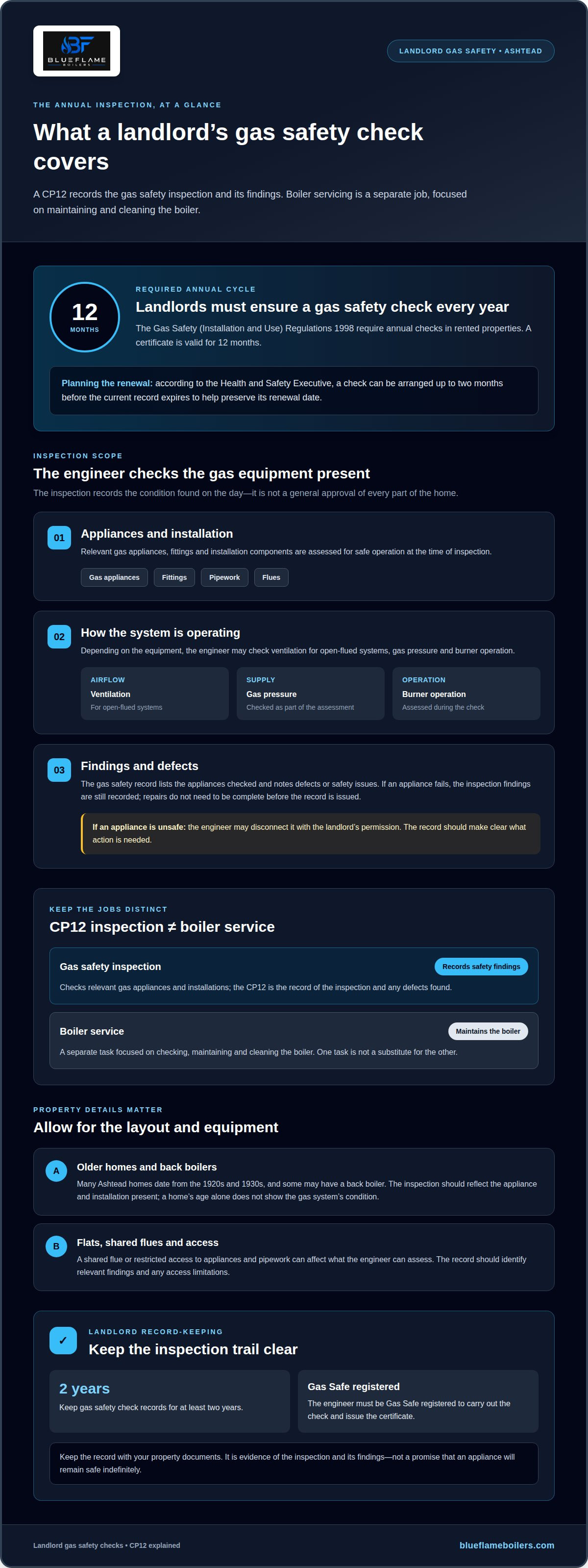
Landlords must obtain a new gas safety inspection certificate, referred to as a CP12, every 12 months, according to the Health and Safety Executive. The Gas Safety (Installation and Use) Regulations 1998 require UK landlords to ensure annual gas safety checks, according to UK legislation. These checks are all about the safety of gas appliances and installations, not just whether a boiler switches on.
The inspection gives you a snapshot of the condition found on the day. An engineer assesses the relevant gas equipment, records the results and flags any defects. A boiler service is a separate job: it focuses on maintaining and cleaning the boiler, while the CP12 records gas safety check results. Keeping these purposes distinct helps landlords plan both tasks, rather than treating one as a substitute for the other.
Landlord checks and CP12 certificates
For a rented property in Ashtead, the certificate relates to the gas safety checks completed at that property. The wording in UK legislation includes: “2.-(1) Subject to paragraph (2), the requirements prescribed(1) for the purposes of section 21A of the Act are the requirements contained in-”. This identifies section 21A of the Housing Act within the stated legislative provision.
Older properties need the same careful attention to the gas equipment present. Many Ashtead homes date from the 1920s and 1930s, and some properties may have a back boiler. The inspection should cover the appliance and its installation, including any flue and pipework that falls within the check. A home’s age alone doesn’t tell you the condition of its gas system.
The inspection findings are just as important as the certificate. The gas safety record lists the appliances checked and any issues identified. If an appliance fails, the record still documents the inspection and defect; it isn’t held back until repairs are complete. Any recorded defect or safety classification makes clear what action is needed. If an appliance is unsafe, the engineer may disconnect it with the landlord’s permission.
Flats can bring a few practical complications, such as shared flues or limited access to appliances and pipework. These features affect how an inspection is carried out and what the engineer can assess at the property. A CP12 for a flat should reflect the checks completed there and clearly record any access issue or finding relevant to the inspection.
What is a Gas Safety Certificate?
A gas safety certificate gives you a written record of checks on gas appliances and installations. It shows what the engineer inspected and flags any defects found, so you know what may need attention.
Gas safety regulations
The Gas Safety (Installation and Use) Regulations 1998 require landlords in the UK to ensure annual gas safety checks. These checks cover relevant appliances and installations in rented properties. The certificate records the checks; it isn’t a general approval of every part of a home.
For an Ashtead landlord, the inspection covers the property’s gas equipment. This can include appliances, flues and pipework, with ventilation checked for open-flued systems. The engineer also checks gas pressure and burner operation. Together, these checks give a picture of the installation’s condition at the time of inspection.
Records and certificate validity
A gas safety certificate is valid for 12 months. The completed record identifies the appliances inspected and notes any defects or safety issues. Landlords should keep gas safety check records for at least two years. Keeping a clear record makes it easier to track previous findings, follow up on faults and plan the next inspection.
If an appliance doesn’t pass an inspection, the record still documents the results. Repairs don’t need to be completed before the inspection record is issued. The defect should be recorded so the landlord can see what needs attention. A CP12 is evidence of the inspection and its findings, not a promise that an appliance will remain safe indefinitely.
In Ashtead, a property’s layout can shape the inspection. In a flat with a shared flue, the engineer may need to assess how the appliance connects to it. Restricted access can also limit what can be inspected. The record should identify the appliances checked and note relevant findings or access limitations.
Homeowners don’t have to obtain a landlord gas safety certificate for a home they occupy themselves. They can still arrange an inspection of gas appliances and installations, such as a boiler, gas fire or cooker. The inspection records findings about the equipment checked; it doesn’t replace repairs or routine boiler servicing.
For a rented home, keep the record with your property documents and use its date to plan the next check. For a homeowner, the appliances present, their condition and any concerns about safe operation can help guide the decision to arrange an inspection. Arrange a landlord gas safety check when your Ashtead rental property is due for its inspection.
How often should gas appliances be inspected and serviced?
For a rented property, arrange the gas safety inspection within the current record’s renewal cycle. Have the property address, appliance details and previous gas safety record ready for the appointment. Also provide access information for appliances, flues and pipework.
Appliances, fittings, flues and pipework
A gas safety inspection covers the property’s gas appliances and installation, including relevant fittings, flues and pipework. The engineer assesses whether each item is operating safely at the time. For an open-flued appliance, the engineer also checks ventilation, gas pressure and burner operation.
The inspection covers each gas appliance in scope, not just the main boiler. A cooker or gas fire, for example, should also be included. Shared flues in flats and restricted access can affect what is accessible, so information about the layout helps the engineer plan the visit. The record should identify the appliances checked and any findings.
Inspection process and record issuance
The engineer checks the appliances and associated fittings, flues and pipework, then records the results. The landlord gas safety record identifies the equipment inspected and notes any defects. If an appliance fails, the completed record is not delayed until repairs are finished; it documents the findings so the landlord can see what needs attention.
Keep the previous record available to show the last inspection date and any outstanding issues. This helps distinguish a recurring fault from a new finding. The Health and Safety Executive says landlords may arrange a gas safety check up to two months before the current record expires while retaining the original renewal date. This can help with scheduling access without shifting the cycle.
A gas safety check and a boiler service have different purposes. The inspection records whether gas appliances are safe at the time; servicing focuses on maintaining the boiler. Arrange each task according to its purpose and the property’s needs, rather than assuming one appointment covers both. A boiler service, for example, does not replace the landlord’s gas safety inspection or its record.
For the appointment, provide access to each gas appliance and relevant areas containing the installation. In a flat with a shared flue, explain the arrangement and any access limits. These details help the engineer complete the checks and record the result clearly, including any appliance or part that could not be inspected.
Gas Safe Registered engineers
Only a Gas Safe registered engineer can issue a gas safety certificate. It’s a record of a safety inspection, not simply a visit to look at a boiler. For an Ashtead rental, the engineer’s findings should cover the gas appliances and installation inspected at the property.
Gas Safe is the UK gas registration body. It replaced CORGI in 2009, so older paperwork may use the previous name. A past CORGI reference doesn’t change what a current inspection needs to establish: which appliances were checked, what the engineer found, and whether any defects need attention.
The engineer checks the gas appliances, fittings, flues and relevant pipework. Checks can include gas pressure, burner operation and ventilation for open-flued systems. For example, if a property has a boiler and gas fire, both should be recorded if they’re included in the check. The landlord gas safety record gives you a written account of the inspection.
Using a Gas Safe registered engineer is essential when a landlord needs a valid certificate. A boiler service alone won’t meet this requirement, as servicing and a gas safety inspection have different aims. The inspection records safety findings; servicing focuses on maintaining and cleaning the boiler. Keeping the jobs separate makes it clear what the engineer has completed.
During a visit, the engineer may find an appliance that’s unsafe to use. In an Ashtead rental, they may disconnect an unsafe gas appliance with the landlord’s permission. The record should state the defect found, giving the landlord a clear starting point for arranging the next steps. The certificate documents the inspection; it doesn’t mean a failed appliance has been repaired.
If a flat has a shared flue or restricted access, the findings should reflect what the engineer could inspect. Access limitations can affect the checks, so arrange access to relevant rooms and appliances before the appointment. Clearing access to a cupboard containing the boiler or meter, for example, helps the engineer assess that equipment.
After the inspection, the landlord should keep the record with the property’s gas safety documents. It identifies the appliances checked and any issues found, making it a useful reference for future inspections and repair decisions. A clear record also helps distinguish an inspection from a separate boiler service or repair visit.
CP12 and landlord gas safety certificate terminology
“CP12”, “gas safety certificate” and “Landlord Gas Safety Record” are familiar names for the record of a landlord’s gas safety inspection. Landlords without a valid certificate could face fines of up to £20,000 for each property, so it’s well worth keeping everything up to date. The record shows which appliances were checked and what the engineer found.
Landlord certificates in Ashtead
For a rented property in Ashtead, the certificate records checks on its gas appliances and installation. Whatever its age, a flat, house or older home still needs the required inspection. The record identifies the appliances checked and notes any defects, giving landlords and tenants a clear picture of the findings.
The terms can sound like different documents, but CP12 is commonly used to refer to the landlord gas safety record. It records the inspection results; it doesn’t guarantee that appliances will remain safe after the check. If an engineer spots a defect, the landlord needs to address it, the certificate itself isn’t a repair.
Who needs a landlord gas safety record
Landlords letting a property with gas appliances need a gas safety record for that property, in Ashtead and across the UK. Tenants aren’t responsible for arranging the landlord’s safety checks, but making rooms and appliances accessible helps the engineer complete the inspection.
Tenants must receive a copy of the certificate within the required timeframe. According to the UK Government, landlords must provide tenants with a copy of the gas safety certificate within 28 days of the inspection. New tenants must receive a copy before they start living in the property. For a property let for less than 28 days at a time, the record should be displayed prominently inside.
Keeping the certificate handy helps everyone understand the inspection outcome. Landlords can keep it with the property’s gas documents and share it with tenants as required. Tenants can check which appliances were inspected and whether the engineer noted a fault. For example, a record listing a boiler and gas fire makes the inspection scope clearer than one without appliance details.
Landlord and tenant responsibilities go hand in hand, but they’re not the same. The landlord arranges the gas safety checks and provides the record; the tenant allows access for the inspection. If access is tricky, written requests and saved correspondence can document attempts to arrange entry. Clear records and communication help keep things running smoothly.
For a let lasting less than 28 days, displaying the record prominently means occupants can easily find the safety information during their stay. In a longer tenancy, providing the copy directly ensures tenants receive the inspection outcome. Either way, the document should reflect the appliances actually checked and the findings recorded by the engineer.
Blueflame Boilers Ltd: Landlords Gas Safety Checks - CP12
Blueflame Boilers Ltd provides Landlords Gas Safety Checks - CP12 for landlords who need a gas safety inspection and certificate for a rental property. The check records the appliances inspected and any issues found, helping you keep the property’s gas safety paperwork in order.
Arrange an inspection as the current record approaches renewal, or when a new inspection is due for a rented property. If the engineer identifies a fault, the recorded findings help clarify the next steps. Blueflame Boilers Ltd also provides boiler repairs when a boiler needs attention.
For a CP12 check in Ashtead, get in touch with Blueflame Boilers Ltd to discuss your property’s inspection.
Make your next property step straightforward
Use the inspection record as a practical starting point for managing the property’s gas equipment. If it identifies a fault, arrange appropriate follow-up work and keep the relevant paperwork together. A clear plan helps you coordinate access, communicate with tenants and organise future property tasks.
For landlords arranging a CP12 certificate in Ashtead, Blueflame Boilers Ltd can carry out Landlords Gas Safety Checks - CP12. If the property also needs other heating work, Blueflame Boilers Ltd offers gas boiler installation, boiler repair and emergency callouts.
Getting the right work organised can make property management feel more manageable. Take the next step when you’re ready.
With a clear record and a sensible plan, you can manage the next steps with confidence.
Frequently Asked Questions
What’s Included in a Gas Safety Inspection?
A gas safety inspection assesses the gas appliances and connected installation at the property. Depending on the system, checks can include flues, pipework, ventilation for open-flued appliances, gas pressure and burner operation. For example, a rented home with a boiler and gas hob should have both included in the inspection scope. The record identifies the items checked and any defects noted.
Do landlords need a new certificate every year?
Yes. Landlords must obtain a new gas safety inspection certificate every 12 months, according to the Health and Safety Executive. Scheduling can be planned around the record’s renewal date. The Health and Safety Executive says a check may be arranged up to two months before the current record expires whilst retaining the original renewal date. This can help landlords coordinate access without moving the established renewal cycle.
Does the tenant have to be present?
The tenant does not need to carry out the inspection, but the engineer needs access to the relevant appliances and areas. The landlord can arrange access with the tenant and explain which rooms need to be available, such as a kitchen containing a gas hob. If access is difficult, written requests and records of attempts can help document the arrangements.
How long does a gas safety check take?
A standard UK gas safety check usually takes 30 to 60 minutes. The time depends on what needs inspecting and the property layout. A flat with a boiler and hob, for instance, requires access to both appliances and their relevant connections. Shared flues or restricted access may affect the inspection process, so allowing time for access arrangements can help the appointment run smoothly.
What is a CP12 gas safety certificate?
A CP12 is the commonly used name for a landlord’s gas safety record. It documents the inspection results, appliances checked and defects found. The term comes from “CORGI Proforma 12”, a name rooted in CORGI’s former role in UK gas safety before the change to Gas Safe in 2009. For a CP12 certificate in Ashtead, the document relates to the specific rental property inspected.
Who is legally required to obtain a CP12 certificate in Ashtead?
The landlord is responsible for arranging gas safety checks and keeping a valid record for a rented property with gas appliances. This applies to rental homes in Ashtead, including flats and older houses. Tenants are not responsible for organising the landlord’s inspection, but the engineer needs access to assess the appliances. The landlord must also provide tenants with a copy of the certificate.
How can I find a Gas Safe registered engineer in Ashtead?
Choose a Gas Safe registered engineer to carry out the inspection and issue the gas safety record. Blueflame Boilers Ltd is Gas Safe registered and provides Landlords Gas Safety Checks - CP12. When arranging the visit, give the property address and explain which gas appliances are present, including any shared-flue arrangement. This helps set out the inspection scope and plan access to the relevant rooms.
What does a CP12 inspection check?
A CP12 inspection checks whether the gas appliances and installations included in the visit are operating within acceptable parameters at the time. The engineer assesses relevant fittings, flues and pipework, and may check ventilation, gas pressure and burner operation. The inspection is not the same as boiler servicing: its record captures safety findings, while servicing focuses on maintaining the boiler. Any defect identified should appear in the record.


