

What if those stubbornly lukewarm radiators and rattling pipes aren't warning you of a total boiler breakdown, but simply a tired circulation unit crying out for help? When winter temperatures bite across Surrey, the dread of unexpected emergency callouts and freezing rooms is enough to leave anyone unsettled. If you're trying to work out your central heating pump replacement cost, you're certainly not alone. Weighing up mysterious mechanical knocks against certified Gas Safe labour shouldn't leave you guessing in the cold.
You deserve clear answers, dependable comfort, and total peace of mind before inviting an engineer into your home. Discover the key factors shaping central heating pump replacement cost to restore reliable, energy-efficient home warmth without nasty surprises. We'll show you how to spot telltale failure symptoms accurately, match hydraulic requirements properly, and bring whisper-quiet heat back to every radiator with zero fuss.
Key Takeaways
- Discover the hydraulic factors, property layouts, and labour requirements that dictate your total central heating pump replacement cost.
- Learn how to accurately spot genuine pump failure symptoms before booking a trade visit, saving you time and worry.
- Understand the vital step-by-step replacement process that safeguards your home against leaks, airlocks, and electrical damage.
- Uncover the hidden operational risks of DIY shortcuts compared to the lasting protection of certified Gas Safe expertise.
- Find out how teaming up with dependable Surrey heating specialists keeps your system running whisper-quiet for years to come.
Understanding Central Heating Pump Replacement Cost Factors in Surrey
Your central heating pump acts as the beating heart of your home's warmth, pushing hot water straight from the boiler through pipework to each radiator. When this component begins to falter, circulation drops, leaving rooms chilly and energy bills creeping up. Pinpointing your overall central heating pump replacement cost depends on pump design, system volume, and the precise mechanical labour required for safe fitting.
Many online guides suggest that every pump replacement takes just a couple of hours. In reality, the setup of your heating system heavily dictates the scope of the project. Tackling circulation issues promptly keeps the rest of your system healthy, avoiding secondary strain on the heat exchanger and burner controls. If your system leaves you freezing, professional boiler repairs protect you against full winter breakdowns.
Standalone External Pumps vs Internal Boiler Pumps
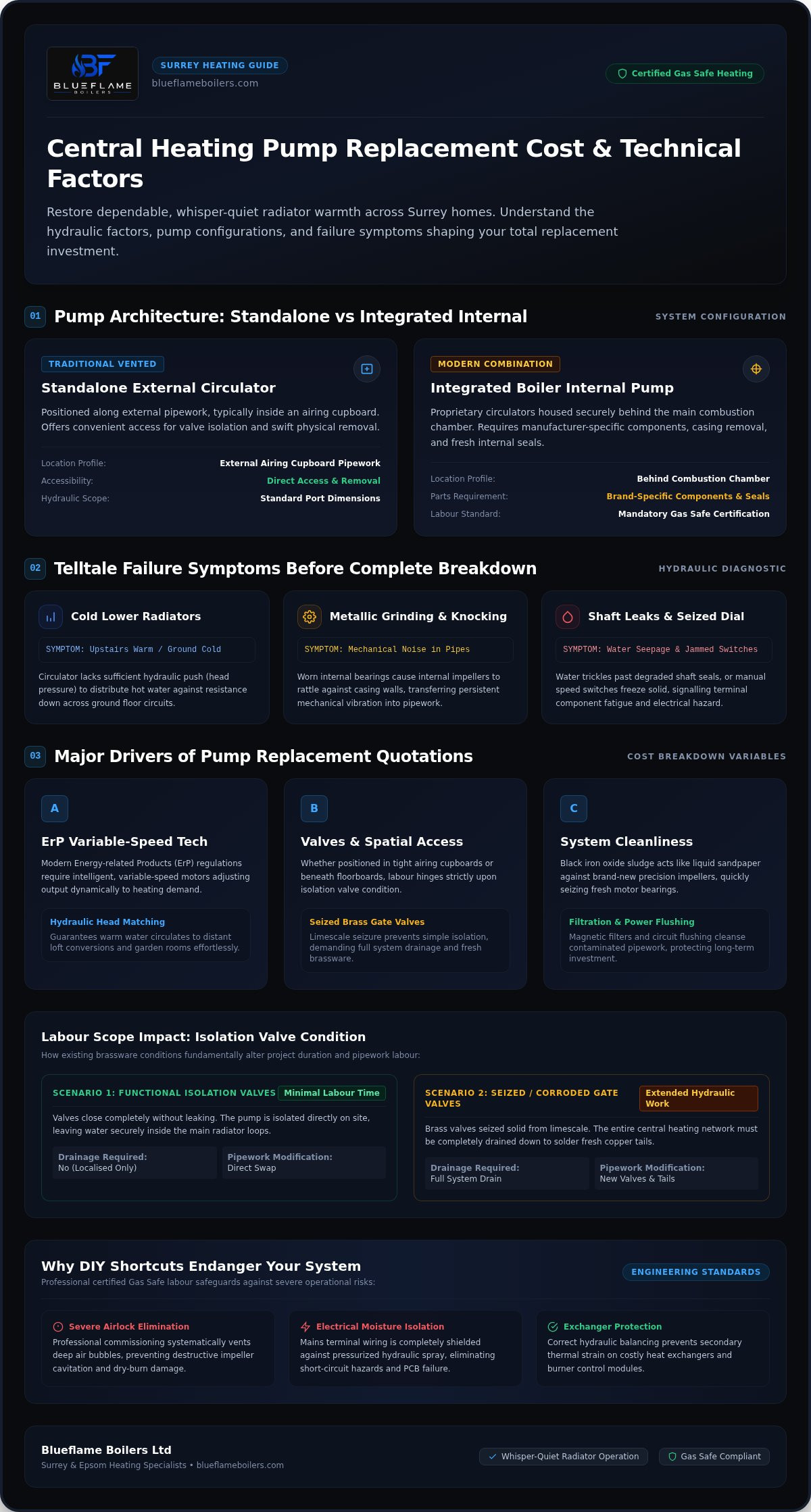
On traditional vented setups, a standalone circulator pump sits along external pipework, usually in an airing cupboard. These offer straightforward access, making physical removal and valve isolation relatively quick. Modern combination boilers, however, house proprietary internal pumps tucked behind the main combustion chamber. Replacing an integrated unit demands brand-specific parts, careful casing removal, and fresh internal seals fitted by a certified Gas Safe engineer.
Key Signs Your Circulator Pump Needs Immediate Replacement
Pumps rarely fail without warning. Spotting hydraulic trouble early helps you budget accurately and prevents unexpected emergency callouts:
- Cold ground-floor radiators: When upstairs radiators heat up whilst lower levels remain lukewarm, the pump lacks the hydraulic push to distribute flow across different levels.
- Metallic grinding or humming: Worn internal bearings cause internal impellers to rattle against the casing, generating persistent mechanical noise throughout your home's pipes.
- External leaks and seized switches: Water trickling past worn shaft seals or a stuck manual speed selector indicates serious internal component failure.
Catching these red flags early keeps your central heating pump replacement cost manageable by stopping dirty, restricted water from damaging adjacent boiler valves.
Major Factors That Influence Your Pump Replacement Quotation
Getting a realistic handle on your central heating pump replacement cost means looking beyond the box the unit arrives in. While online retailers display standalone hardware at enticing rates, the real work happens in the unique pipework network inside your Surrey property. A modern, efficient installation balances mechanical compatibility, spatial access, and system hydraulics to deliver lasting radiator performance.
ErP Energy Ratings and Variable Speed Motor Technology
Gone are the days of clunky, single-speed motors guzzling electricity day and night. Modern Energy-related Products (ErP) regulations require intelligent, variable-speed circulators that adjust output in real time based on demand. Choosing a properly sized pump with adequate head pressure ensures warm water reaches awkward loft conversions and distant garden rooms effortlessly. As highlighted in the Energy Saving Trust guide to heat pumps, modern high-efficiency circulation plays a massive role in reducing household carbon footprints and trimming domestic running costs.
Accessibility, Pipework Modifications, and Isolation Valve Condition
Tucked away in cramped airing cupboards or hidden beneath vintage floorboards, circulator pumps aren't always easy to reach. The true test of installation time often hinges on the condition of your isolation valves. If decades-old brass gate valves have seized solid through limescale, an engineer can't isolate the pump without draining your entire central heating network. Replacing stiff valves and adapting corroded copper tails naturally adds labour time, but it protects your home against sudden leaks.
System Cleanliness and the Need for Magnetic Filtration
Installing a pristine new motor into dirty system water is a recipe for instant trouble. Black iron oxide sludge acts like liquid sandpaper against precision impellers, quickly grinding fresh bearings to a halt. Incorporating a quality magnetic filter and booking power flushing Surrey cleanses contaminated radiators, ensuring your central heating pump replacement cost proves to be a durable investment rather than a recurring headache.
Taking time to assess these hydraulic details guarantees smooth, whisper-quiet heating throughout the coldest months. If you'd like an accurate breakdown tailored to your home's setup, simply request a friendly quote from our local team today.
Step-by-Step Guide: What Happens During Professional Pump Replacement
Ever wondered what actually takes place when a heating specialist arrives to swap your failing circulator? It involves far more than simply unbolting an old box and fitting a shiny new one. When you invest in your central heating pump replacement cost, you are paying for meticulous mechanical isolation, system protection, and precise hydraulic setup that safeguards your wider boiler setup for years.
Initial Hydraulic Assessment and Electrical Isolation
Safety comes first. Before loosening a single bolt or touching terminal covers, a registered heating engineer proves dead electrical circuits using calibrated voltage equipment. Next, they closely examine surrounding copper tails for stress fractures. Isolating the local pump valves prevents having to drain gallons of water unnecessarily, saving time and keeping treatment chemicals inside the radiators.
Safe Drainage, Pump Removal, and Precision Fitting
Once isolated, the engineer manages residual water pressure through controlled collection cloths and trays. Loosening stiff union nuts requires dual-wrench techniques; one tool holds the brass valve body steady while the other cracks the union free, ensuring adjacent copper pipework never bends or buckles. The old unit comes away cleanly, mating surfaces get degreased, and fresh rubber gaskets slip into place to prevent high-pressure leaks.
Commissioning, Venting Air, and Testing System Circulation
Fitting the hardware is only half the battle. A professional finish ensures your home receives smooth, quiet warmth straight away:
- De-aeration and air bleeding: Bleeding trapped air from the impeller housing stops dry running, which can burn out ceramic bearings within minutes.
- Variable speed balancing: Adjusting the digital head settings ensures water circulates at the exact velocity required without creating whistling sounds in thermostatic radiator valves.
- Chemical inhibitor top-up: Re-dosing the heating circuit preserves fresh gaskets and shields the new unit against corrosive sludge.
Completing these steps prevents sudden breakdowns and secures whisper-quiet comfort across every floor. If persistent cold spots remain across your home even with a functional pump, booking expert boiler repairs ensures your entire circuit runs with total precision.
Can You Replace a Heating Pump Yourself or Call a Professional?
Tackling home improvements yourself often feels like a tempting way to trim down project expenses. But when you look closely at your overall central heating pump replacement cost, attempting a DIY swap on pressurized pipework brings colossal risks that can quickly dwarf any initial savings. One slip of an adjustable wrench can turn a weekend project into an indoor swimming pool.
The Hidden Hazards of DIY Central Heating Pump Fitting
Central heating circuits operate under continuous pressure, and older plumbing fittings rarely cooperate easily. Applying brute force to seized shutoff valves risks shearing aged brass threads straight off the copper tail, dumping litres of pitch-black water over carpets and floorboards. If you accidentally purchase a pump with the wrong flange size or port-to-port dimension, achieving a watertight seal becomes virtually impossible.
Electrical hazards present an equally severe headache. Modern electronic circulators integrate with delicate boiler controls, meaning a single miswired terminal can instantly fry an expensive printed circuit board. Crucially, if your pump sits inside a modern combi boiler casing, UK law strictly mandates that only a Gas Safe registered engineer can remove that room-sealed cover. When DIY attempts go sideways, our rapid-response emergencies service often steps in to resolve severe water leaks that could easily have been avoided.
Why Certified Heating Engineers Deliver True Cost Value
Hiring a certified professional gives you total certainty and zero stress. Registered engineers use precision diagnostic instruments to verify whether sluggish radiator performance stems from pump motor fatigue or restricted hydraulic flow elsewhere in the circuit. They also balance pump speeds against your boiler capacity to prevent noisy vibration.
Professional installation guarantees compliance with current building standards and safeguards valuable manufacturer warranties that DIY work instantly voids. By ensuring the correct flow rate, head height, and electrical isolation from minute one, you protect your home against premature failures. That lasting peace of mind makes expert labour the smartest element of your central heating pump replacement cost.
Securing the Best Heating Pump Service in Epsom and Surrey
Finding dependable tradespeople shouldn't feel like a lottery when the temperature starts tumbling. When you evaluate your central heating pump replacement cost, choosing an established local specialist across Epsom, Ashtead, and wider Surrey ensures rapid attendance, transparent pricing, and genuine accountability. Local engineers understand the unique plumbing quirks of regional housing stock, from Victorian villas with complex pipe runs to modern detached estates requiring balanced multizone circulation.
Transparent Assessments Without Hidden Surprises
Honest heating firms inspect your system thoroughly before producing an itemised quote. Rather than guessing, a trustworthy engineer checks whether isolation valves need updating, confirms the exact pump size required, and evaluates your system pressure upfront. Clear, early communication eliminates mid-job shocks, giving you complete confidence in the scope of work and the final invoice before any tools leave the van.
Combining Pump Upgrades with Routine Boiler Servicing
Grouping heating tasks together offers smart efficiency gains for any household. When an engineer already has your heating circuit isolated, scheduling standard maintenance alongside a pump upgrade saves time and protects your overall system health:
- Comprehensive component checks: Pair your new pump with a complete health check by reading our guide on boiler service epsom to keep internal seals, safety devices, and combustion levels running at peak performance.
- Futureproofing older properties: If your boiler has reached the end of its operational lifespan alongside the failing pump, explore whether upgrading via a modern gas boiler installation Surrey delivers superior seasonal fuel savings.
- Protecting system warranties: Regular servicing alongside professional component replacements maintains manufacturer warranties and prevents secondary breakdowns.
Next Steps to Restore Reliable Warmth to Your Home
Never suffer through chilly Surrey winter evenings listening to clattering pipework or shivering next to lukewarm radiators. Resolving circulation troubles early safeguards your wider boiler, restores whisper-quiet operation, and keeps your central heating pump replacement cost entirely predictable. Friendly, Gas Safe registered engineers are standing by to get your radiators glowing again.
Bring Whisper-Quiet Warmth Back to Your Surrey Home
Taking control of your central heating pump replacement cost comes down to three essentials: selecting the right energy-efficient technology for your property, identifying aged isolation valves before work begins, and choosing certified trade skill over risky DIY shortcuts. A properly commissioned circulator pump instantly banishes shuddering pipework, protects your boiler against secondary strain, and delivers reliable, balanced heat to every radiator across the house.
Our friendly Gas Safe registered heating engineers proudly support households throughout Epsom, Ashtead, and wider Surrey. Whether you require rapid diagnostic support or a planned pump upgrade, we deliver clear, transparent quotations with zero hidden surprises. You can relax knowing your heating system rests in safe, experienced hands.
Say goodbye to lukewarm radiators and step into lasting, whisper-quiet warmth today.
Frequently Asked Questions
How do I know if my central heating pump is failing?
You will usually notice uneven radiator heating, mechanical rattling, or total circulation failure. If upstairs radiators heat up while downstairs ones stay cold, or the casing feels scalding hot to the touch while pipes remain lukewarm, the internal impeller or motor is seizing. Leaks around the pump flanges and sudden boiler lockouts also indicate the unit is failing. Prompt diagnosis keeps your central heating pump replacement cost predictable by preventing boiler overheating.
How long does it take an engineer to replace a central heating pump?
A standard central heating pump replacement typically takes between one and three hours for an experienced heating engineer. If your system features functional isolation valves, the physical swap proceeds quickly. However, if seized valves require a complete circuit drain-down, or if pipework modifications are needed in older Epsom or Leatherhead properties, the job can take closer to four hours to ensure everything is purged and balanced properly.
Can a central heating pump be repaired instead of replaced?
Minor issues like an airlocked chamber or a stuck impeller can occasionally be freed, but worn internal components generally require a replacement. When electrical motor windings degrade or internal ceramic bearings wear out, repairs aren't cost-effective or long-lasting. Replacing the entire circulator guarantees reliable performance, complies with modern ErP energy standards, and comes with a manufacturer warranty that quick patch jobs simply can't match.
Do I need a Gas Safe registered engineer to change a heating pump?
Yes, you legally require a Gas Safe registered engineer if the pump is located inside your boiler casing. For internal combi boiler pumps, removing the protective casing involves breaking combustion seals, which only certified specialists can safely execute. Even with external standalone circulators, hiring a Gas Safe professional ensures safe mains electrical isolation, precise hydraulic commissioning, and strict adherence to UK building regulations across Surrey homes.
Why is my new central heating pump making a loud humming noise?
A loud humming noise usually points to trapped air inside the impeller housing or excessive speed settings. Air pockets cause cavitation, creating noticeable vibration throughout nearby pipework. Bleeding the pump using its central bleed screw often solves this immediately. Alternatively, if the variable speed is set too high for your pipe diameter, water rushes through thermostatic valves too quickly, generating resonant humming across your radiators.
Will a new energy-efficient pump reduce my household electric bills?
Yes, installing a modern variable-speed modulating pump will noticeably lower your domestic electricity usage. Older fixed-speed circulators run continuously on high wattage, consuming substantial power regardless of heat demand. Modern ErP-compliant pumps automatically ramp motor speed up or down to match your heating load. Over several chilly Surrey winters, this reduced power consumption helps offset your initial central heating pump replacement cost.
What causes central heating pumps to fail prematurely in Surrey homes?
Black iron oxide sludge and heavy limescale build-up are the leading causes of premature pump failure across Surrey. Untreated hard water and corroding radiator interiors circulate abrasive magnetic grit straight into the pump housing, grinding down delicate impeller shafts and jamming ceramic bearings. Running the pump dry due to low boiler pressure or trapped air pockets also overheats motor coils, accelerating mechanical breakdown in towns like Banstead and Cobham.


