

There is nothing quite like waking up to icy radiators, a silent house, and a flashing fault code on your boiler screen. If you are dealing with your central heating losing pressure and having to top up the gauge every few days without seeing a single drop of water, it is easy to panic about hidden leaks soaking through floorboards. You are certainly not alone in wondering where that elusive pressure vanished to, or fearing a massive repair bill just to get the hot water flowing again.
The good news? Boilers are remarkably logical machines, and pressure drops always stem from traceable mechanical issues rather than seasonal mysteries. In this complete guide, you will discover why your central heating keeps losing pressure, how to top it up safely using the filling loop without overfilling, and precisely when a Gas Safe registered engineer is legally required to step in. Let's get your home cosy again and banish those chilly mornings for good!
Key Takeaways
- Learn how to read your boiler's pressure gauge accurately and understand why dropping below 1.0 bar triggers an automatic safety lockout.
- Uncover the real culprits behind your central heating losing pressure, from pinhole radiator weepage to hidden internal component failures.
- Master a simple DIY visual inspection across your home and recognise the exact moment a Gas Safe registered engineer is legally required.
- Follow our step-by-step method to repressurise your system safely using an external or keyless filling loop without the risk of overfilling.
- Discover why repeatedly topping up your water level accelerates radiator corrosion and how long-term fixes protect your home's heating health.
Decoding the Pressure Gauge: What Low Central Heating Pressure Means
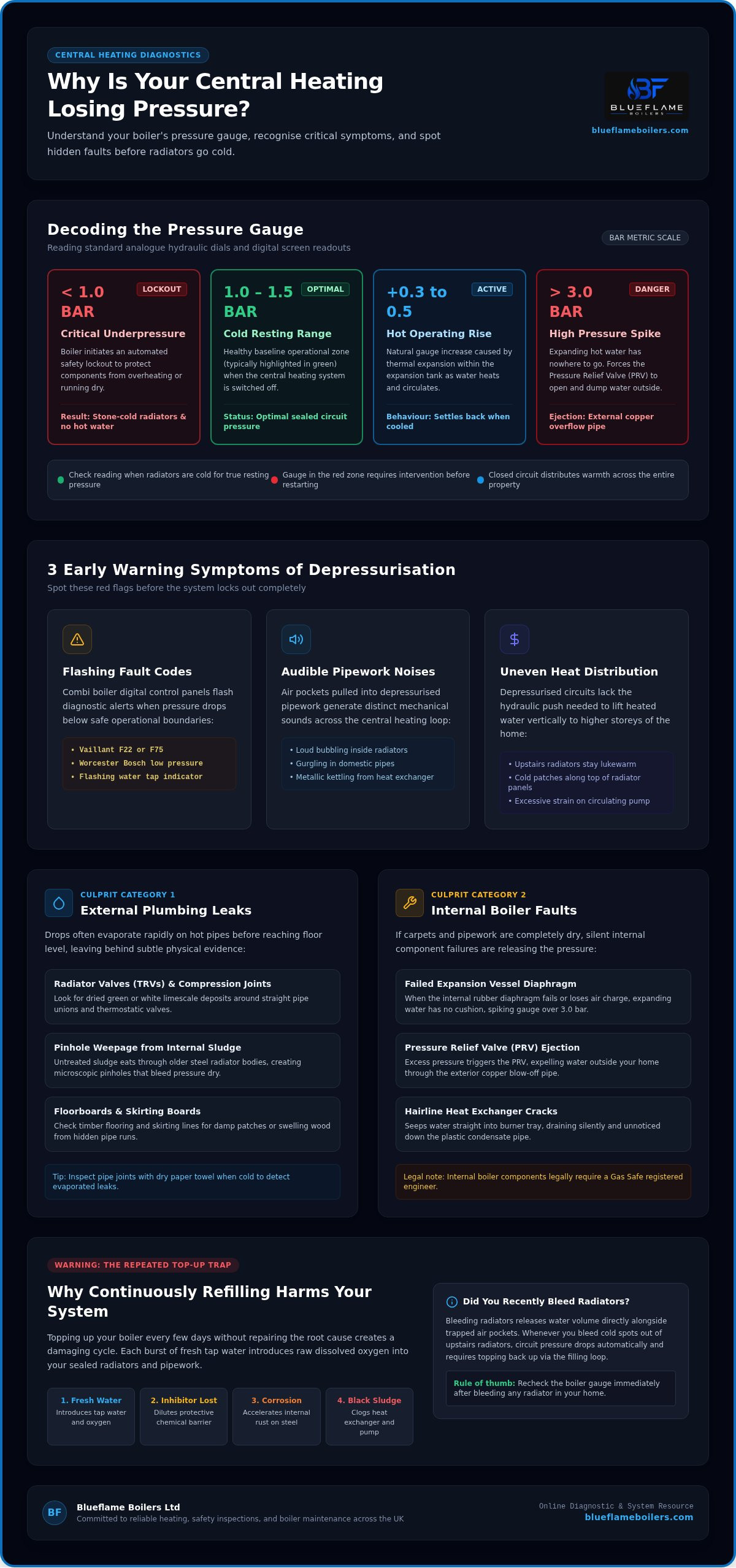
Your central heating functions as a continuous, sealed circuit where water circulates to distribute cosy warmth right across your home. When that closed circuit experiences water loss, the system cannot pump heat efficiently through your radiators. A cold central heating system requires a resting pressure between 1.0 and 1.5 bar to operate properly. If the level dips below this threshold, modern combi and system boilers immediately initiate an automated safety lockout to protect vital internal components from severe overheating or running dry. The result? Your boiler abruptly stops delivering piping hot water, leaving your radiators stone cold just when you need warmth the most.
Understanding the Pressure Gauge on Your Boiler
To check where your system stands, take a look at the front control panel of your boiler for a round hydraulic dial or an illuminated digital screen readout. Most analogue gauges feature a brightly coloured display where the healthy operational range sits highlighted in green, while the critical zone below 1.0 bar shows up in red. You will naturally see the needle or digital number rise slightly by 0.3 to 0.5 bar when the heating pump runs and the water heats up, as thermal expansion temporarily increases the volume within the internal expansion tank. Once the radiators cool completely, the reading should settle smoothly back into the green zone.
Common Symptoms of a Depressurised Heating System
Before you even spot the dial dropping into the danger zone, your heating system often broadcasts clear warning signs that pressure has escaped. If you notice your central heating losing pressure regularly, keep an ear and eye out for these classic indicators:
- Flashing safety fault codes: Combi boilers flash diagnostic errors such as Vaillant's F22 or F75, Worcester Bosch low-pressure warnings, or flashing water tap symbols.
- Audible pipework noises: Air pockets sucked into depressurised pipework produce loud bubbling, gurgling, or metallic kettling sounds from the boiler heat exchanger.
- Uneven radiator heat: Upstairs radiators become lukewarm or stay cold at the top because falling pressure lacks the hydraulic push to lift hot water to upper floors.
Catching these red flags early prevents unnecessary wear on your circulating pump. If your system keeps locking out despite your best efforts, the friendly team at Blueflame Boilers Ltd can step in to track down the root cause and restore reliable warmth in no time.
Why Is Your Central Heating Losing Pressure? Common Culprits
Tracking down why your central heating losing pressure stops the guesswork and protects your home from hidden water damage. Water escapes in one of two ways: obvious external plumbing leaks or silent internal boiler component failures. Topping up your boiler repeatedly without fixing the root cause is a costly mistake. Every burst of fresh tap water introduces oxygen, dilutes protective rust inhibitors, and accelerates internal corrosion that generates thick heating sludge.
External Leaks in Radiators, Valves, and Pipework
Tiny leaks are sneaky. Check the compression joints around your thermostatic radiator valves (TRVs) and straight pipe unions for dried green or white limescale stains. Microscopic drops often evaporate on hot pipes before ever pooling on the floor. Take a close look under timber floorboards and along skirting boards for damp patches or swelling wood. Untreated sludge inside older steel radiators can also eat through the metal, creating microscopic pinhole leaks that slowly bleed the circuit dry.
Internal Boiler Faults: The Pressure Relief Valve and Expansion Vessel
If your carpets are bone dry, look towards internal components. When the rubber diaphragm inside an expansion vessel fails or loses its air charge, expanding hot water has nowhere to go. This spikes system pressure above 3.0 bar and forces the pressure relief valve (PRV) to eject water outside through a small copper pipe on your exterior wall. Defective heat exchangers present another sneaky issue; hairline cracks can seep water directly into the burner tray, where it drains unnoticed down your plastic condensate line.
Recent Maintenance and Radiator Bleeding
Bleeding radiators directly removes system water volume alongside trapped air, which inevitably causes total circuit pressure to drop. If you recently released trapped air to cure cold spots, watching a comprehensive walkthrough on boiler pressure top-up procedures will show you how to top the level back up safely. Newly installed radiators also settle over several heating cycles, demanding an initial top-up. Always double-check your bleed screws; a loose screw will weep water continuously, leaving your central heating losing pressure week after week.
Tired of hunting for mystery leaks on your own? You can quickly reach out to the Blueflame Boilers Ltd friendly heating specialists to get your system checked, sealed, and running at peak performance.
DIY Triage: How to Safely Inspect Your Heating System for Leaks
Before assuming your boiler has reached the end of its life, a quick, methodical inspection can save you immense stress. Many instances of central heating losing pressure come down to easily accessible joints or weepage points that you can check yourself in minutes. Understanding the most common reasons for pressure loss allows you to gather valuable clues before deciding whether a simple tweak or a certified specialist is required.
The Step-by-Step Radiator and Pipework Paper Towel Test
Dry kitchen roll is one of the most effective diagnostic tools for detecting elusive seeps. Turn off your heating controls completely and wait for the entire system to cool down, ensuring water will not instantly evaporate off hot pipe surfaces. Press a dry sheet of kitchen paper tightly around every radiator valve, compression tail, and air vent plug. Inspect the paper closely for damp rings, powdery white limescale crusting, or greenish verdigris marks, which clearly signal an active or drying leak.
Checking the External Pressure Relief Discharge Pipe
Take a walk outside to locate the small, curved copper pipe protruding through the brickwork directly behind your boiler. This blow-off line connects straight to your pressure relief valve. To catch an intermittent release, loosely tape a dry plastic sandwich bag around the open pipe end. Run your heating on full blast. If the bag collects water during high-temperature cycles, your boiler is ejecting excess pressure, which explains why the needle crashes back down once the radiators cool.
Knowing When to Stop: The Gas Safe Safety Boundary
Safety always comes first when diagnosing heating faults. While inspecting accessible pipework and checking outdoor copper lines is entirely safe for householders, you must never remove the main combustion casing of your boiler. That outer panel forms a sealed barrier protecting your home from toxic exhaust gases. Inside lie mains-voltage pumps, intricate wiring, and delicate gas train assemblies. Under UK Gas Safety (Installation and Use) Regulations, opening room-sealed combustion chambers is strictly reserved for qualified professionals.
If your paper towel check comes back clean and the outdoor pipe remains dry, the fault sits securely behind that front cover. In that scenario, calling out fully qualified Gas Safe engineers for an emergency boiler repair is the quickest, safest way to trace hidden internal faults and restore reliable heating.
How to Re-Pressurise Your Central Heating System Using a Filling Loop
When you discover your central heating losing pressure, topping up the circuit via your filling loop gets your heat circulating right away. This temporary link connects your mains cold water supply straight into your sealed heating circuit. Because high mains pressure can swiftly overwhelm your boiler's internal seals, approaching this task with a calm, methodical mindset guarantees a hassle-free result without accidental overfilling.
Identifying Your Filling Loop Style
Modern homes across the UK generally feature one of three filling configurations:
- External flexible braided hose: A silver, flexible metal tube fitted directly beneath the boiler casing, equipped with two black lever valves or slotted screws at either end.
- Modern keyless internal lever: Often found on Worcester Bosch units, this setup uses a pull-down blue lever or sliding switch tucked neatly beneath the lower fascia panel.
- Internal rigid filling key: Older models utilise a removable brass or plastic T-shaped key that pushes into an internal manifold and turns forty-five degrees alongside a small plastic nut.
Step-by-Step Boiler Repressurisation Instructions
Before you begin, switch off the electrical power to your boiler and verify that your pipework is cold. If you have an external braided hose, ensure both thumbscrew ends are threaded securely to prevent sudden splashes. Next, gently open the first valve fully. Then, slowly turn the second valve until you hear the distinct hiss of fresh cold water entering the system.
Keep your eyes glued to the pressure needle or digital display. As soon as the gauge climbs to 1.2 bar, firmly close both valves one after the other. Avoid the temptation to push higher; cold water expands under heat, so 1.2 bar provides the ideal resting level. Finally, disconnect the flexible hose or cap the keyless link to comply with UK Water Regulations and stop mains water backflow into your domestic drinking supply.
What to Do If You Accidentally Overfill the System
Did the phone ring while you were filling, sending the gauge soaring past 2.5 or 3.0 bar? Don't panic. Simply grab a radiator bleed key, an old towel, and a small measuring jug. Head to an accessible ground-floor radiator, attach the key to the square bleed valve, and turn it anti-clockwise to release liquid into your container. Drain a pint or two, checking the boiler display periodically until the pressure settles comfortably back between 1.0 and 1.5 bar.
Permanent Solutions for Persistent Central Heating Pressure Loss
Topping up your boiler gauge every week is not normal maintenance; it is a clear warning sign of an unresolved mechanical issue. While re-pressurising provides temporary relief, running fresh mains water into your system constantly dilutes protective chemical inhibitor levels. This influx of aerated water accelerates internal oxidisation, leading to stubborn blockages and costly component failures. Securing a professional diagnosis resolves underlying faults permanently, helping you lower household energy bills, safeguard your equipment, and enjoy dependable heating all winter long.
Combating System Sludge and Corrosion with Power Flushing
Black iron oxide sludge poses a severe threat to your heating efficiency. As this heavy debris gathers inside radiators and circulation passages, it creates cold spots, strains your pump, and eventually corrodes steel panels until pinhole leaks appear. A high-flow, chemical cleansing treatment flushes these abrasive particles out completely, restoring clear waterways and even warmth. Check out our comprehensive guide on power flushing Surrey to learn how this service revitalises sluggish systems.
Annual Servicing and Component Overhauls
Routine maintenance catches minor defects before they leave your central heating losing pressure and bring your heating to a standstill. During a comprehensive annual service, a Gas Safe registered engineer re-pressurises the internal expansion vessel with a foot pump and pressure gauge, preventing thermal water expansion from triggering safety discharges. If your pressure relief valve seat has degraded or suffered limescale fouling, fitting a fresh valve stops outdoor dripping permanently. Read our expert advice in the ultimate guide to boiler servicing in Epsom to see how proactive checks protect your manufacturer warranty.
When to Replace an Ageing, Inefficient Boiler
Repeated pressure drops on an old unit often point to extensive corrosion across internal assemblies, such as a leaking main heat exchanger. When routine repairs become a frequent headache, replacing your tired boiler with a modern, high-efficiency condensing system is often the most cost-effective path forward. Discover our installation recommendations in our gas boiler installation in Surrey homeowner overview.
Whether you require targeted boiler repairs across Ashtead, Leatherhead, or Epsom, or you simply want straightforward advice from local experts who genuinely care, take a minute to enquire with our friendly Epsom team today!
Restore Total Warmth and Protect Your Heating Today
Living with a central heating losing pressure can quickly turn cold mornings into stressful guessing games. As we have explored, diagnosing whether your system suffers from a simple weeping radiator valve, post-bleeding air loss, or an internal expansion vessel failure puts you back in total control. Safely topping up your pressure gauge to 1.2 bar provides immediate warmth, but stopping repeated drops requires tackling the root mechanical cause before corrosion spreads.
Our fully Gas Safe registered engineers across Epsom and Surrey provide fast-response emergency callout support and thorough diagnostic assessments to keep your home running smoothly. We pride ourselves on complete transparency, pinpointing hidden faults with zero hidden charges so you can relax in comfort.
Take action today to safeguard your radiators, protect your boiler, and look forward to dependable, piping-hot heating all year round!
Frequently Asked Questions
How often should a central heating boiler naturally lose pressure?
A healthy, sealed central heating system should only lose a tiny fraction of pressure across an entire twelve-month period. If you find your central heating losing pressure every couple of months or weeks, an active leak or a failing internal valve is definitely present. Sealed circuits are built to remain airtight. Needing more than one or two minor seasonal top-ups each year means it is time to inspect your pipework.
Is it dangerous if my central heating pressure drops to zero?
No, a drop to zero bar is not dangerous because modern boilers feature built-in safety switches. The moment water levels drop below safe operating limits, the boiler automatically locks out to prevent dry firing, protecting the delicate heat exchanger and pump from thermal cracking. While your home will turn cold without heating or hot water, the appliance shuts itself down safely until you restore proper pressure.
Can I leave my filling loop valves open all the time to maintain pressure?
Never leave your filling loop valves open or partially cracked. Doing so exposes your central heating to mains water pressure, which can easily climb above 3.0 bar. High mains pressure will rupture internal seals, blow the pressure relief valve, and soak your exterior brickwork. Leaving the loop open also breaches UK Water Regulations by risking contaminated heating water siphoning backwards into your fresh drinking water supply.
Why does my boiler pressure rise significantly when the heating is switched on?
Water naturally expands as it heats up, increasing volume within your closed pipework. A normal, healthy rise is roughly 0.3 to 0.5 bar above cold resting pressure. However, if the needle climbs past 2.5 or 3.0 bar when running, your internal expansion vessel has likely lost its air charge. Without that flexible cushion absorbing expansion, hydraulic pressure spikes rapidly and vents through the external pipe.
What happens if I keep topping up my boiler without fixing the leak?
Continuously feeding fresh mains tap water into your system strips away protective chemical inhibitor levels. Every fresh top-up introduces dissolved oxygen and minerals into the circuit, accelerating internal rust on steel radiators. Over time, this unchecked corrosion produces thick black iron oxide sludge that ruins circulating pumps, chokes heat exchangers, and creates tiny pinhole punctures. Finding the underlying leak avoids far more expensive repairs.
Does bleeding radiators cause the boiler pressure to drop?
Yes, bleeding radiators directly lowers your boiler's water pressure. When you open a radiator bleed valve with a key, you release pockets of trapped air, which immediately reduces the total volume and pressure inside the sealed loop. If you vent several radiators across your home, the pressure gauge will drop noticeably. Always remember to inspect your boiler gauge afterwards and top it back up to 1.2 bar.
How do I know if my boiler expansion vessel has failed?
The clearest sign is a dramatic pressure spike when the heating kicks on, followed by your central heating losing pressure down to zero once the radiators cool. You will also notice water discharging outside from the copper relief pipe during high-temperature cycles. If a Gas Safe engineer tests the vessel's air valve and water squirts out, the internal rubber diaphragm has perished and needs replacing.


