
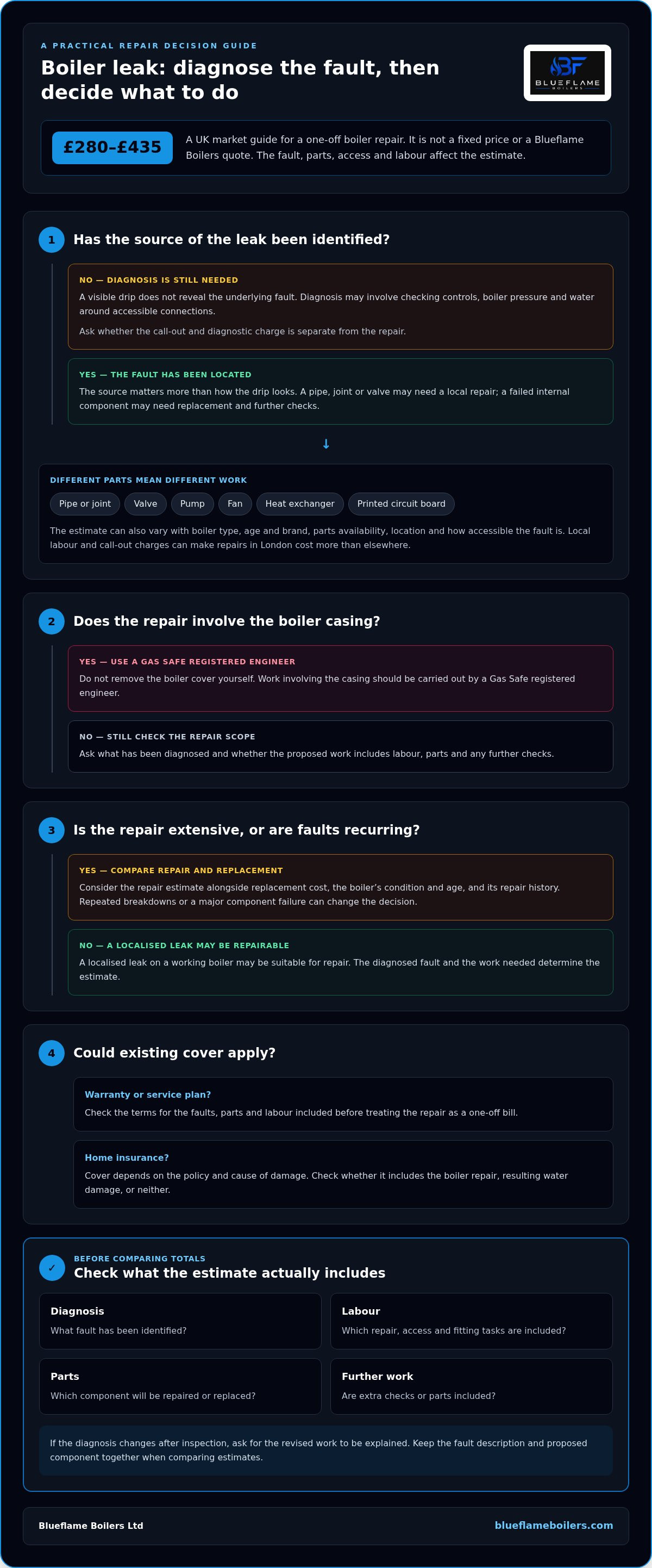
A boiler leak can turn a calm day into a worrying one, but a one-off repair typically costs between £280 and £435 on the UK market. The boiler leak repair cost in the UK depends on what’s leaking and the work needed to put it right. That range is a market guide, not Blueflame Boilers’ price.
It’s understandable to want a clear figure before arranging a boiler leak repair. In the UK, there is no single fixed cost: the fault, parts required, access and labour all affect the estimate. This guide explains what to consider when comparing quotes and deciding on the next step.
Key Takeaways
- The repair bill depends on the fault: a leaking pipe or valve can call for different work from a failed internal component.
- Separate the call-out and diagnostic charge from labour and parts to understand what an estimate covers.
- Compare labour-inclusive estimates carefully, as repair time and replacement parts both affect the final cost.
- Use a Gas Safe registered engineer for work involving the boiler casing, and don’t remove the cover yourself.
How much does a one-off boiler repair cost?
A repair bill depends on the fault, the part needed and the work involved. These cost factors explain why two boiler leaks can lead to different estimates.
Common Boiler Faults and Leak Repairs
A boiler leak repair deals with water escaping from a pipe, joint, valve or internal component. Finding the source matters, because drying a visible drip won’t fix the underlying fault.
Replacing a leaking valve or pipe involves different parts and labour from replacing a seized pump. The price depends on the fault, access, parts and labour, and is given after a quote request. A leak near a connection may need a local repair, whilst a failed component can require its replacement and further checks.
How do common boiler leak repairs compare? The cost of repairing a valve, pump or pipe depends on which part has failed, whether it can be repaired or must be replaced, and how accessible it is. The source of the leak matters more than the appearance of the drip.
Typical Costs by Location and Part
The boiler part involved and your location both affect repair estimates. This is worth bearing in mind when comparing quotes from different areas or assessing whether replacing a component is the main cost.
Boiler repairs in London can cost more than elsewhere because of local labour and call-out charges. The fault’s complexity and the parts required still shape the final estimate. A fan, heat exchanger, printed circuit board, pump or valve each involves different repair work.
Boiler type, age and brand can affect the estimate through component design, parts availability and the work needed to reach the fault. Older or less common models may need different parts from newer boilers, while an accessible component can take less work to reach than a fault inside the casing. A service may identify wear, but it does not repair a leak.
A valve or pipe repair may involve less work than replacing a failed pump, but the diagnosed fault determines the scope. Ask for an estimate that sets out diagnosis, labour and parts. This makes it easier to see what is driving the cost instead of comparing totals without knowing what each includes.
Repairing a Leak or Replacing the Boiler
Replacement may make better financial sense when a repair is extensive or the boiler has recurring faults. Consider whether paying for another repair is likely to resolve the problem or whether repeated issues change the calculation.
When might replacement be more cost-effective than repairing a leak? Compare the repair estimate with the cost of a replacement, taking account of the boiler’s condition, age and repair history. A localised leak on a working boiler may be suitable for repair; repeated breakdowns or a major component failure can change the decision.
How do warranty or service-plan costs work? What you pay depends on the cover’s terms, including which faults, parts and labour it includes. Check whether the leak and required repair are covered before treating the work as a one-off repair bill.
When does home insurance cover a leaking boiler? Cover depends on your policy and the cause of the damage. The policy wording determines whether the repair itself, resulting water damage, or neither is included. Distinguish the boiler fault from damage to the surrounding property.
Call-out fees, diagnostics, labour and parts
A boiler repair estimate may include the visit, fault diagnosis, labour and replacement components. Separating these items helps show whether the main cost comes from finding the fault, completing the repair or fitting a part. A thermostat issue, for example, may require different investigation from a leak around a pipe connection.
Diagnosis means identifying the cause, not just the visible symptom. An engineer may inspect the boiler’s controls, check its pressure and look for water around accessible connections. Radiators that aren’t heating properly may indicate a heating-system issue rather than the leak itself. These checks help distinguish faults that can look similar from outside the boiler.
A call-out and diagnostic fee may be separate from the repair itself. Ask what the visit covers and whether the estimate includes labour and parts. A breakdown caused by one faulty component has a different scope from a problem requiring further investigation or several replacements. The repair price depends on the fault, access, parts and labour, and is given after a quote request.
Parts affect an estimate in different ways. A thermostat or pressure sensor is not the same component as a pump or heat exchanger, and the work varies depending on the part’s location and how it can be reached. The diagnosis should identify which part has failed and whether it needs replacing. That is more useful than a single total with no description of the work.
Before agreeing to a repair, look for these details in the estimate:
- Diagnosis: what fault has been identified, such as a leak at a pipe joint or a control issue.
- Labour: which repair tasks are included, including access and fitting work.
- Parts: which component will be repaired or replaced.
- Further work: whether additional checks or parts are included in the proposed repair.
The scope may change if the initial diagnosis changes after the engineer inspects the boiler. A clear explanation of revised work lets you compare it with the original estimate, rather than treating every change as the same repair. Keep the fault description and proposed component together for an accurate record.
If you need help with a boiler fault, you can send a boiler repair enquiry with the symptoms and any visible leak details.
Labour-inclusive repair estimates
A labour-inclusive estimate combines the engineer’s work with any parts included in the repair. Before comparing totals, check how diagnosis, time on site and replacement components are counted.
Parts and Labour Inclusions
An estimate for parts and labour should identify the component being fitted and the work involved. The same fault can take different amounts of time to repair, depending on access and what the engineer finds.
For example, a thermostat or controls repair is estimated to take 1 hour. A replacement part might be charged separately, included in the total, or listed with its own labour charge. The price depends on the case and is given after a quote request; the main factors are the fault, labour, parts and access.
Look for the diagnosis, the component to be repaired or replaced, and the labour included. If the inspection identifies another fault, the scope may change. A revised estimate should describe the new work and parts, rather than leaving you to assume the original total covers everything.
Engineer Labour Rates
Engineer labour charges cover time spent diagnosing and repairing the boiler. They matter most when the repair takes longer than the initial visit or requires extra work.
The final labour total depends on time spent diagnosing the fault, reaching the component and completing the repair. A thermostat or controls repair estimated at 1 hour gives a useful example of how task duration affects labour, although other faults require different work.
A repair can take from an hour to a couple of days, depending on the problem. This affects labour and whether a part needs to be sourced before the work is complete. A simple control fault that affects hot water involves different work from a leak requiring component replacement.
Urgency can affect the estimate, but the fault, time required and parts still determine the work involved. Keep any emergency charge separate from quoted repair labour or replacement components so the total is easier to understand.
Warranty terms can also affect what you pay. In most cases, failing to arrange an annual boiler service invalidates its warranty. Check the warranty paperwork for servicing conditions and covered repairs; a covered component and labour may be treated differently from work outside the terms.
Boiler leaks and dripping pipes or valves
A drip beneath a boiler can come from a pipe joint, valve, pressure relief pipe or internal component. Finding the source matters: water near the casing may have a different cause from a wet radiator connection, and the visible drip may not show where the fault began. Boiler leak repair cost in the UK depends on which part has failed and the work needed to fix it.
These are market estimates, not a specific quote; the price depends on the fault, access, parts and labour, and is given after a quote request. Comparing boiler leak repair costs in the UK is most useful when each estimate describes the same repair scope.
Can you safely use a boiler that’s leaking? Don’t keep using it if water is reaching electrical parts, the leak is worsening or the boiler is losing pressure. If you can safely reach its controls without touching water, switch it off and arrange a repair.
If your boiler is leaking, keep away from wet electrical areas, protect nearby belongings and note where the drip appears. Don’t remove the boiler casing or try to tighten internal fittings. A photo taken from a safe distance can help show whether water is coming from a visible pipe, valve or underneath the unit.
Pressure can offer another clue. A boiler gauge that keeps falling may indicate water escaping from the heating system, but the gauge alone won’t locate the leak. Note any pressure change and whether heating or hot water has stopped; these details can help distinguish a pipe leak from another fault.
Several causes can explain a drip, and the repair depends on the failed part:
- Pipe joint: water may appear around a connection, where the repair depends on access and the joint’s condition.
- Valve: a worn or damaged valve can leak around its body or connection.
- Pressure relief pipe: dripping from the outlet can indicate a pressure-related issue that needs diagnosis.
- Heat exchanger: a leak from this internal component can involve more extensive repair work.
A leak can also affect heating performance if the system loses water or pressure. Don’t keep topping up a boiler to mask a persistent leak; repeated refilling won’t fix the fault. Note when the drip occurs, whether it follows heating or hot water use, and any visible changes around the boiler.
If you smell gas as well as seeing a leak, leave the property, avoid electrical switches and call the National Gas Emergency Service on 0800 111 999. For a water leak without a gas smell, keep the area clear and arrange professional diagnosis rather than opening the boiler.
Using a Gas Safe Registered Engineer
A Gas Safe registered engineer should handle work involving the boiler casing. The casing protects internal components, and removing it without the required expertise can expose hidden faults and hazards. A drip from inside the unit may look like a simple plumbing problem, but diagnosis can involve parts connected to the boiler’s gas operation.
Avoid opening the boiler to investigate a leak. Removing it is dangerous and breaks the law. Keep your inspection external: note where water appears, whether pressure changes, and whether heating or hot water is affected. This information can help an engineer diagnose the fault without you opening the appliance.
Carbon monoxide is another reason to treat boiler safety seriously. Carbon monoxide poisoning kills around 60 people a year in England and Wales. The gas can’t be identified by sight or smell, so avoid disturbing boiler components and arrange professional attention for suspected faults. If you smell gas, leave the property, avoid electrical switches and call the National Gas Emergency Service on 0800 111 999.
Registration matters for the work being carried out, not just the engineer’s job title. For a leak near the boiler casing, use a Gas Safe registered engineer who can assess the appliance and explain the repair. A visible drip from an external heating pipe may have a different cause, but don’t assume it’s safe to open the boiler or adjust internal fittings yourself.
Landlords have a specific responsibility: the Landlord and Tenant Act 1985 requires landlords to use a professional for boiler repair and maintenance work. If you rent, report the leak promptly and give the landlord its location, visible symptoms and any loss of heating or hot water. A written record of the report can help keep the repair request clear.
Before work begins, ask the engineer to explain the diagnosis and proposed repair in plain terms. A useful estimate identifies the fault, parts to be replaced, labour included and any additional work. A visible leak at a pipe connection and water escaping from an internal component require different investigations. Knowing the difference helps you understand what the repair covers.
After the repair, ask what was changed and whether the engineer found any related fault. Keep the paperwork with your boiler records, especially if you’re a landlord or the appliance has a warranty. A clear record of the component and work completed can be useful if the same symptom returns.
Blueflame Boilers Ltd: Gas Boiler Installation
Blueflame Boilers Ltd provides boiler repairs for leaks and other faults. If a repair isn’t the right long-term option, gas boiler installation may be worth considering. The right route depends on the boiler’s condition and the repair required.
Blueflame Boilers Ltd also provides boiler servicing and emergency callouts for urgent boiler problems. Whether you’re dealing with a leak, a breakdown or considering a replacement, describe the issue and the boiler’s symptoms clearly to help determine the next step.
For support with a boiler repair or installation, contact Blueflame Boilers Ltd or visit blueflameboilers.com.
Take the next step with confidence
Understanding boiler leak repair cost in the UK starts with treating the leak as a decision point, not simply an unexpected bill. Describe the symptoms, note changes in heating or hot water, and make sure the estimate focuses on the diagnosed cause. This gives you a practical basis for deciding whether to repair the boiler or consider a longer-term option.
If water is still escaping, prioritise safe access and clear information instead of trying to open the appliance. Note where the leak appears and what has changed; these observations can help focus the discussion. The right next step depends on the boiler’s condition and the repair findings, so don’t choose a solution based only on a headline figure.
You don’t need to diagnose the fault yourself. Share what you’ve noticed and take the next step towards a clear, considered decision.
Frequently Asked Questions
What’s not included?
There’s no universal list of exclusions; the estimate’s wording defines what’s included. Check whether it covers diagnosis, labour, replacement parts and any additional work identified during inspection. For example, an estimate for replacing a leaking valve may not cover a separate fault discovered later. Ask for the scope to be set out clearly before agreeing, so you can see which work is included and what would require a revised estimate.
How Can I Prevent Expensive Repairs in the Future?
Arrange an annual boiler service and watch for changes in pressure, unusual noises, dripping or inconsistent heating. A service may identify developing issues, but it doesn’t replace repair of a fault that’s already causing a leak. Keep service records and note when symptoms appear, such as a pressure drop after the heating runs. This history gives an engineer useful context when diagnosing a new problem.
What Should I Do if a Quote Seems Too High?
Ask for an itemised explanation before accepting an estimate. Check that it names the diagnosed fault and proposed repair, lists parts and labour, and separates any diagnostic or call-out charge. Compare the scope with the problem described rather than judging the total alone. A quote for replacing an internal component isn’t directly comparable with one covering a pipe joint. Ask what changed if the proposed work differs from the original diagnosis.
What if I have more than one problem with my boiler?
Tell the engineer about every symptom, even if it seems unrelated to the leak. For example, mention a pressure drop, intermittent hot water and a separate radiator issue. Several symptoms may stem from one underlying fault or require separate repairs. The diagnosis should distinguish between them and explain which work addresses each problem. This helps you understand the proposed repair and decide whether any work can be prioritised safely.
What is the average cost to repair a leaking boiler in the UK?
The price depends on the cause, parts needed, access and labour. A drip from a pipe connection can involve different work from a leak caused by an internal component, so a general average is only a starting point for understanding an estimate.
What is the UK call-out fee for an emergency boiler leak repair?
A call-out charge covers the visit and assessment, not necessarily the repair, parts or labour. Check whether the estimate separates the initial call-out from the repair total so you know what each charge covers.
How do UK boiler repair prices vary by region, including London and the South East?
Estimates vary with local labour, travel, fault complexity and parts. The South East has varied local markets, so a single regional figure won’t describe every area. Compare the same work scope, including diagnosis and replacement parts, rather than assuming two estimates differ only because of location.
Do UK gas boiler leak repairs need to be carried out by a Gas Safe registered engineer?
Work involving the boiler casing should be handled by a Gas Safe registered engineer. Removing the cover is dangerous and breaks the law. Don’t open the casing to inspect a suspected internal leak or attempt a repair yourself. Describe visible symptoms from outside the boiler, such as where water is collecting or whether the pressure gauge changes. This helps the engineer assess the fault without you disturbing internal components.


