

Could replacing a buried water pipe mean less of your garden or driveway needs to be dug up? Supply pipe replacement moling creates an underground route between access points, potentially avoiding excavation along the full pipe route. It still involves some access work, but it may help limit disruption to surfaces.
If you’re worried about damage to your property, it helps to understand the approach before work begins. Whether moling is suitable depends on the pipe route, ground conditions and access around your home.
This guide explains how moling differs from open excavation, what can affect suitability and what to expect during a supply pipe replacement. Blueflame Boilers Ltd provides moling for the mains water supply pipe between the external stopcock in the road and the internal stopcock inside your property. The company serves Epsom and local areas across Surrey. Read on for practical preparation tips and an overview of the process.
Key Takeaways
- Learn how supply pipe replacement moling creates an underground route for a new pipe without digging a continuous trench.
- Compare moling with open-trench replacement and see how access and the route can influence the practical approach.
- Use the preparation checklist to note visible route details and locate your external and internal stopcocks.
- Understand the general stages of replacement, from route planning to installing the pipe and completing connections.
- Find out how Blueflame Boilers’ moling service covers the supply pipe between the road-side external stopcock and your internal stopcock.
What does supply pipe replacement by moling involve?
Here, the supply pipe means the route carrying water from the external stopcock in the road to the internal stopcock inside your property. Replacement involves installing a new pipe along that connection. Identifying these endpoints helps clarify the scope of the work and distinguish this pipe from other water pipework in your home.
Moling replaces a buried pipe by creating an underground passage between access points, rather than digging a continuous trench along the whole route. This can reduce how much of a garden, path or driveway needs to be opened up, although some excavation or surface work may still be necessary.
Which section of the water supply pipe is being replaced?
Blueflame Boilers’ supply pipe replacement service covers the route from the external stopcock in the road to the internal stopcock inside your property. The pipe may pass beneath outdoor areas before reaching the building, so its likely path helps define the job.
For example, if the pipe crosses a driveway before entering the house, that surface is one factor to consider when planning access. The entry point and stopcock locations also help distinguish the supply pipe from pipework elsewhere in the property. If you know where either stopcock is, include that information when describing the route.
How does moling differ from digging a continuous trench?
With open-trench replacement, the ground is excavated along the pipe route to expose the pipe. Moling takes a different approach: a mole creates an underground passage through which the replacement pipe can be installed. This method is part of trenchless pipe-laying, as outlined in Moling (construction).
Instead of opening up the full length of the route, moling uses access points to reach the work below ground. Their number and position depend on the job. As a result, work at ground level is focused around access and connection areas rather than necessarily following every metre of the pipe route.
This difference can matter if the route passes beneath a lawn, paved area or driveway you’d prefer to preserve. However, moling can’t guarantee that every surface will remain untouched. Ground conditions, the pipe route and the property layout affect what access or excavation is needed. Obstacles or limited access may also influence the practical approach, so suitability is specific to the site.
How does moling install a replacement supply pipe?
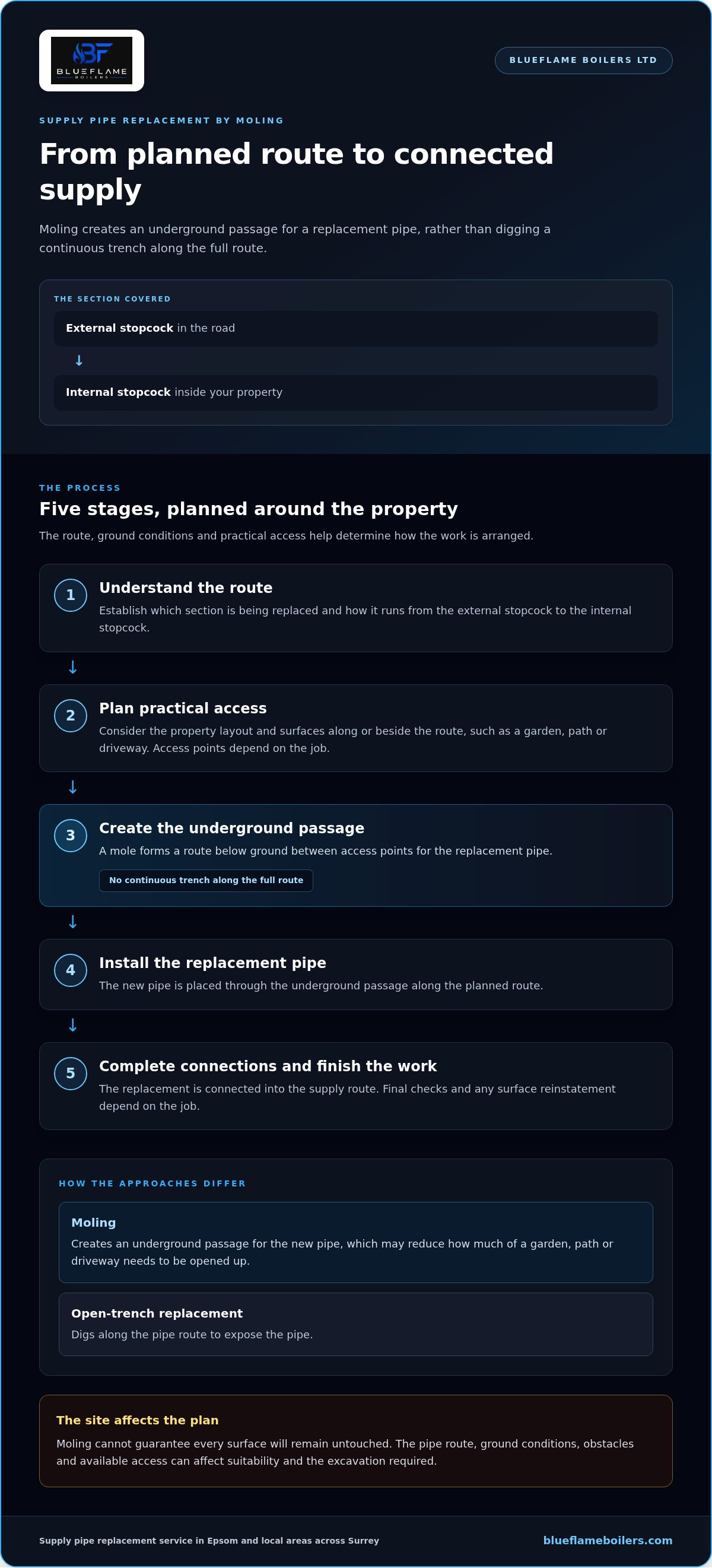
The work is planned around the actual pipe route and the access available at the property. In general, the route is considered first, an underground passage is created, and the replacement pipe is installed and connected to the supply. Access points and any surface reinstatement depend on the property and route.
Moling installs a replacement supply pipe by creating an underground passage along the planned route, then placing the new pipe through it and connecting it into the property’s water supply.
What happens before the moling work begins?
The pipe route and access around the property need to be understood before work is planned. A garden, driveway, path or other feature above or beside the route can affect how the work is arranged. Knowing where the pipe enters the property and where it connects outside helps establish the section being considered.
Each home has a different layout. A clear route across an open garden presents different planning considerations from one that passes beneath several hard surfaces or close to other property features. Planning takes account of the route and practical access, without assuming every surface can be left undisturbed.
What happens during and after pipe installation?
In general, the work follows a sequence such as this:
- Understand the route: establish the section for replacement and how it runs through the property.
- Plan access: consider where the work can reach the route, taking the layout and surfaces into account.
- Create the underground passage: a mole forms a route below ground for the replacement pipe.
- Install the pipe: the new pipe is placed through the passage.
- Complete connections: the replacement is connected into the supply route, with final checks and surface work depending on the job.
Access points are places where the route can be reached for the work. Their number and position vary with the ground, route and property layout. Moling may avoid a continuous trench, but some excavation or access work may still be required.
Once installed, the replacement pipe needs to connect with the property’s supply route. The work to finish those connections, any checks carried out and the reinstatement of disturbed areas can vary by job. Moling offers an underground alternative to digging along the full route, while the practical details remain site-specific.
If you’re considering a replacement, you can enquire about supply pipe replacement with Blueflame Boilers Ltd.
Moling or open-trench replacement: which approach may suit your property?
Both methods can replace a buried supply pipe, but they create the route in different ways. Open-trench work digs along the route to expose the pipe. Moling creates an underground passage, which may reduce the need for continuous excavation. The practical choice depends on the route, available access and ground conditions, not simply on a preference for less disruption.
| Consideration | Moling | Open-trench replacement |
|---|---|---|
| How the route is created | An underground passage is made for the replacement pipe. | A trench is dug along the route to expose the pipe. |
| Likely surface disturbance | Can reduce continuous excavation, though access areas and other work may still disturb surfaces. | Ground is opened along the pipe route, so more of the surface may be affected. |
| Access needs | Access is needed for the work and connections; its position and extent depend on the job. | Access is needed along the route so the trench can be excavated and the pipe reached. |
When might moling be a practical option?
Moling may be worth considering where a supply route passes beneath a lawn, path or driveway and avoiding a continuous trench could help limit surface disruption. For example, it may be preferable to opening up the full length of a paved route. That doesn’t guarantee the paving will remain untouched, as access work or local excavation may still be needed.
Property layouts vary across Surrey, so a method that appears practical for one home may not suit another. The route and available access need to be considered together.
What can affect whether moling is suitable?
The route’s length and direction, access points and features around the property can all influence planning. Obstructions beneath or alongside the route may affect the practical approach. Ground conditions matter too and can vary from one site to another. These factors explain why suitability depends on the property, rather than on the method alone.
In short, moling can reduce continuous excavation, while open-trench replacement exposes the route directly; access, ground and property features help determine which approach is practical. Neither method guarantees that all surfaces will be left undisturbed.
For a broader explanation of the options and the work involved, see the complete guide to water main replacement in Surrey. It provides further context for homeowners weighing up trenchless moling and other replacement considerations.
How should Surrey homeowners prepare for supply pipe replacement?
A little preparation can make it easier to discuss the work and understand how it may fit around your home. You don’t need to trace buried pipework or investigate a leak yourself. Gather what you already know about the route, the property and access to relevant areas. These details help inform planning, although they don’t determine the final method.
What information is useful before arranging the work?
Note any known leaks, previous repairs or changes to the water supply route, such as building work near where the pipe enters the property. If possible, identify the external stopcock in the road and the internal stopcock inside your home. There’s no need to operate fittings or carry out plumbing work—as emergency specialists like plomberie-laval.ca highlight, complex diagnostics and mains pipework are always best handled by professional plumbers. Approximate locations can still help describe the route.
- Note where you’ve noticed a leak or signs of past repair, without trying to uncover or fix the pipe.
- Write down known changes to the route or property that could be relevant.
- Identify the external and internal stopcock locations where possible.
- Point out features near the likely route, such as paving, planting or a garden structure.
How can you plan around access and surface disruption?
Think about which areas may need to be reached, but don’t assume where access points will be placed. A clear path to relevant parts of the property can help with planning. The route, ground and layout affect the practical arrangements, including any excavation and surface reinstatement.
Consider everyday access too. Note whether a driveway is regularly used, whether garden furniture or pots could be moved, and whether a path needs to remain accessible. You don’t have to clear or move anything in advance unless arrangements have been agreed. Sharing these details helps make the discussion specific to your property.
Keep expectations realistic. Moling may limit the need for a continuous trench, but access work can still disturb some surfaces. The work plan and reinstatement details depend on the route and property. Mention surfaces you’re particularly concerned about without assuming they can be avoided entirely. For commercial premises or broader facility repairs following ground and pipework, trade specialists like Service King Commercial provide building maintenance and property solutions to restore and maintain the site.
Blueflame Boilers Ltd is based in Epsom and serves local areas across Surrey. Having your route notes and stopcock locations to hand is a practical starting point when discussing a replacement.
Arrange supply pipe replacement by moling with Blueflame Boilers
If a supply pipe needs replacing, it helps to know exactly which section the work covers. Blueflame Boilers provides mains water supply pipe replacement using moling from the external stopcock in the road to the internal stopcock inside your property. The service addresses that connection, with the practical details shaped by the home and pipe route.
Moling is an underground method, but each property and route is different. Access, ground conditions and features around the pipe influence the practical approach. Sharing what you know about these factors helps describe your situation clearly.
What does Blueflame’s supply pipe service cover?
The service covers the supply pipe between the road-side external stopcock and the internal stopcock in your home. Blueflame uses moling for this replacement work. Clear boundaries help you describe the section you’re concerned about and understand the scope of the enquiry.
What is the next step for a local homeowner?
Homeowners in Epsom and local areas across Surrey can submit an enquiry with a short description of the issue. Include your property location and any details you know, such as where a leak has appeared, whether the pipe has been repaired before, or where the stopcocks are. You don’t need a complete map of buried pipework. If you’re unsure about the route, simply say so.
It can also help to mention features near the suspected pipe route, such as a driveway or paved garden path. These details don’t establish in advance where access will be needed, but they give useful context about the property. The work plan depends on the specific route and site conditions, so don’t assume every surface can be left untouched.
Keep the first enquiry straightforward: share what you’ve observed, where the property is and any known information about the pipe connection. There’s no need to diagnose the fault or carry out plumbing work yourself.
Take the next step with confidence
Planning a pipe replacement doesn’t have to start with every detail mapped out. A simple description of the issue, your property location and any route information you already know is a helpful starting point. The approach can then be considered around your home and its layout.
If you’re weighing up supply pipe replacement moling, focus on how the pipe route and access needs may affect your property. Share what you’ve noticed and the areas you’re concerned about, such as a garden or driveway. You don’t need to diagnose the problem yourself.
When you’re ready, enquire about supply pipe replacement with Blueflame Boilers.
Frequently Asked Questions
What is supply pipe replacement by moling?
It’s a way to replace a buried water supply pipe by forming an underground route for the new pipe, rather than opening a trench along its whole length. Supply pipe replacement moling may be useful if the pipe runs beneath a lawn, path or driveway. The route and access needed still depend on the property, so the method isn’t automatically suitable for every home.
Is moling less disruptive than digging a trench?
Moling can mean less continuous excavation than digging a trench along the full pipe route, which may help where a garden or paved area sits above it. However, it doesn’t guarantee that surfaces will remain untouched. Access work may still disturb parts of the property, and the route, ground and any features in the way can influence the method.
Can every property have a supply pipe replaced by moling?
No, moling isn’t suitable for every property or pipe route. Limited access, features along the route or ground conditions may affect whether it’s practical. You can share what you know about the pipe’s path and nearby surfaces without uncovering the pipe or investigating underground. The work plan needs to reflect the particular property.
How does a moling pipe replacement work?
In general, the route and access are considered first, then a mole creates an underground passage for the replacement pipe. The pipe is installed through that passage and connected into the property’s supply route. Access points and final surface work vary by job.
What does Blueflame Boilers replace with its moling service?
Blueflame Boilers’ moling service replaces the mains water supply pipe between the external stopcock in the road and the internal stopcock inside the property. Based in Epsom, the business serves local areas including Ashtead, Leatherhead, Oxshot, Cobham, Weybridge, Ewell, Worcester Park, Cheam, Sutton, Carshalton, Banstead, Reigate, Tadworth, Woking, Bookham, Effingham, Horsley, Ripley and Kingswood, Surrey.
What should I do before arranging a supply pipe replacement?
Make a note of your property location, what you’ve noticed and any known history of leaks or repairs. If you can identify the internal and external stopcock locations, include that information too. You might also mention nearby features such as paving or a driveway. There’s no need to diagnose the fault or attempt plumbing work. Enquire with Blueflame Boilers about supply pipe replacement.


