
What if the number of bedrooms tells you very little about your power-flushing quote? The cost to powerflush a 3 bed house depends more on the heating system itself: how many radiators it has, how it is laid out and how much debris may have built up. Two three-bedroom homes can need different work, even if they look similar on paper.
A clear quote should explain what the flush covers and how the proposed work relates to your system’s condition. Cold areas on radiators, slow heating or dark water when bleeding a radiator can be clues to discuss, but they do not confirm the cause. Some heating problems may stem from a boiler fault or another issue instead. Understanding that distinction helps you assess whether the proposed work fits your concerns.
This guide explains which home and system details can shape a quote, what to look for in its scope and how a power flush differs from a gentler chemical clean. Blueflame Boilers Ltd provides power flushing in Epsom and nearby Surrey towns. Its certified engineers can assess your heating system and discuss the concerns you have noticed, giving you a clearer basis for understanding the work involved.
Key Takeaways
- The cost to powerflush a 3 bed house depends on the system and work required, so a quote should reflect the home’s actual heating set-up.
- Before agreeing to work, understand how the system will be assessed and what the flushing scope includes.
- Compare quotes by checking what each covers, its assumptions and any exclusions, not just the headline figure.
- Persistent heating concerns are a reason to arrange an assessment, but they do not prove a power flush is the right fix.
- Blueflame Boilers Ltd’s certified engineers provide power flushing in Epsom and nearby Surrey locations, with the work scope based on your system and concerns.
Why the cost to powerflush a 3-bed house varies
A power-flushing quote should reflect your heating system and the work involved, not just the number of bedrooms. The cost to powerflush a 3 bed house cannot be worked out reliably from the property label alone. Bedroom count is a starting point. The system’s layout, condition and access help bring the estimate into focus.
Two three-bedroom homes can have different numbers of radiators, pipe routes and access around the heating equipment. One may have a straightforward layout; another could include extensions or alterations that make the system more involved to assess. These differences matter because central heating systems connect multiple components. A useful quote reflects the actual set-up rather than assuming every home is much the same.
Why bedroom count does not tell the whole story
Bedroom count is a useful starting point, not a complete assessment. A three-bedroom home might have more or fewer radiators than another, and their position can affect access to parts of the system. The system’s condition matters too. Uneven heating may prompt a closer look, but it does not establish the cause or determine the work required. The full picture comes from the heating system, not the property label.
Imagine two homes with the same number of bedrooms. One has an accessible heating set-up; the other has a more complex layout or components that are harder to reach. Those practical differences can shape how the work is planned, as can concerns about the system’s condition. An estimate based on these details is more useful than a fixed assumption about every three-bedroom home.
What a homeowner should expect from a useful estimate
A helpful estimate sets out the proposed work in plain English. It should identify the system the quote relates to, the information it is based on and the scope being priced. Check that you can tell what the figure covers, rather than having to guess. An estimate is a starting point for discussion, not an agreement to work whose details are unclear.
Before comparing estimates, look at the assumptions behind them. One may be based on details you supplied, whilst another may reflect a closer assessment of the system. Access, observed condition and the work included can all affect whether the figures describe comparable jobs. Ask for any unclear part of the scope to be explained before you decide.
Use this quick checklist to get your bearings:
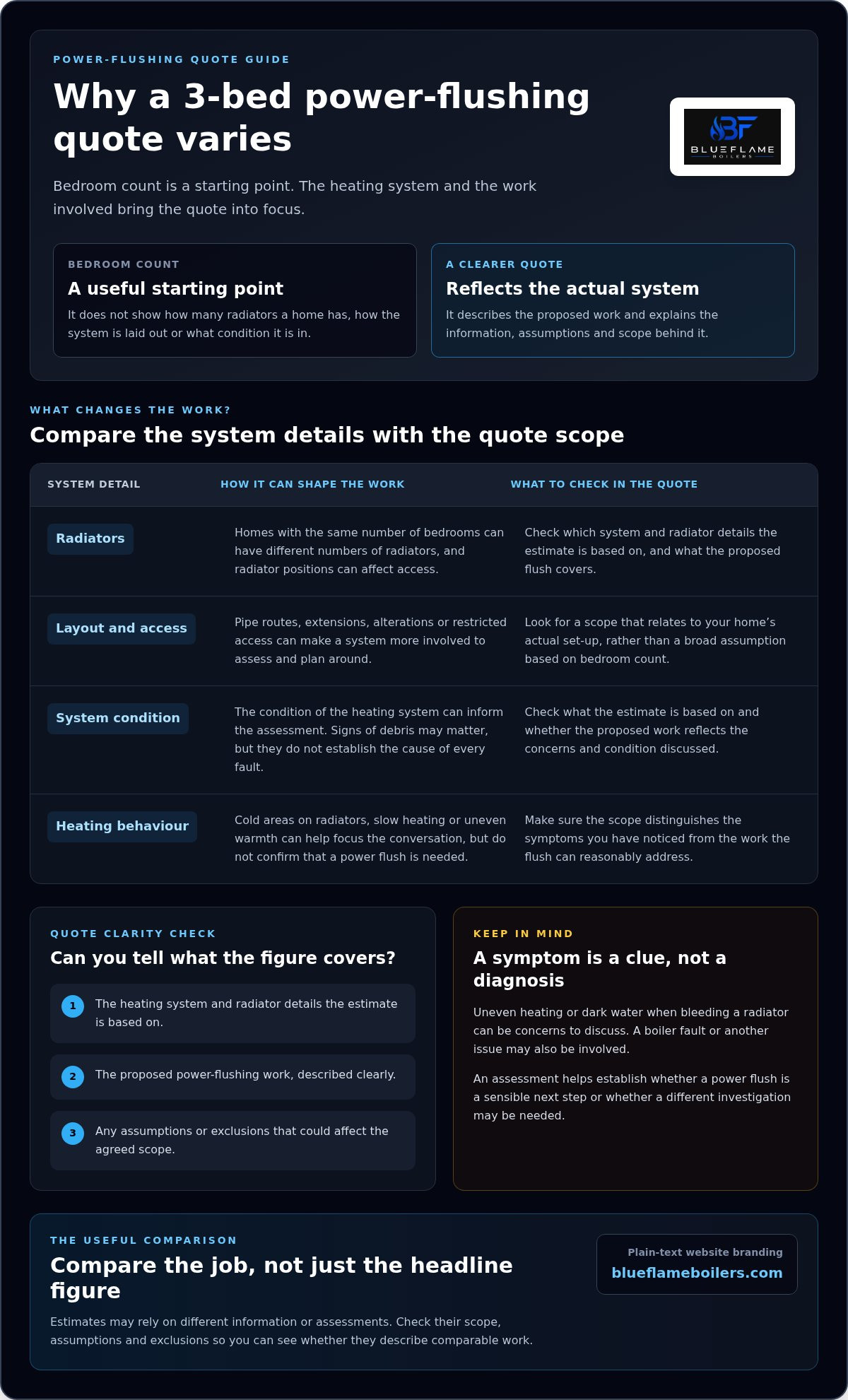
- The heating system and radiator details the estimate is based on.
- The proposed power-flushing work, described clearly.
- Any assumptions or exclusions that could affect the agreed scope.
With those points in view, you can compare the job itself rather than relying on a broad price table or a bedroom-count shortcut. Clear scope makes it easier to understand what is proposed and compare like with like.
What a central-heating power flush involves and what can affect the work
A power flush is a thorough clean of a home’s central-heating system. Specialist equipment circulates water and cleaning chemicals to help dislodge and remove built-up debris. It is intended to address contamination that may affect circulation, but the result depends on the system’s condition. An assessment matters because flushing cannot be promised as the answer to every heating problem.
Before agreeing to the work, the engineer needs to understand what is happening in your home. Radiator numbers, access and system layout help shape the practical scope. Your observations are useful clues too. Perhaps one radiator stays cool in places, several warm slowly, or rooms heat unevenly. These details help focus the discussion, even though they do not diagnose the cause by themselves.
How the engineer assesses the heating system
The engineer can discuss the heating behaviour you have noticed, look at relevant radiators and consider the system’s overall condition. This helps establish whether a power flush is a sensible next step or whether the symptoms call for a different investigation. Explain where and when the issue occurs, and whether it affects one radiator or several. Those specifics give the assessment a useful starting point.
Which system details can change the agreed scope
Radiator numbers, system layout and access can all affect how the work is planned. Visible signs of contamination may inform the assessment, but they do not reveal the cause of every fault. The agreed scope should follow what the engineer finds and the concerns you have raised, rather than assuming flushing will address every symptom.
- Radiator number and position: The engineer needs to understand which radiators are part of the system and how accessible they are.
- Layout and access: Extensions, alterations or restricted access can shape how the work is planned.
- System condition: Signs of debris may inform the assessment, whilst other faults could need separate investigation.
Symptoms can point to a concern, but they are not a confirmed diagnosis. Uneven radiator heating, for example, may raise questions about circulation or contamination, but it does not prove that a power flush is needed. A boiler or another part of the heating system could be involved too. The assessment helps distinguish what you have noticed from what the proposed work can reasonably address.
That distinction helps keep the agreed scope clear. If you mention a problem beyond the flushing work, it should be considered separately rather than quietly folded into the estimate. Blueflame Boilers Ltd provides power flushing in Epsom and nearby Surrey locations. For more context on the service, explore the Surrey power-flushing guide.
To discuss how your system’s condition and layout may shape the work, enquire about a power-flushing assessment. A clear discussion can bring your concerns and the proposed scope together before work is agreed.
How to compare power-flushing quotes without focusing only on price
A lower headline figure can catch your eye, but it does not show whether two estimates cover the same work. One quote might be based on details you supplied, whilst another accounts for radiator numbers, access and the system’s condition. Check the written scope before comparing the figures. That way, you are looking at what is actually proposed, not just the number at the top.
This matters for the cost to powerflush a 3 bed house too. Bedroom count alone will not tell you what each estimate assumes about the heating system. Check whether the quotes relate to the same system details and concerns. If their assumptions differ, the figures may not be directly comparable.
A simple like-for-like quote comparison
Put the estimates side by side and check what each is based on. Do they use the same property and radiator details? Is the proposed work clearly described? Are access assumptions or exclusions stated? These questions can reveal a difference in scope that a headline figure will not explain. Note any unanswered points before you decide.
- Property details: Does each estimate reflect the radiator numbers and system details you have provided?
- Work included: Can you tell, in plain language, what power-flushing work is proposed?
- Assumptions and exclusions: Is it clear what is assumed about access and system condition, and what is left out?
- Open questions: Is further investigation or additional work mentioned separately?
For example, one estimate might use the radiator count you shared over the phone, whilst another follows a closer assessment. Neither difference automatically makes one quote better or worse. It means you should understand what each figure covers before choosing. Checking the scope can make the comparison much clearer.
When a heating problem may need a different response
Uneven heating or a slow response can be a reason to investigate, but sludge is not the only possible cause. As experienced HVAC and heating specialists such as Peters Heating & Cooling note, a radiator fault, boiler issue or wider mechanical problem may need a different repair service entirely. Power flushing is not a fix for every heating concern, so the proposed work should match the problem you have described.
Describe what is happening, including which radiators are affected and when you notice the issue. If the boiler itself seems faulty, the boiler repair information can help you explore that route rather than assuming a flush will resolve it. Keeping the concerns distinct helps focus the proposed work.
Before agreeing to a quote, check that you can explain what work is proposed and what it does not cover. If anything is unclear, ask for the wording to be explained. A clear scope makes it easier to compare like with like and choose your next step with confidence.
When to consider a power flush in your Surrey home
A power-flushing assessment may be worth considering if uneven heating keeps returning or several radiators behave inconsistently. The useful question is not simply whether one room feels chilly. Notice whether particular radiators are affected, whether the issue appears after the heating has been on for a while, or whether it changes from day to day. That pattern gives the engineer a clearer starting point.
Signs that make an assessment worth considering
Look out for persistent cold areas on radiators, rooms that heat unevenly, or system water that appears discoloured when a radiator is bled. These are clues to discuss, not proof that sludge is present or that flushing is the right answer. Make a brief note of which radiators are affected and when you notice the problem. Specific observations are more useful than a general impression that the heating feels “off”.
Context can help distinguish an ongoing pattern from an occasional change. Note whether the same radiator is affected each time, whether the issue appears across several rooms, and whether anything changes after the heating has been running. Do not try to diagnose the system yourself. Your observations help the engineer understand your concern and assess whether a power flush is appropriate.
When a power flush may not answer the problem
Similar heating symptoms can have different causes. A boiler fault, an individual radiator issue or another part of the system may need attention instead of, or as well as, a flush. For households facing wider climate control or heating performance challenges, heating specialists such as Urban Climate Solutions can assist with comprehensive system repairs and servicing. The system’s condition and what you want to resolve should guide the decision. A power flush is not a guaranteed fix for every fault and should not be presented as a promise of lower bills or restored performance.
If you are weighing up the cost to powerflush a 3 bed house, first make sure the proposed work matches the concern you have described. A clear assessment helps distinguish a flushing-related issue from a problem that needs a different response. For routine boiler-care context, see this guide to boiler servicing in Epsom.
Blueflame Boilers Ltd’s certified engineers provide power flushing in Epsom and nearby Surrey locations. Describe what you have noticed and arrange an assessment focused on your home’s heating system and concerns.
Arrange a power-flushing assessment with Blueflame Boilers
Once you have compared what different quotes cover, the next step is to discuss your own heating system. Start by describing the home, explaining what you have noticed and talking through the system and proposed work. That keeps the conversation focused on your concerns rather than a generic assumption based on bedroom count.
What to share when arranging an assessment
Share your property location and that it is a three-bedroom home. If you know how many radiators there are, include that too. Explain which rooms or radiators are affected, what the symptoms are and when they occur. Mention relevant system history, such as previous repairs or changes, if you know it. You do not need technical terms; clear observations are helpful.
- Location and home: Say where the property is and describe its size.
- Heating concerns: Note the affected radiators, rooms and any pattern you have observed.
- System background: Share relevant changes, repairs or servicing history you know about.
These details help shape an informed discussion about your home’s requirements and provide context for the engineer’s assessment. If you are unsure how many radiators there are or what has caused a symptom, simply say so. An accurate description of what you have noticed is a good place to begin.
Take the next step with a local heating team
Blueflame Boilers provides power flushing for homes in Epsom and nearby Surrey locations. Its certified engineers can discuss your concerns and assess the heating system, helping establish whether flushing is suitable and what work should be included. The agreed scope should fit the individual system, its condition and the issues you want addressed, rather than relying on bedroom count alone.
If you are weighing up the cost to powerflush a 3 bed house, explaining your property and symptoms is a practical first step towards a relevant assessment. From there, you can discuss the system and understand the proposed scope before deciding how to proceed. You do not need every technical detail to hand; share what you know and what you have observed.
To start a conversation about your home’s heating system, enquire about power flushing. Discuss your concerns and the work scope for your system.
Take the next step towards clearer heating
Turn your concerns into a practical starting point. Before arranging an assessment, jot down what you would like to understand about your heating and what outcome matters most to you. That gives the conversation a clear purpose and keeps attention on your home’s needs. The cost to powerflush a 3 bed house makes more sense when discussed alongside the actual system and proposed work, rather than as a figure in isolation.
You do not need to arrive with a diagnosis or technical knowledge. A straightforward account of what you have noticed is enough to begin discussing whether a power-flushing assessment is the right next move. From there, you can decide with greater confidence what to do next.
A clear conversation is a positive first step. Take it at your pace, and centre the decision on your home’s needs.
Frequently Asked Questions
How much does it cost to powerflush a 3-bed house?
There is no reliable figure based on bedroom count alone. The cost to powerflush a 3 bed house depends on the system and the work agreed. To make an estimate more useful, share the radiator count if known, describe any access restrictions and explain the symptoms you have noticed. Check what work the estimate covers and whether related concerns are excluded before comparing it with another quote.
Does the number of radiators affect a power-flushing quote?
Yes, radiator numbers can affect the work involved, but they do not tell the whole story. A home with radiators in an extension, for example, may have different layout or access needs from one with the same count on a single floor. If you do not know the exact number, give an approximate count and mention any radiators that are difficult to reach. The assessment can then take the actual system into account.
Is a power flush always the right fix for cold radiators?
No. A cold radiator can have several possible causes, so do not treat the symptom as proof that sludge needs flushing. Note whether one radiator or several are affected, whether the whole radiator is cool or only part of it, and whether the issue persists. Those details help an engineer assess what might be happening and whether a power flush is suitable, rather than proceeding on guesswork.
Can power flushing damage an old central-heating system?
Age alone does not determine whether a system is suitable for flushing. Its present condition matters, especially if you are aware of leaks, corrosion or recurring problems. Share those concerns before work is agreed so the engineer can consider them as part of the assessment. Do not assume flushing is automatically suitable for every older system, or that damage is inevitable. The decision should follow an informed review of the system.
How long does it take to powerflush a three-bedroom house?
The time required depends on the system and the agreed work, so bedroom count cannot provide a dependable duration. A home with straightforward access may have different practical requirements from one with restricted access or a more involved layout. If timing matters for your household, mention that when discussing the estimate and ask what the proposed scope means for the expected visit. Avoid relying on a general duration as a promise for your home.
Can a power flush fix a boiler fault?
No. A power flush is intended to address the central-heating system, not repair every fault within the boiler. If the boiler is displaying an error, stopping unexpectedly or behaving unusually, describe that separately rather than assuming flushing will resolve it. The symptoms need to be assessed so the appropriate work can be considered. Keeping boiler concerns distinct from radiator or circulation concerns helps avoid agreeing to work that does not match the problem.
What should a power-flushing quote include?
A useful quote should identify the system details it is based on, describe the proposed work and state any assumptions or exclusions. Keep notes on the radiator count, access concerns and symptoms you reported so you can check whether the estimate reflects them. Blueflame Boilers provides power flushing in Epsom, Ashtead, Leatherhead, Oxshot, Cobham, Weybridge, Ewell, Worcester Park, Cheam, Sutton, Carshalton, Banstead, Reigate, Tadworth, Woking, Bookham, Effingham, Horsley, Ripley and Kingswood, Surrey. Enquire with Blueflame Boilers about a power-flushing assessment and discuss the work your heating system needs.


