
Urgent plumbing help in Leatherhead is available 24 hours a day, 7 days a week. A 24/7 emergency plumber in Leatherhead can help with problems such as a serious leak, a burst pipe or a sudden loss of heating, while routine jobs are usually booked within 24–48 hours. The key is knowing whether the fault needs urgent attention or can safely wait.
A leak spreading through your home or a heating failure on a cold evening can be stressful, and it’s natural to want clear next steps. This guide explains what to do while waiting for help, what emergency call-outs can involve, and how leaks, no-heat problems and blocked drains are approached. You’ll also learn what can affect the work required, so you can make a calm, informed decision.
Key Takeaways
- Assess whether water is actively damaging your home or a heating fault is affecting essential use to decide how urgently to seek help.
- When calling about a leak or burst pipe, describe where it is and whether it is still spreading so the issue can be triaged clearly.
- For no-heat problems, note what has stopped working and whether the fault affects the boiler, radiators or hot water.
- Explain which drains or fittings are blocked and whether more than one is affected; this helps clarify the likely scope of the problem.
- Before arranging an urgent call-out, understand what the repair involves and how the next steps will be explained.
24/7 Emergency plumbing availability
Emergency plumbing help in Leatherhead is available 24 hours a day, seven days a week. Routine jobs are usually booked within 24–48 hours, while emergency plumbers often arrive within 60 minutes. A 24/7 emergency plumber in Leatherhead can assess urgent faults outside routine booking hours.
Emergency and routine availability
Emergency call-outs are for urgent problems that cannot wait for a routine appointment, such as a leak causing active damage or a sudden loss of heating. A dripping tap you can contain may be suitable for a standard booking instead.
Routine plumbing jobs are usually booked within 24–48 hours. When reporting a fault, explain what has stopped working, where it is, and whether the problem is worsening. These details help describe its urgency clearly.
Out-of-hours charges
Nights, weekends and bank holidays may affect the charge for an emergency visit. The cost also depends on the fault and work required, so ask what the call-out covers and whether additional repairs are charged separately. Request a clear quote before work begins.
Before arranging a visit, look for relevant qualifications, suitable insurance and customer reviews. For boiler work, check that the engineer is qualified to work on gas appliances. Reviews can help you gauge how previous customers describe communication and completed work.
Home insurance may cover some emergency plumbing repairs, depending on your policy. Check whether emergency assistance is included, what excess applies and whether your insurer requires you to take particular steps before arranging repairs.
Leatherhead service areas
Emergency plumbers serving Leatherhead may also cover nearby locations such as Oxshot and addresses within KT22. The areas covered vary between services, so give your full address and postcode when describing the problem.
Explain whether you need help with a leak, heating fault or another plumbing issue. Give your location so the person taking your call can establish whether your property is within the service area and understand the situation.
Steps while waiting
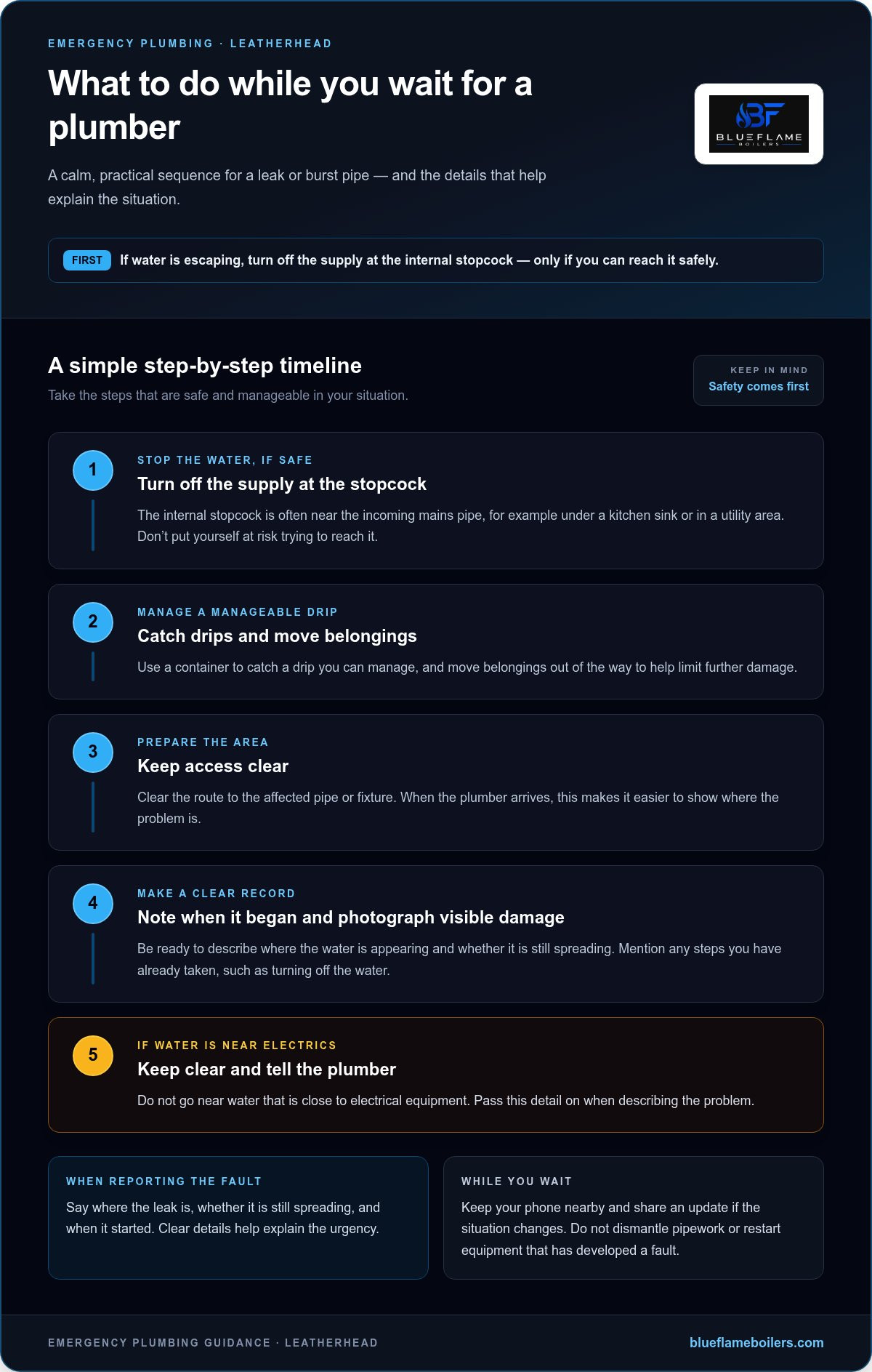
If water is escaping, turn off the supply at the internal stopcock if you can reach it safely. It is often near the incoming mains pipe, such as under a kitchen sink or in a utility area. Use a container to catch a manageable drip and move belongings out of the way.
Keep the route to the affected pipe or fixture clear. Note when the fault began and take photographs of visible damage. If water is near electrical equipment, keep clear and tell the plumber. Choosing a 24/7 emergency plumber in Leatherhead is only one step; these details help explain the situation before arrival.
24/7 Emergency plumbing response
Emergency plumbing and no-heat call-outs in Leatherhead are estimated to take around 40–55 minutes across KT22. This gives you a useful indication of the expected journey time, while the fault itself still needs assessing once the engineer arrives.
Estimated response times
The 40–55-minute estimate applies to emergency plumbing and no-heat call-outs across KT22. It describes the expected response, not how long repairs will take. For example, a visible leak may be straightforward to locate, while a fault hidden behind a panel needs further inspection.
Give clear details when reporting the problem. Say which room is affected, whether water is still escaping, and whether the heating or hot water has stopped. Mention every affected area. This helps the person taking your call understand the urgency and pass useful details to the attending engineer.
Arrival and repair are separate stages. The engineer first needs to inspect the fault, identify the work required and explain the next step. A damaged pipe may need a different repair from a boiler fault, even if both have left your home without hot water.
Engineer attendance timing
The journey to your property can depend on its exact location, road conditions and the engineer’s existing jobs. In Leatherhead, Oxshott and other parts of KT22, give the full postcode and explain any access details, such as a shared entrance or a rear access route.
Keep your phone nearby after arranging attendance. If the situation changes, such as a leak spreading or the heating stopping completely, pass on the update. Do not dismantle pipework or restart equipment that has developed a fault. Keep the route to the affected area clear.
When the engineer arrives, show them the problem and explain what you have observed. Mention any steps already taken, such as turning off the water. Ask what the assessment has found and what work is proposed before it begins. If additional parts or work are needed, ask what the immediate next step will be.
For a heating issue, note whether the radiators are cold, whether hot water is available and any message displayed by the boiler. For a plumbing fault, describe where water is appearing and whether it continues. You can use the emergency call-out service to make an enquiry.
The service states that its engineers can normally reach customers in Leatherhead in less than 1 hour. Treat that as a broad arrival expectation alongside the 40–55-minute estimate for KT22, rather than a promise of an exact arrival time. The time needed to resolve the fault is separate and can only be understood after an inspection. When requesting help, make the nature of the emergency clear and keep the phone available in case further information is needed. If anything changes while you wait, provide an update so the engineer has a current picture of the situation. Once they arrive, use the assessment to understand what can be dealt with immediately and whether any further work is required.
Emergency leaks, burst pipes and no-heat callouts
A spreading leak, burst pipe or sudden loss of heating needs prompt assessment. For a leak, turn off the water at the stopcock if you can reach it safely. The internal stopcock is often near the incoming mains pipe, such as under a kitchen sink or in a utility area. If the boiler or heating pipework is leaking, switch off the heating controls if safe and describe the fault clearly.
Emergency leak and burst pipe repairs
The engineer first needs to locate the leak and establish whether it comes from a joint, fixture or damaged pipework. A burst pipe may need the water isolated before the damaged section can be repaired or replaced.
Tell the person taking your call which room is affected, whether water is still flowing and whether the leak is near electrical equipment. This helps them understand the immediate risk and the access the repair may require.
While waiting, move furniture and belongings away from the water, and use a bucket to catch a contained drip. Do not cut into a wall or install replacement pipework yourself. If water is near electrical equipment, keep clear and tell the responding plumber where it is.
Frozen pipe repairs
A frozen pipe can restrict water flow and may split as ice thaws. If a tap stops running during cold weather, tell the plumber which fixture is affected and whether other taps still work.
Do not use a naked flame or force a stiff tap. Keep the area accessible and explain whether the pipe is exposed or behind a cupboard. The plumber can assess the pipework and determine whether it needs thawing or repair.
A no-heat call-out may involve a boiler fault, central heating controls or another issue in the system. Note whether the radiators are cold, whether the hot water still works and any message shown on the boiler display. These details help distinguish a heating fault from a water leak.
For a leaking radiator or heating pipe, avoid restarting the system before the fault is assessed. Keep people away from hot water or wet flooring, and show the engineer the affected section on arrival. If you have shut off the water supply, say where.
Describe the problem in plain terms. “Water is coming through the ceiling below the bathroom” is more useful than “the pipe has failed”. Mention visible damage, recent changes to the system and whether the leak continues after you shut off the water. This gives the engineer a clearer starting point.
Blocked drains, sinks and toilets
A blocked toilet, slow kitchen sink or overflowing drain can disrupt essential routines. Note which fixtures are affected and whether water is backing up. This helps distinguish a local blockage from a wider drainage problem.
Start with a simple check: has one fixture stopped draining, or are several affected? A single blocked basin may point to a trap or nearby pipe, while water rising in more than one sink or toilet could indicate an issue further along the drainage route. Tell the plumber exactly what you observe.
Stop using affected fixtures until the blockage is assessed. If a toilet is close to overflowing, do not flush it again. Keep children and pets away from standing wastewater, and move items off the floor around the affected area. These steps can limit further mess while help is arranged.
For a kitchen sink, say whether water drains slowly, stands in the bowl or returns through another outlet. Explain whether the problem began after washing up or during normal use. Avoid pouring more products into the drain, especially if you do not know what is already there. Tell the plumber if you have used a cleaner.
A plumber can inspect accessible fittings and pipework to locate the blockage. Depending on what the inspection finds, the repair may involve clearing the obstruction or addressing a damaged section. Ask what has caused the restriction and what work is needed before agreeing to a repair or replacement.
Finding a leak is different from clearing a blocked drain. If you see damp patches, water staining or unexplained moisture near a pipe, point out the exact location and when it appeared. A leak from an incoming water supply pipe differs from wastewater backing up through a drain, so describe the water’s source and behaviour.
In Leatherhead, tell the plumber whether the problem affects an upstairs toilet, a ground-floor kitchen sink or an outside drain. Mention any gurgling, unpleasant smells or water appearing at another outlet. These details help build a clear picture without guessing where the blockage is.
Before the visit, clear access to the affected sink, toilet or inspection point. Keep track of which taps or fixtures you used and what happened. If several drains are affected, list them in order. This can help the plumber assess whether the problem is isolated or shared.
Confirm whether the quoted price applies to the issue found, and ask about any additional work before proceeding.
24/7 Emergency plumbing response
Emergency plumbing and no-heat call-outs in Leatherhead are estimated to take around 40–55 minutes across KT22. This gives you a useful indication of the expected journey time, while the fault itself still needs assessing once the engineer arrives.
Estimated response times
The 40–55-minute estimate applies to emergency plumbing and no-heat call-outs across KT22. It describes the expected response, not how long repairs will take. For example, a visible leak may be straightforward to locate, while a fault hidden behind a panel needs further inspection.
Give clear details when reporting the problem. Say which room is affected, whether water is still escaping, and whether the heating or hot water has stopped. Mention every affected area. This helps the person taking your call understand the urgency and pass useful details to the attending engineer.
Arrival and repair are separate stages. The engineer first needs to inspect the fault, identify the work required and explain the next step. A damaged pipe may need a different repair from a boiler fault, even if both have left your home without hot water.
Engineer attendance timing
The journey to your property can depend on its exact location, road conditions and the engineer’s existing jobs. In Leatherhead, Oxshott and other parts of KT22, give the full postcode and explain any access details, such as a shared entrance or a rear access route.
Keep your phone nearby after arranging attendance. If the situation changes, such as a leak spreading or the heating stopping completely, pass on the update. Do not dismantle pipework or restart equipment that has developed a fault. Keep the route to the affected area clear.
When the engineer arrives, show them the problem and explain what you have observed. Mention any steps already taken, such as turning off the water. Ask what the assessment has found and what work is proposed before it begins. If additional parts or work are needed, ask what the immediate next step will be.
For a heating issue, note whether the radiators are cold, whether hot water is available and any message displayed by the boiler. For a plumbing fault, describe where water is appearing and whether it continues. If you need to arrange an urgent visit, use the emergency call-out enquiry page.
Blueflame Boilers: Gas Boiler Installation
Blueflame Boilers Ltd provides emergency call-outs and boiler repairs. If a boiler has reached the point where repair is no longer suitable, the company also offers gas boiler installation. Boiler servicing is available for homeowners who need their gas boiler maintained.
When calling about a boiler fault, explain what the boiler is doing, whether you have heating or hot water, and any message shown on its display. If you are considering a new installation, details about your current boiler and heating system can help frame the conversation. The right next step depends on whether you need a repair, replacement or routine servicing.
Contact Blueflame Boilers or visit blueflameboilers.com to discuss your boiler needs.
Take the next step with confidence
An urgent fault can feel difficult to manage, especially when you are unsure whether it needs a repair, further investigation or a longer-term solution. Focus on the immediate decision: explain the problem clearly and ask what the proposed next step will address. This gives you a practical basis for deciding how to proceed.
If you need a 24/7 emergency plumber in Leatherhead, share your location and the immediate issue when you get in touch. A concise description helps start the conversation, whether you’re dealing with water escaping, a boiler fault or another urgent plumbing concern. You can also explain what outcome matters most, such as stopping damage or restoring hot water.
Clear information makes the first conversation more useful. Explain what is happening and take the next step at a pace that feels right for your situation.
Contact Blueflame Boilers for emergency help
With a clear plan, you can move forward with greater confidence.
Frequently Asked Questions
Which plumbers offer 24/7 emergency call-outs in Leatherhead, Surrey?
Blueflame Boilers Ltd offers emergency call-outs for urgent plumbing and boiler problems in Leatherhead. If you need a 24/7 emergency plumber in Leatherhead, explain the issue and give your postcode when making an enquiry. For example, say whether you’re dealing with a burst pipe, a leak or a boiler fault. Clear details help describe the work needed and the urgency of the situation.
What emergency plumbing services are available, including burst pipes, leaks and blocked drains?
Emergency plumbing can address burst pipes, active leaks and blocked sinks or toilets. The work depends on the fault: a plumber may need to find the source of a leak, isolate the water or investigate a blockage. Describe which fixtures are affected and whether water is escaping or backing up. Blueflame Boilers Ltd provides emergency call-outs for urgent plumbing issues.
What are typical emergency plumber call-out fees and hourly rates in Leatherhead?
Emergency plumbing costs depend on factors such as the fault, access, work required, parts and timing of the call-out. There is no single price for every repair. Blueflame Boilers Ltd provides a quote based on the work involved, with a free, no-obligation quote so you can review the proposed work before deciding how to proceed.
How quickly can an emergency plumber reach Leatherhead?
Arrival time depends on the address, road conditions and the engineer’s existing call-outs. A 24/7 emergency plumber in Leatherhead can give an estimated arrival window when you explain the location and fault. Provide the full postcode and mention any access details, such as a shared entrance or difficult-to-find property. If the situation changes while you wait, pass on the update.
How can I check an emergency plumber’s qualifications, insurance and reviews?
Check for relevant plumbing qualifications, such as an NVQ Level 2 or 3, and suitable insurance, including public liability insurance. For boiler work, confirm the engineer is qualified for gas appliances, and read customer reviews to assess communication and completed work.


