
Could a CP12 check do more than add a date to your rental property’s paperwork? A thorough gas safety record gives you a clear account of what was checked and whether anything needs follow-up. For a CP12 certificate Cheam landlords can arrange with Blueflame Boilers Ltd, preparing the property and coordinating access with tenants can help the appointment run smoothly.
It’s understandable to worry that an issue found during the check could mean extra work or affect your letting plans. Knowing what the engineer will inspect and making sure appliances are accessible helps you approach the appointment with confidence. Blueflame Boilers Ltd’s certified engineers carry out landlord gas safety checks in Cheam and clearly record the outcome.
This practical checklist explains what a gas safety check covers, what to prepare before the engineer arrives and how to understand the record afterwards. It also sets out how to respond to findings, so you can plan any required follow-up and keep the process moving.
Key Takeaways
- Understand what the CP12 record represents and how it documents a rental property’s gas safety check.
- Prepare access to relevant appliances and installations so the engineer can carry out the checks efficiently.
- Gather property details and existing records before arranging your appointment.
- Review the recorded findings and organise any necessary follow-up.
- Arrange a CP12 certificate Cheam appointment with Blueflame Boilers’ certified engineers for your local rental property.
CP12 Certificate in Cheam: What Landlords Need to Know
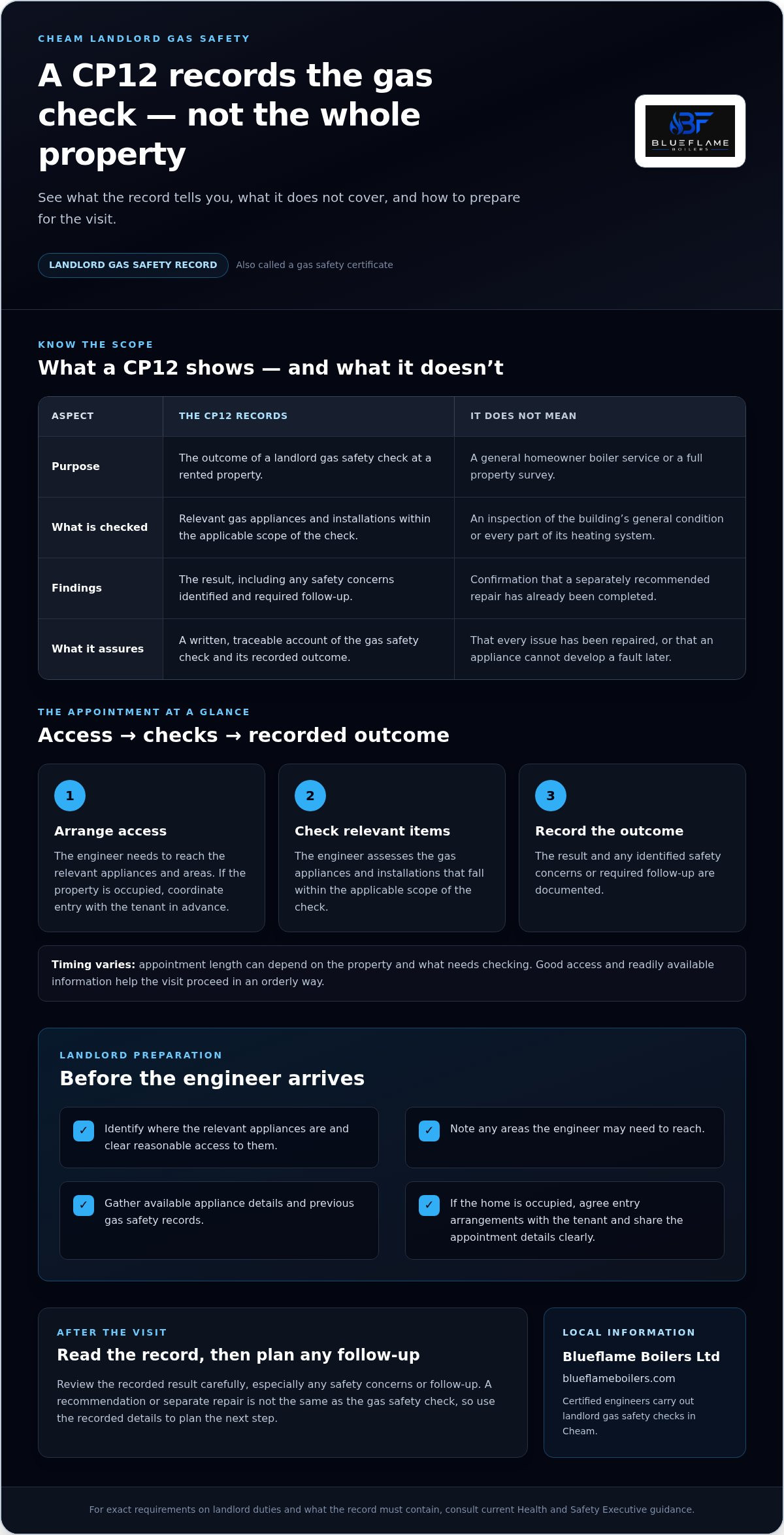
Cheam landlords arranging a gas safety check need a clear record of what was examined and what the engineer found. A CP12, also called a landlord gas safety record or gas safety certificate, documents the outcome of a gas safety check at a rented property. It covers gas safety, not the general condition of the building or every part of its heating system.
Blueflame Boilers carries out landlord gas safety checks and provides CP12 certificates in Cheam through its certified engineers. Understanding who the check is for and what the record covers makes it easier to prepare for the appointment and act on the result.
Who may need a CP12 gas safety check?
The responsibility applies to landlords who let properties with gas appliances. In broad terms, landlords must arrange the applicable gas safety checks for appliances and flues they provide for tenants. The precise requirements can depend on the property and circumstances, so consult the Health and Safety Executive’s current landlord gas safety guidance for details of duties and any exceptions.
This is different from general homeowner boiler maintenance. A homeowner living in their own property doesn’t need a landlord gas safety record simply because they own a gas boiler, although regular checks and servicing remain sensible ways to look after gas appliances. A CP12 is specifically connected with a landlord’s responsibilities for a rented home.
What a CP12 record is intended to show
A CP12 is a written record of a landlord gas safety check, documenting the inspection outcome for the relevant gas appliances and installations. It gives the landlord an account of the check, rather than a broad assurance that the whole property has been inspected. The term is commonly used for a landlord gas safety record; a general overview of the Landlord's Gas Safety Certificate also explains how the CP12 name is used.
The record makes the result traceable. If the engineer identifies a concern, the finding and any required follow-up should be recorded clearly. A completed check doesn’t mean that every issue has also been repaired. Read the outcome and recommendations carefully, then arrange appropriate action where needed.
Keep the record with the property’s other important documents. It provides a useful reference when organising future checks, communicating with tenants or handing over management. For exact rules on what the record must contain and how it should be shared, use current HSE guidance rather than relying on a generic checklist.
In short, a CP12 is a focused safety record for a landlord’s gas check. Knowing that distinction helps you prepare without mistaking it for a full property survey or a boiler service.
What Happens During a CP12 Gas Safety Check in Cheam?
A CP12 visit follows a practical sequence: the engineer needs access to the relevant gas appliances and areas, carries out checks within the applicable scope, then records the outcome. Blueflame Boilers’ certified engineers provide CP12 gas safety checks in Cheam. Knowing what to expect helps you organise access and understand the findings afterwards.
The exact work depends on the property and the gas appliances and installations within scope. The engineer checks the relevant items at the property rather than carrying out a general building survey. The HSE Gas Safety Guidance for Landlords sets out the wider landlord context; the visit focuses on recording the gas safety check and its result.
- Access is arranged. The engineer needs to reach the relevant appliances and areas. If the property is occupied, coordinate entry with the tenant in advance.
- The relevant items are checked. The engineer assesses the gas appliances and installations that fall within the applicable scope of the check.
- The outcome is recorded. The engineer documents the result and any identified safety concerns or required follow-up.
The appointment length can depend on the property and what needs checking. Good access and readily available information help the visit proceed in an orderly way, but they don’t replace the engineer’s assessment.
How to prepare the property before the engineer arrives
Make a simple access plan before the appointment. Identify where the relevant appliances are, clear reasonable access to them and note any areas the engineer may need to reach. Gather available appliance details and previous gas safety records so they’re easy to find. If the property is occupied, agree entry arrangements with the tenant and share the appointment details clearly.
What the landlord should expect after the checks
After checking the relevant items, the engineer records the result and any safety concerns identified during the visit. Read the record carefully, especially where it notes follow-up. A recommendation or separate repair isn’t the same as the gas safety check, and the check doesn’t mean further work has been completed. If a concern is recorded, use the details to plan the next step.
The visit checks relevant gas appliances and installations within scope, then records the outcome and any identified concerns. Keep that distinction in mind when reviewing your CP12 certificate Cheam record. To arrange a check for a local rental property, enquire about a CP12 appointment with Blueflame Boilers.
Cheam CP12 Checklist: Records, Access and Safety Findings
A little organisation before and after the appointment helps keep your rental property’s gas safety paperwork easy to follow. Use this checklist to prepare access, gather useful records and deal calmly with any findings. A CP12 record documents the check outcome, but it isn’t a promise that an appliance won’t develop a fault later.
Before the CP12 appointment: landlord checklist
Bring the key details together before the engineer arrives. If a tenant or property manager handles access, agree arrangements with them in advance and explain which areas need to be reached. Clear access to relevant gas appliances and installations, and gather previous records or appliance information if available. Note any known concerns so you can raise them during the visit.
- Confirm entry arrangements with the tenant or property manager, including how the engineer will access the property.
- Make relevant areas accessible by moving belongings that obstruct access to appliances or other areas included in the check.
- Gather available paperwork, such as previous gas safety records and appliance details, to keep the property’s history together.
- Write down known concerns so you can describe them clearly and bring them to the engineer’s attention.
These steps help prevent avoidable access problems. They don’t replace the engineer’s checks, and you don’t need to diagnose an issue yourself.
After the check: records and next steps
When you receive the record, file it with the property’s safety documents and make sure it reaches the right people. Current HSE guidance says landlords must provide a copy to existing tenants within 28 days of the check and to new tenants before they move in, and keep the record for at least two years. The Gas Safe Register Landlord Responsibilities guidance is also a useful reference for understanding the landlord context.
Read the recorded outcome rather than treating the paperwork as a simple pass-or-fail form. If the engineer notes a safety concern, follow the advice recorded for that specific finding. The recommended response depends on what was identified, so avoid guessing at technical remedies or assuming further work has already been completed.
If a separate boiler repair is needed, Blueflame Boilers can help with boiler repair services. Keep the repair outcome and gas safety record together in your files, so it’s easy to see what the check found and what action followed.
For a CP12 certificate Cheam landlords can manage with confidence, keep to a straightforward routine: prepare access, retain the record, share it within the required timeframe and act on any advice documented by the engineer.
How to Arrange a CP12 Appointment for a Cheam Rental Property
Booking a gas safety check is easier when the property details and access plan are ready. Blueflame Boilers provides landlord gas safety checks and CP12 certificates in Cheam, carried out by certified engineers. A clear brief helps tailor the appointment to your property and makes tenant coordination more straightforward.
Details to have ready when arranging the visit
Start with the full Cheam property address and your preferred timing, taking account of when the existing record is due for renewal or when the property will be occupied. Rather than estimating how long the appointment will take, share the practical details that help plan access and identify the relevant gas appliances.
- Property address: provide the complete address so the appointment is linked to the correct rental home.
- Appliances: list the gas appliances you know are at the property, such as the boiler or cooker, and mention any previous records you have.
- Access arrangements: explain how the engineer will enter and whether any appliance or area may be difficult to reach.
- Occupancy: say whether tenants live at the property and, if so, how access can be coordinated with them or a property manager.
- Timing needs: explain any relevant letting or tenancy dates so you can plan the check around those commitments.
Be specific about practical constraints. If access needs to be arranged through a managing agent, or a tenant has to be present, mention that when organising the visit. Keep a note of the arrangements and pass the details on to anyone coordinating entry. This helps avoid confusion on the day, particularly if the property is occupied or an appliance isn’t immediately accessible.
Keep CP12 checks distinct from routine boiler servicing
A landlord gas safety check and routine boiler servicing have different purposes. The CP12 check records the outcome of the relevant gas safety checks. A boiler service focuses on maintaining the boiler and its operation. Don’t treat one as a substitute for the other; make sure the appointment you arrange matches the task you need completed. Routine boiler servicing can be considered separately as part of looking after the appliance.
If you’re arranging a CP12 certificate Cheam landlords can manage with confidence, keep the booking information together: address, appliance details, access plan and timing requirements. That gives the engineer a practical starting point and helps you prepare for the visit.
Blueflame Boilers provides local CP12 appointments for landlords in Cheam. Once the check is complete, keep the resulting record with the property documents and follow any advice noted by the engineer.
Arrange Your CP12 Certificate in Cheam with Blueflame Boilers
For landlords, the next steps are simple: organise access to the relevant gas appliances, arrange the check, then keep the completed record with the property documents. Blueflame Boilers provides landlord gas safety checks and CP12 certificates in Cheam, carried out by certified engineers. The appointment checks relevant gas appliances and installations within scope, records the outcome and notes any required follow-up. The result depends on what the engineer finds, so don’t assume a particular outcome in advance.
What Blueflame Boilers brings to a local CP12 check
A methodical appointment starts with clear details about the property and access. Blueflame’s certified engineers carry out the CP12 check and document its findings, helping you understand what was checked and whether the record notes anything requiring further attention. A gas safety check is a specific task, not a general property inspection. Any separate repair or maintenance work is follow-up, not something to assume is included in the check.
To make arrangements easier, have these details ready:
- Property location: share the Cheam address so the enquiry relates to the correct rental property.
- Access requirements: explain how the engineer can enter and whether a tenant, property manager or other contact needs to coordinate access.
- Relevant appliances: list the gas appliances you know are at the property and mention any access constraints or concerns.
- Timing needs: outline any tenancy or letting dates that affect when you’re planning the check.
These details make the conversation specific to your property and help avoid missing an important access arrangement, such as coordinating entry with an occupier or managing agent. You don’t need to diagnose an appliance concern yourself. Describe what you’ve noticed, then refer to the engineer’s recorded findings and advice.
Take the next step for your Cheam property
Once the appointment is arranged, prepare access and have any previous records to hand. After the visit, review the new record, keep it with the property paperwork and follow up on any action noted by the engineer. That gives you a clear trail from booking to recorded result, without treating the certificate as a guarantee against future faults or confirmation that separate work has been completed.
Blueflame Boilers provides CP12 checks for rental homes in Cheam and nearby areas, including Epsom, Ashtead, Leatherhead, Oxshot, Cobham, Weybridge, Ewell, Worcester Park, Sutton, Carshalton, Banstead, Reigate, Tadworth, Woking, Bookham, Effingham, Horsley, Ripley and Kingswood, Surrey. Share your property location and access requirements when you enquire to arrange a CP12 check with a certified engineer.
Make Your Next Gas Safety Check Easier to Manage
Give your property a simple gas safety routine that works alongside your wider tenancy administration. Set a reminder for the next check, keep appointment details with the property file and make sure whoever manages access knows how to coordinate with the tenant. A little organisation can make future planning much more straightforward.
For a CP12 certificate Cheam landlords can turn to Blueflame Boilers’ local service, delivered by certified engineers. Share the property location and access arrangements when you enquire, then prepare for a clearly documented check. The engineer will record the outcome and any follow-up noted during the visit, helping you decide what needs attention next.
With a clear plan in place, you can approach the appointment calmly and keep your property records organised. Enquire with Blueflame Boilers to arrange a CP12 check for your Cheam rental property.
Frequently Asked Questions
What is a CP12 certificate, and who needs one?
A CP12 is the commonly used name for a landlord gas safety record, which documents the outcome of a gas safety check at a relevant rented property. Landlords should check current Health and Safety Executive guidance for the duties that apply to their circumstances, including timing and record-sharing. A CP12 isn’t a general property survey. Blueflame Boilers carries out landlord CP12 checks in Cheam, with the engineer recording the visit’s findings.
Is a CP12 certificate the same as a boiler service?
No. A CP12 check records the outcome of relevant gas safety checks, while a routine boiler service focuses on maintaining the boiler. They have different purposes, so booking one doesn’t automatically cover the other. Blueflame Boilers provides both CP12 checks and boiler servicing. For example, a landlord may need a gas safety check for the rental record and a separate service to maintain the boiler.
How often does a landlord need a CP12 check?
Landlord gas safety checks are generally required annually, but check current Health and Safety Executive guidance for precise timing rules and how they apply to your property. Don’t rely on memory or wait until paperwork is difficult to locate. Add the next check to your property calendar after reviewing the record, and keep the appointment details alongside the tenancy documents so they’re easy to find.
What happens if an appliance does not pass a CP12 check?
The engineer records the result and explains any safety concern and recommended action. What happens next depends on the specific finding, so follow the advice given rather than assuming every issue has the same fix. A check doesn’t mean separate remedial work has been completed. If the recorded concern relates to a boiler that needs repair, Blueflame Boilers also provides boiler repairs in its local service area.
Do owner-occupiers need a CP12 certificate?
A CP12 is associated with landlord gas safety records for relevant rented properties, rather than being a general certificate for every homeowner. Owner-occupiers may still arrange gas appliance checks and maintenance, but that isn’t automatically the same as a landlord requirement. If you live in a property with tenants, shared accommodation or a changing occupancy arrangement, check current official guidance to understand which responsibilities apply.
What should I prepare before a CP12 appointment in Cheam?
Make sure the engineer can reach the relevant appliances and any areas needed for the visit. If a tenant holds the keys or needs to provide access, agree the arrangements with them beforehand. Previous records or appliance information can also be useful to have nearby. For a CP12 certificate Cheam appointment, flag access restrictions or concerns when arranging the visit rather than trying to diagnose an appliance yourself.
Does a CP12 certificate cover every gas appliance in a property?
Not necessarily. The check and record cover the relevant gas appliances and installations within the applicable scope for that property. Don’t assume an appliance in a separate area or a shared system has been included unless the record says so. Review the completed document to see what it covers, and use current official guidance if you’re unsure how the scope applies to your property.


