
Could a boiler that still heats your home be hiding a small fault? It’s easy to put off a check when the radiators are warm, but noticing changes early can help you choose what to do next. If you’re searching for Effingham boiler maintenance, this checklist can help you separate simple observations from work that needs an engineer.
It’s understandable to be unsure what routine maintenance involves, or whether an unusual noise means a repair is needed. In the UK, a gas boiler service is recommended every 12 months by a Gas Safe registered engineer. For homeowners, this is a recommendation rather than a legal requirement. This guide explains what you can safely observe, how servicing differs from repairs, and what information to have ready when you make an enquiry. You’ll have a practical way to describe your boiler’s behaviour without trying to diagnose it yourself.
Key Takeaways
- Use the Effingham boiler maintenance checklist to record changes without attempting boiler adjustments yourself.
- Understand the purpose of routine servicing and how a separate repair may be needed if a fault is found.
- Choose a next step based on what you’ve noticed, whether you’re planning maintenance or reporting a concern.
- Prepare useful information before a visit and keep a record of the findings afterwards.
- Look for professional boiler care from Gas Safe registered engineers who explain their findings clearly and work considerately.
Effingham Boiler Maintenance: What a Practical Checklist Should Cover
Boiler maintenance can seem unclear when the heating is working normally. A practical checklist helps homeowners in Effingham keep track of what they can safely observe and what needs a qualified engineer. It isn’t a home repair manual or a way to inspect the inside of an appliance. Treat it as a record of useful observations, alongside professional servicing and prompt attention to faults.
For Effingham boiler maintenance, keep the routine straightforward: note changes in heating or hot water, gather relevant boiler information, arrange professional servicing and report anything unusual. The aim is to describe what’s happening clearly, not to diagnose the cause.
What can a homeowner reasonably observe?
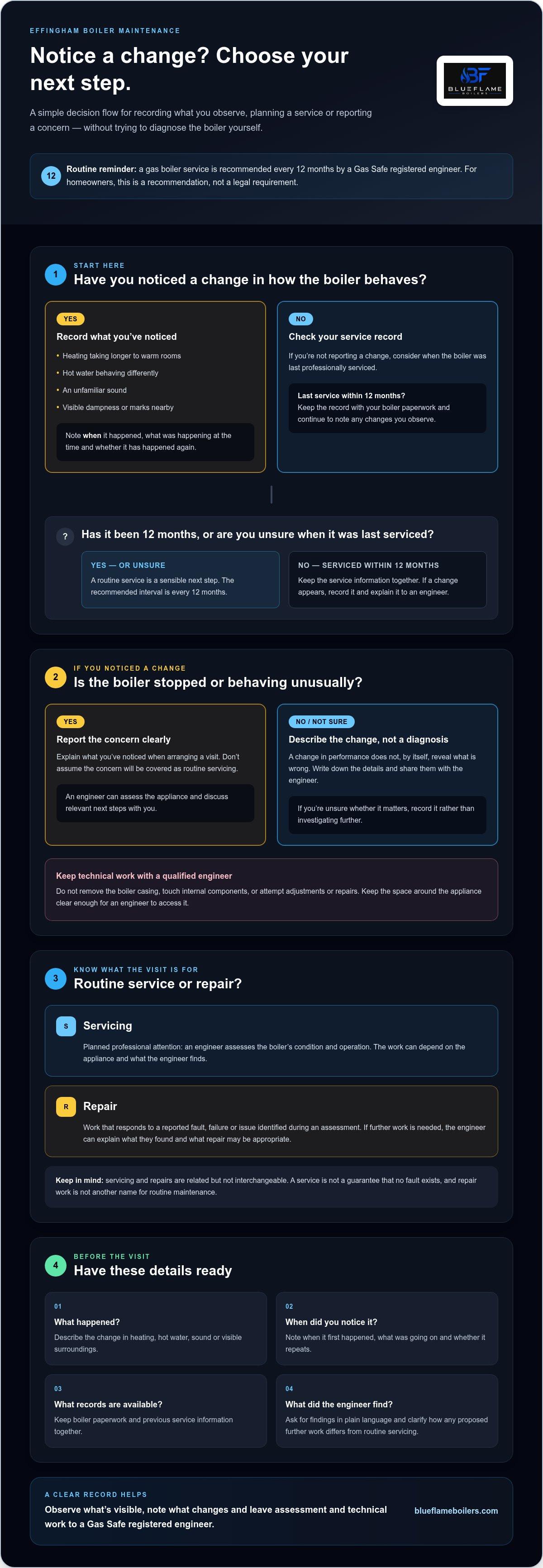
You don’t need technical knowledge to notice a change. Pay attention to whether rooms take longer to warm, hot water behaves differently or the boiler makes an unfamiliar sound. Record when you noticed it, what was happening at the time and whether it has happened again. These details can help an engineer understand your experience, but they don’t confirm the cause.
Keep the space around the appliance clear enough for an engineer to access it. You can also note visible changes nearby, such as dampness or marks. Don’t remove the casing, touch internal components or attempt adjustments and repairs. If you’re unsure whether an observation matters, write it down and describe it rather than investigating further.
- Note changes in heating, hot water or sounds.
- Record when the change happens and whether it repeats.
- Keep boiler paperwork and previous service information together.
- Leave access to the appliance clear and observe only what’s visible.
What belongs in professional boiler maintenance?
Professional maintenance involves an engineer assessing the boiler’s condition and operation. They can take your observations into account and assess the appliance appropriately. The work may depend on the boiler and what the engineer finds, so a general checklist can’t promise a fixed sequence of checks or replace an assessment. For a general explanation of how boilers work, see this overview of boilers.
Servicing and repair work are related, but they address different needs. Servicing is planned attention to the appliance; repair work deals with a fault or a problem identified during a visit. If the engineer finds a concern, they can explain it and discuss any further work that may be needed. A service is not a guarantee that no fault exists, and a repair is not another name for routine maintenance.
Blueflame Boilers Ltd provides boiler servicing and repairs, with Gas Safe registered engineers and a careful, customer-focused approach. Keeping your observations and relevant information ready gives the engineer a useful starting point, while leaving technical work to them.
What Happens During Professional Boiler Maintenance?
Boiler servicing is planned professional attention in which an engineer assesses a boiler’s condition and operation. It gives a qualified engineer the opportunity to examine the appliance and discuss relevant findings with you. If you’re arranging Effingham boiler maintenance, knowing the purpose of a service helps set expectations: it is an assessment, not a promise that every fault will be found or that repairs are included.
The work can depend on the appliance and what the engineer observes. No single description of a visit should be assumed to fit every boiler. The National Board Boiler Maintenance Checklist is a broader reference for maintenance planning; it isn’t a domestic gas boiler procedure or a substitute for an engineer’s assessment of your appliance.
How servicing differs from a boiler repair
Servicing is planned attention to the boiler’s condition and operation. Repair work responds to a reported fault, a failure or an issue identified during an assessment. The two may be connected, but they aren’t interchangeable. If corrective work is needed, the engineer can explain what they found and what repair may be appropriate. Blueflame Boilers Ltd provides boiler repair services for faults that need attention.
A change in performance doesn’t, by itself, reveal what’s wrong. If you’ve noticed a problem, describe it when arranging a visit so it can be considered in context. If the appliance has stopped working or is behaving unusually, explain that rather than assuming it will be covered as routine servicing. The engineer can discuss the assessment and relevant next steps with you.
What information helps make a visit useful?
A few clear details can make the situation easier to explain. Note what the boiler has been doing, when you first noticed the change and whether it happens consistently or only at certain times. Keep any available appliance paperwork and previous service records to hand. You don’t need to interpret technical terms or work out the cause before speaking to an engineer.
During or after the assessment, ask for the findings to be explained in plain language. If further work is relevant, make sure you understand how it differs from routine servicing and what the proposed next step involves. Blueflame Boilers Ltd’s Gas Safe registered engineers take a customer-focused approach to servicing and repairs. To discuss professional boiler care, make an enquiry about boiler servicing.
Boiler Maintenance or Repair? How to Choose the Right Next Step
It can be hard to know whether to book planned maintenance or report a fault. Start by explaining what you need rather than guessing what’s wrong. A change in how a boiler operates doesn’t, by itself, identify the cause. This comparison can help homeowners looking for Effingham boiler maintenance choose a sensible next step without trying to diagnose the appliance themselves.
| Situation | What it may mean | A sensible next step |
|---|---|---|
| Planned maintenance | You want professional attention but aren’t reporting a specific problem. | Arrange a routine service and share any observations. |
| Developing concern | You’ve noticed a change, such as inconsistent heating or unfamiliar behaviour. | Describe what’s happening and when it occurs, then ask about an appropriate assessment. |
| Apparent breakdown | The boiler has stopped working, or heating or hot water is unavailable. | Make a repair enquiry and explain how the problem is affecting your home. |
A routine service enquiry is for planned attention when you have no specific fault to report; a repair enquiry is for a problem already affecting the boiler. This distinction helps set expectations, although an engineer’s assessment is needed to understand the cause and any suitable work.
When routine maintenance is the sensible choice
Planned servicing suits homeowners who want professional attention without reporting a particular fault. Blueflame Boilers Ltd offers annual boiler servicing as part of its boiler care services. If you’re booking because maintenance is due, say so when making an enquiry. If you’ve also noticed a change, describe it clearly so it can be considered as part of the conversation.
Keep the distinction simple: planned servicing is the starting point when there’s no reported fault, while a new concern deserves a clear description. Don’t assume a routine appointment automatically includes repair work if an issue is found. The engineer can explain relevant findings and discuss any next step with you.
When a repair enquiry may be more appropriate
A reported loss of heating or hot water is different from arranging routine upkeep. It gives the engineer a specific problem to assess, but doesn’t reveal the cause. Explain what has stopped working, when you noticed it and whether anything has changed since. If the breakdown feels urgent, Blueflame Boilers Ltd’s emergency heating repair information explains the route for urgent heating problems.
If you have a developing concern that hasn’t become a breakdown, report the symptoms rather than trying to label the fault. Keep the enquiry focused: describe what you’ve noticed, when it happens and whether heating or hot water is affected. Use Blueflame’s boiler care enquiry form to explain whether you’re looking for planned servicing or help with a problem.
A Before-and-After Boiler Maintenance Checklist for Homeowners
A little preparation can make a maintenance visit easier to follow without turning it into a DIY job. For Effingham boiler maintenance, focus on useful observations, clear communication and keeping a record of what the engineer explains. You don’t need to inspect inside the appliance or adjust its controls to prepare.
Before the engineer visit
Start with what you’ve noticed, gather relevant paperwork and make the boiler area accessible. Details such as whether a change happens every time you use hot water or only occasionally can help you describe it clearly. Stick to what you can safely observe.
- Record changes. Note unusual heating or hot-water behaviour, when it began and when it tends to occur. If the issue comes and goes, say so rather than trying to identify a cause.
- Gather available information. Put appliance paperwork and notes from earlier service visits in one place. You could also write down questions, such as asking for an explanation of a change you’ve observed.
- Prepare the space. Keep the area around the boiler accessible for the engineer. Don’t move, disconnect or alter connections, and don’t remove the casing.
These steps turn a vague concern into a useful account. For example, “hot water seems different” is a starting point. Adding when you first noticed it and whether it happens consistently gives the engineer more context. You don’t need technical language: clear, everyday descriptions are enough.
After the maintenance visit
Before the visit ends, make sure you understand what was found and what, if anything, should happen next. You’re not expected to interpret technical details alone. Ask the engineer to explain unfamiliar terms in plain language, then keep any notes or service paperwork with your other home records.
- Keep the record. Store the paperwork alongside previous service notes so you can refer to earlier visits and spot recurring concerns over time.
- Clarify findings. Ask what the engineer observed and whether a recommended next step is routine follow-up or separate work.
- Separate servicing from repair. If a fault needs attention, make sure you understand that repair work is distinct from the maintenance visit. Keep information about the proposed work with the service record.
Good notes create a helpful timeline if you need to describe the same concern again. They also make future conversations more straightforward: you can explain what changed, what was discussed and whether the issue has returned. Keep the record factual and leave assessment of the appliance to an engineer.
Choosing Professional Boiler Maintenance and Making an Enquiry
Choosing professional boiler care is easier when you know what a good service conversation should involve. If you’re considering Effingham boiler maintenance, look for Gas Safe registered engineers, clear explanations and a considerate approach. You should be able to explain what you need and understand whether the next step is routine servicing or attention to a reported problem.
Useful signs of a professional, customer-focused approach include:
- Appropriate registration. Gas work should be handled by an engineer registered for the relevant work. Blueflame Boilers Ltd has Gas Safe registered engineers.
- Clear communication. The engineer should explain findings in straightforward language and distinguish planned servicing from any repair work that may be needed.
- Care and consideration. A reliable service takes your concerns seriously, listens to the information you provide and explains the next steps without pressure.
What to expect from Blueflame’s approach
Blueflame Boilers Ltd is an Epsom-based gas and heating company serving surrounding Surrey areas. Its approach centres on reliability, careful workmanship and customer-focused service, backed by years of gas & heating experience. Boiler servicing, repairs and emergency heating repair are among the services it provides. Whether you’re arranging planned care or reporting a heating concern, the aim is to offer clear, considerate support.
When making an enquiry about Effingham boiler maintenance, include your location, the boiler concern and the type of help you’re looking for. If you’re in a nearby Surrey area such as Epsom, Ewell, Cobham, Tadworth, Weybridge, Woking or Reigate, including that detail helps make your enquiry clear.
How to take the next step
Keep your first message simple. Say whether you’re looking for professional servicing or need help with a boiler problem. If you’ve noticed a change, briefly describe what’s happening and when you first became aware of it. You don’t need to identify the fault; an accurate description of the symptoms is more useful than a guess about the cause.
Blueflame Boilers Ltd offers a free, no-obligation quote for gas and heating services. Share your location and a short description of the work you’re seeking to make your enquiry clear. Use the link below to request a quote and discuss the next step.
Take the Next Step with Confidence
Good Effingham boiler maintenance starts with a clear, informed decision, not guesswork. If your boiler seems to be working normally, you can plan professional servicing. If you’ve noticed a problem, describe what’s happening and arrange an assessment. Either way, you don’t need to work out the cause yourself.
Blueflame Boilers Ltd offers careful, customer-focused boiler care from Gas Safe registered engineers, with years of gas & heating experience in and around Surrey. Explain the type of help you’re looking for and the details that matter to you. A free, no-obligation quote is a straightforward way to discuss the next step.
Keep your notes handy, ask questions and choose the next step that feels right for your home. A clear account of what you’ve noticed can make arranging boiler care much more manageable.
Frequently Asked Questions
How often should a gas boiler be serviced?
Blueflame Boilers Ltd offers annual boiler servicing, and UK guidance recommends having a gas boiler serviced every 12 months by a Gas Safe registered engineer. For homeowners, that’s a recommendation, not a legal requirement. Your boiler manufacturer’s information may also include guidance for your appliance. If you’re unsure what the paperwork means, keep it nearby and ask about it when arranging professional attention.
What is included in boiler maintenance?
Boiler maintenance is a professional assessment of the appliance’s condition and operation, with relevant findings explained to you. The details can depend on the boiler and anything you’ve reported, so there isn’t one fixed checklist for every visit. Ask the engineer what they found and what any unfamiliar terms mean. If further work is suggested, ask whether it is part of servicing or needs to be arranged separately.
Can I maintain my boiler myself?
You can keep an eye on how your heating and hot water behave, note changes and gather useful paperwork. That’s helpful observation, not a replacement for professional work. Leave the inside of the boiler alone: don’t open the casing, adjust internal parts or attempt a repair. If something seems unusual, write down what you’ve noticed and share it with a qualified professional. No technical guesswork needed.
What is the difference between boiler servicing and boiler repair?
Servicing is planned attention for your boiler; a repair responds to a fault you’ve reported or an issue identified during an assessment. Booking routine care is different from reporting that hot water has stopped working. A service may uncover something that needs separate attention, but repair work isn’t automatically included. When you make an enquiry, explain what prompted it so the conversation starts in the right place.
Does a boiler service guarantee that my boiler will not break down?
No service can guarantee that a boiler won’t develop a fault later. Think of servicing as a professional maintenance step, not a promise about future performance. The engineer assesses the appliance at the time of the visit, but problems can still develop afterwards. If you notice a change later, make a note of what’s happening and share it with a qualified engineer.
What should I tell an engineer when arranging boiler maintenance?
For Effingham boiler maintenance, say whether you’re looking for planned servicing or have a particular concern. Describe any change in heating or hot-water behaviour, when you first noticed it and whether it happens every time or only now and then. Appliance paperwork or notes from previous visits may also be useful. You don’t need to name the fault; a clear description is a good starting point.
Can boiler maintenance identify a problem before the boiler stops working?
Professional attention may identify a concern during an assessment, but early detection can’t be guaranteed and no particular result is promised. Some issues may become apparent through changes in how the boiler behaves, while others may not show during a visit. If something seems different afterwards, note what changed and when. This gives a qualified engineer a helpful account if you need to raise it.


