

What if the radiator itself is only part of what shapes your installation quote? The cost to fit a new radiator UK homeowners face can change depending on whether it’s a straightforward replacement or a fresh installation involving pipework changes. Quotes can look similar at first glance but cover very different jobs, so it helps to compare the details, not just the total.
A few practical details can make the work easier to assess. This guide explains the factors that influence fitting costs, compares a same-position replacement with moving or adding a radiator, and shows what information helps a heating engineer understand your home and plans.
You’ll also see how wider system work can affect the scope and what to look for in a quote. Blueflame Boilers Ltd installs radiators in Epsom and across Surrey, either as a standalone job or as part of a wider heating project. Whether you’re replacing an old unit or planning a layout change, this guide gives you a clearer starting point for discussing the work.
Key Takeaways
- The cost to fit a new radiator UK homeowners pay depends on the radiator, labour, existing connections and work involved. Compare the stated scope rather than relying on one headline figure.
- Choose a radiator to suit the room and heating system as well as its appearance. Different formats have practical trade-offs.
- A direct replacement, a change of radiator type and a new location can each involve different planning and pipework needs.
- Before accepting a quote, clarify the proposed radiator, its location, and what is included for supply, fitting and supporting work.
- Radiator installation can form part of a wider heating project, including heating system design or central heating installation.
What shapes the cost to fit a new radiator in the UK?
There’s no single fitting figure that applies to every home and radiator. The cost to fit a new radiator UK homeowners are quoted depends on the radiator itself, the labour involved, the position and condition of existing connections, and the work requested. A same-position replacement can be a very different job from adding a radiator where there wasn’t one before.
That’s why a headline figure can be misleading without a description of the work. A useful estimate should reflect your room, current heating layout and intended result. When describing the job, explain whether you want to keep the radiator in place, change its style or move it. Those details help make the proposed scope easier to understand.
Which parts of a radiator fitting quote can affect the total?
A quote may list the radiator separately from labour and any supporting materials or installation work. The scope can also depend on practical details such as access to the fitting area, the radiator’s proposed position and the state of the existing connections. Look for a description that identifies the radiator and the tasks involved, rather than a quote that only names a product.
When comparing quotes, check whether each covers the radiator, fitting or both. Then compare any supporting work listed separately, such as changes to pipework. This helps you compare like with like instead of assuming that similar-looking totals include the same tasks.
Why a single UK-wide radiator fitting price can mislead
Imagine two homes with radiators of a similar size. In one, the existing connections may suit a direct swap. In the other, the homeowner wants the radiator on a different wall, which could involve planning a new pipe route. The radiator may look much the same, but the installation work can be quite different.
Room requirements and the wider heating setup also help guide radiator choice. A style or size should suit the space and system, not just catch your eye. For a little wider context on homes and heating, explore Energy efficiency in British housing.
Radiator fitting costs depend on the work and your home’s setup, not one standard UK tariff. A project-specific assessment can account for whether you’re replacing a unit in place, changing the layout or including wider heating work. Once those details are clear, it’s easier to see how the proposed work fits your plans.
How radiator type, size and room needs affect your choice
Choosing a radiator is a chance to refresh a room, but the right option needs to do more than look good. Its dimensions and heat output should suit the space and the wider heating arrangement, while its shape and connection positions need to work with the available wall space and pipework. Start with the room, then choose a style that fits.
Here’s a quick comparison of common formats and practical points to consider. Each can suit different homes and layouts, so use this as a starting point rather than a one-size-fits-all answer.
| Radiator format | Typical use | Practical consideration |
|---|---|---|
| Panel | Everyday heating in living spaces and bedrooms | A familiar option, but check its dimensions and connection positions against the existing setup. |
| Column | Rooms where a more traditional or standout design is wanted | Its depth and proportions may affect the wall and floor space available. |
| Vertical | Spaces with limited horizontal wall area | Its taller profile affects where it can sit, so consider furniture and pipe connections. |
| Towel rail | Bathrooms, where hanging towels is useful | Balance the convenience with the wall space and heating needs of the room. |
Does radiator style change the installation work?
It can. A panel radiator may suit the current spot, while a column or vertical design can have different dimensions or connection positions. Even a radiator that looks close in size may not line up with the existing pipework. Check the measurements and connection layout before settling on a replacement, as the style alone won’t tell you the fitting scope or cost.
How should the room influence radiator size and position?
Think about how you use the room, how much wall space is available and where the current connections sit. For example, a radiator tucked behind furniture may be less practical than one on a clear wall. These details help shape the choice, but there’s no simple sizing rule that suits every room.
Radiator output needs to be considered for the specific room and heating arrangement. Rather than choosing by appearance or relying on a quick formula, make sure the planned radiator is suitable for the space. If you’re considering a different style or position, mention it early so the installation plan reflects the room layout.
These choices can also influence the cost to fit a new radiator UK homeowners are considering, as a different format may affect planning or connection work. No style automatically means a higher fitting cost; the home and requested result matter. Blueflame Boilers provides radiator installation in Epsom and across Surrey. If you’re weighing up options, you can discuss your radiator installation plans.
Like-for-like replacement or a new radiator: how the jobs compare
Replacing a radiator in its current position is not the same job as changing the layout or adding heat to another part of the home. The scope depends on the existing heating system and the result you want. A new radiator does not automatically mean replacing the whole central heating system. The work may be limited to one radiator, but the existing setup and requested changes still need consideration.
| Job type | Planning considerations | Pipework considerations |
|---|---|---|
| Direct replacement | Retain the current position and choose a compatible replacement. | Existing connections may suit the new unit, but their condition and compatibility matter. |
| Change of radiator type | Check how the new format fits the room and relates to the existing setup. | Connection positions may differ, so changes could be needed. |
| Adding or relocating a radiator | Plan the new position around the room and the requested heating layout. | New or altered pipe routes may be part of the work. |
What is involved in a like-for-like radiator replacement?
A like-for-like replacement keeps the radiator in its existing location, with connections broadly similar to those already in place. That can make the job more contained than changing the layout, but it doesn’t guarantee a simple swap. The condition of the existing setup and compatibility with the new radiator still affect what’s required. When describing the work, share the current position and the replacement you have in mind.
What changes when you add or relocate a radiator?
A new position calls for planning around the room, the intended layout and how the pipework can reach the radiator. Moving one may mean adapting existing pipe routes; adding one introduces a new heating point. Neither change automatically calls for a complete central heating replacement. A wider assessment can establish whether the request is a focused radiator job or part of broader system work.
For example, one homeowner may want to move a radiator to make better use of a room, while another may want to add one where more heat is needed. These are different aims, so the proposed work should reflect the specific layout rather than assume a standard package. Blueflame Boilers can carry out radiator installation on its own or alongside wider heating work. For more on planning an upgrade locally, explore this guide to radiator installation in Surrey.
Being clear about whether you’re replacing, changing or adding a radiator helps make the cost to fit a new radiator UK quote easier to understand. Describe the current position, your preferred layout and whether the rest of the heating system is also part of your plans. That gives the installation scope a practical starting point without assuming that one radiator change requires a full system overhaul.
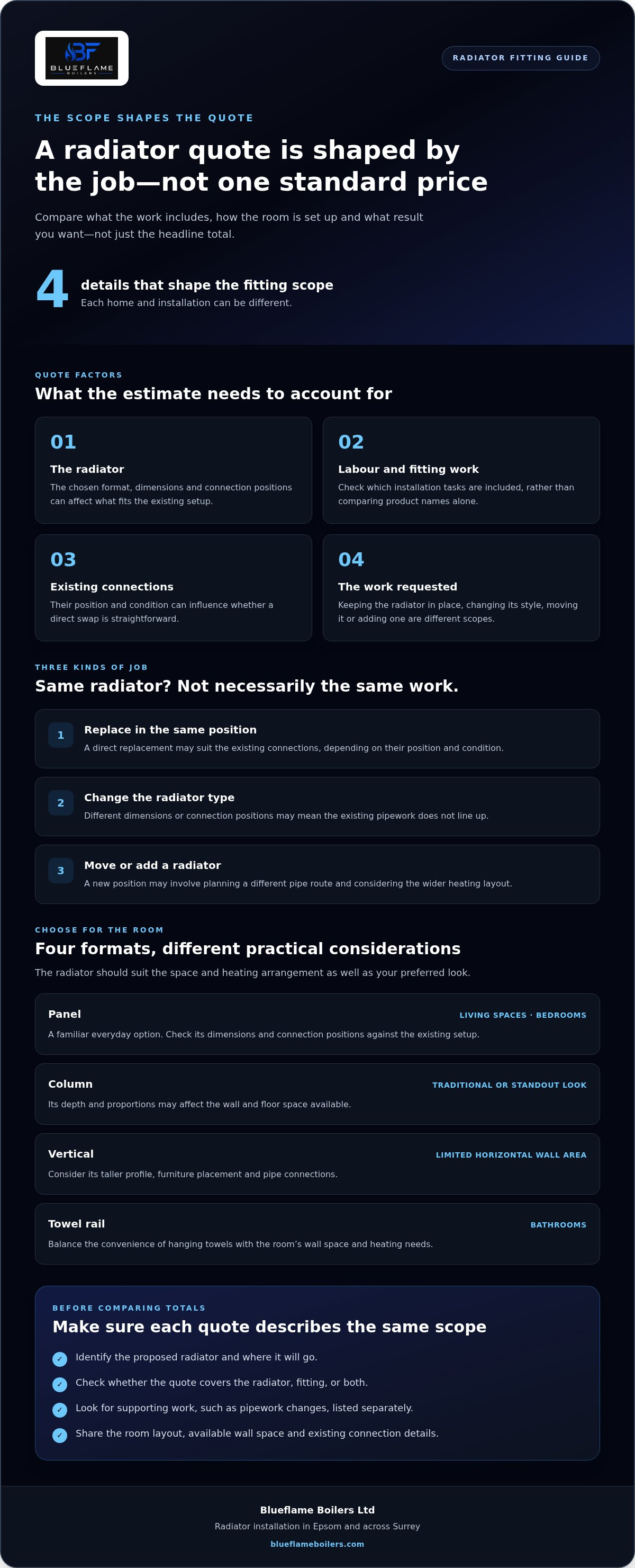
What to clarify before accepting a radiator fitting quote
A clear quote should describe the radiator you want, where it will go and the work proposed to achieve that result. Before accepting, make sure you can distinguish radiator supply from fitting and see any supporting work described clearly. This makes it easier to understand what’s included and identify assumptions about pipework or the existing system before work begins.
Which project details help clarify the scope?
Describe the current radiator and room, then say whether you want a replacement, a relocation or an additional radiator. Mention access, your preferred style and what you know about the existing connections. Photographs and accurate measurements can help explain the layout, but they don’t replace an assessment of the property and installation requirements.
Use this checklist to organise the details and clarify the proposed scope:
- Radiator: Identify the proposed type and size, or describe the style you have in mind.
- Location: State whether it will remain in place, move to another wall or be added in a different room.
- Room: Explain how the space is used and note any practical access considerations.
- Connections: Share what you know about the existing pipe positions and condition. Ask for any assumptions that affect the planned work to be made clear.
- Supply and fitting: Check whether the radiator itself and the installation are described separately or together.
- Supporting work: Look for additional tasks set out as part of the scope, and distinguish these from items that depend on what is found.
How can you compare two radiator fitting quotes fairly?
Put the proposed radiator, location and intended work side by side. A direct replacement and a move to a different wall aren’t equivalent scopes, even if both quotes refer to one radiator. Check that each proposal separates planned work from conditional items and explains how supply, fitting and supporting tasks are covered. That gives you a more useful comparison than the total alone.
The cost to fit a new radiator UK homeowners are quoted is easier to interpret when the scope reflects the actual room and requested outcome. Blueflame Boilers installs radiators in Surrey homes, with the work shaped around the property and the plan. For further local guidance, read about radiator installation in Surrey.
Radiator installation from Blueflame Boilers in Epsom and Surrey
Blueflame Boilers is an Epsom-based heating company that installs radiators in local homes. Whether you’re replacing a radiator or changing your heating layout, the work can be planned around your property and what you want the room to achieve. Sharing a clear description of the project helps establish the right scope for the installation.
Blueflame Boilers serves local communities across Surrey, including Epsom, Ashtead, Leatherhead, Oxshot, Cobham, Weybridge, Ewell, Worcester Park, Cheam, Sutton, Carshalton, Banstead, Reigate, Tadworth, Woking, Bookham, Effingham, Horsley, Ripley and Kingswood. Wherever you’re planning a radiator project in these areas, the right work depends on the home, the radiator and the requested changes. A discussion focused on your project helps identify the practical details without assuming every job follows the same pattern.
When can a radiator installation form part of wider heating work?
A radiator can be fitted as a standalone job or included in a larger heating project. Blueflame Boilers also provides full heating system design and central heating installation, which may suit plans that go beyond one room or one radiator. If replacing a boiler is also part of your plans, explore the company’s boiler installation service as part of the wider project.
These are distinct scopes. Replacing one radiator doesn’t automatically mean changing the whole system; equally, a wider redesign may involve considering how the radiators fit into the overall heating arrangement. Describe your plans so the discussion stays focused on the work you actually want.
How to take the next step with a local radiator project
To start a useful conversation, outline the room, describe the existing radiator and say whether you’re looking for a replacement or additional heat. If you have a preferred style, a proposed new position, photographs or measurements, share those details to explain your starting point. The home and requested outcome shape the suitable scope, so a price or timeframe shouldn’t be assumed from a brief description alone.
Blueflame Boilers installs radiators in Epsom and nearby Surrey communities, whether the work is limited to one radiator or connects with a broader heating plan. Bring the key details you already have, and the conversation can focus on what you want to achieve and the work involved. That’s a practical first step towards a clearer installation plan.
Turn your radiator plans into a clear next step
A radiator upgrade is a chance to shape how a room feels and functions, not just replace a piece of equipment. As you weigh up the cost to fit a new radiator UK homeowners may face, focus on what you want the room to achieve. That gives your installation discussion a useful starting point, whether comfort, layout or a fresh look is driving the change.
Before moving ahead, consider what matters most in the finished room. A clear priority helps keep decisions practical and makes it easier to discuss the work involved. You don’t need every detail settled before taking the next step. A straightforward conversation about your plans can bring the options into focus.
With a clear goal and a practical installation plan, you can move forward with more confidence. Visit Blueflame Boilers to discuss your radiator project and take the next step.
Frequently Asked Questions
How much does it cost to fit a new radiator in the UK?
There isn’t one reliable price for every home. The cost to fit a new radiator UK homeowners are quoted depends on the radiator selected, the work involved and the condition of the existing setup. A direct replacement may have a different scope from installing a radiator in a new position. To understand an estimate, check what it says about the radiator, fitting and additional work rather than comparing totals alone.
Does fitting a new radiator cost more than replacing an existing one?
It can, particularly if the new radiator is being added where there wasn’t one before. A replacement in the same position may be able to use existing connections, while a new location could involve planning a pipe route. The difference depends on the property and requested layout. Adding heat in an extension, for example, is a different brief from swapping an existing unit for a compatible replacement.
Can I replace a radiator without changing the pipework?
Sometimes. If the replacement suits the existing connections and they’re in suitable condition, the pipework may not need changing. A different radiator size or design can have connections in different positions, however, and older or unsuitable connections may affect the work. Before choosing a replacement, note where the pipes meet the current radiator and include that detail when describing the job.
Does adding a radiator mean I need a new boiler?
No, adding a radiator doesn’t automatically mean you need a new boiler. The existing heating arrangement and the change you’re planning determine what should be considered. Adding one radiator to improve comfort in a room is not the same as replacing the whole heating system. An assessment can help establish whether the proposed change fits the current setup or forms part of wider work.
Does a radiator need to be drained before it is replaced?
The heating circuit usually needs to be isolated and the radiator emptied as part of replacement work, but the exact steps depend on the system and job. Don’t assume the radiator can be removed while the system is full or start undoing connections yourself. A heating engineer can assess the setup and carry out the work with appropriate precautions for the property.
Will fitting a new radiator require a power flush?
No, fitting a radiator doesn’t automatically require a power flush. Whether system cleaning is appropriate depends on the heating system’s condition and any issues identified, rather than the replacement alone. If you’re concerned about how the system is performing, describe the symptoms and have them considered separately from the radiator fitting scope. This helps distinguish the installation you want from any additional system work.
Can a new radiator help make a cold room more comfortable?
It may help if the radiator is suitable for the room and heating arrangement, but it can’t guarantee that every cause of coldness will be resolved. Draughts, heat loss and radiator position can also affect comfort. For a home in Epsom, Ashtead, Leatherhead, Oxshot, Cobham, Weybridge, Ewell, Worcester Park, Cheam, Sutton, Carshalton, Banstead, Reigate, Tadworth, Woking, Bookham, Effingham, Horsley, Ripley or Kingswood, consider the room as a whole when planning a change.


