
What if another boiler repair is only delaying a bigger decision? If your Surrey home still feels chilly while your gas bills climb, or your boiler is clunking or giving off an unusual eggy smell, it’s natural to wonder whether a repair is enough. Recognising the signs you need a new boiler can help you plan ahead rather than face the decision during a mid-winter breakdown.
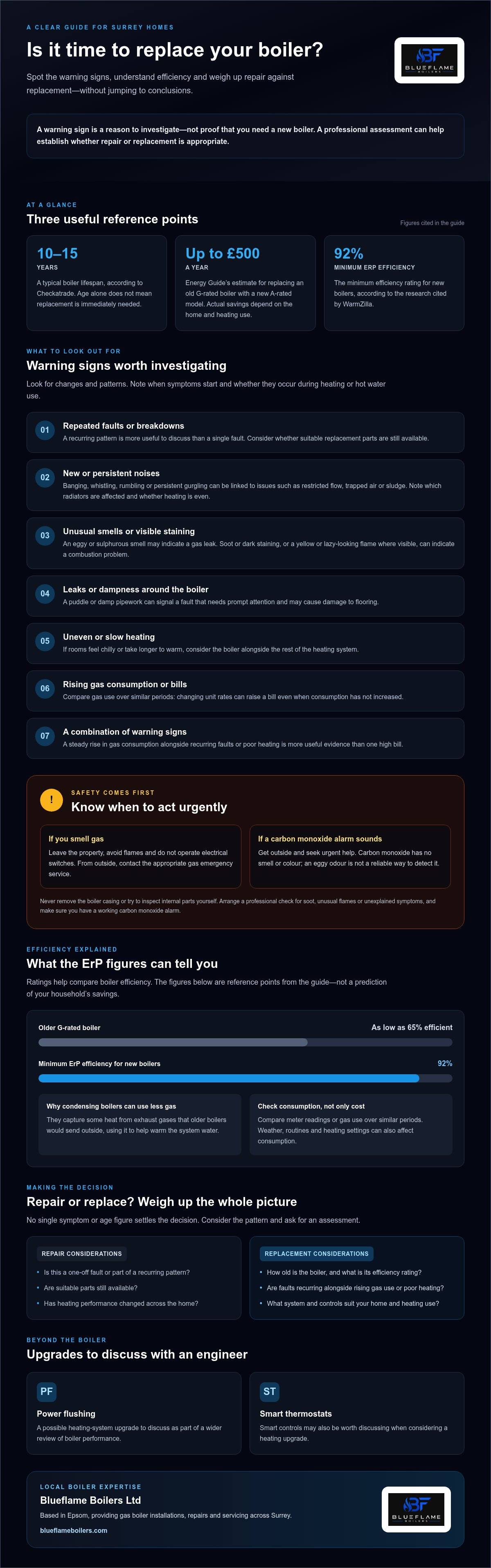
An ageing boiler doesn’t always need replacing straight away. Repeated faults, uneven heating and rising energy use are reasons to investigate, but they don’t prove the boiler is at fault. Checkatrade puts a typical boiler’s lifespan at 10 to 15 years, while Energy Guide estimates that replacing an old G-rated boiler with a new A-rated model could save up to £500 a year on energy bills. Actual savings depend on your home and heating use.
This guide covers seven warning signs, how to weigh repair against replacement, and what to consider when choosing a more efficient system. It also looks at upgrades such as power flushing and smart thermostats. Blueflame Boilers Ltd is based in Epsom and provides gas boiler installations, repairs and servicing. Its local team can help you discuss the options for your home.
Key Takeaways
- Learn which warning signs you need a new boiler may be showing, from repeated faults to unusual noises or smells.
- See how an ageing boiler’s efficiency can affect your energy use, and what ErP ratings can tell you when comparing replacements.
- Weigh up repair or replacement by considering the pattern of breakdowns and whether suitable parts are still available.
- Find out why power flushing and smart controls may be worth discussing as part of a heating upgrade.
- Discover what to consider when choosing a local Epsom specialist for a boiler installation in Surrey.
Is Your Boiler Behaving Badly? Top Telltale Signs to Watch For
A boiler may make some noise as it heats up, but new or persistent sounds, smells, leaks and visible marks need attention. None of these symptoms alone proves that you need a replacement. They do mean you should arrange a professional check rather than ignore the problem. Note when the symptom started, whether it happens during heating or hot water use, and whether the system’s performance has changed. Those details can help an engineer assess the fault.
Not sure what happens inside the unit? This overview of what a boiler is explains the basic principles behind how boilers heat water. Don’t remove the casing or try to inspect internal parts yourself.
Strange Noises: Bangs, Whistles, and Gurgles
A sudden soundtrack of banging, whistling or gurgling can be unsettling. A high-pitched whistle or rumble may be caused by kettling, where restricted water flow or limescale can make water overheat and produce steam bubbles. The sound is worth investigating, particularly if it is new or getting louder.
A soft burble may come from air moving through the heating system. Persistent gurgling can also point to trapped air, while sludge or restricted circulation may contribute to rumbling. Repeated banging or a sharp mechanical clunk shouldn’t be dismissed as normal. Note which radiators are affected and whether the heating still works evenly, then ask a qualified engineer to investigate. Avoid opening the boiler or attempting internal repairs.
Odd Smells and the Yellow Flame Danger
An eggy or sulphurous smell can be a warning of a gas leak. Treat it as urgent: leave the property, avoid flames and don’t operate electrical switches. From outside, contact the appropriate gas emergency service. For a boiler-related emergency, you can also find information about emergency callouts. Don’t assume the smell is harmless just because it fades.
A yellow or lazy-looking flame, where visible, or soot and dark staining around a boiler can indicate a combustion problem. A healthy-looking flame is often described as blue, but never open the boiler to check it. Some appliances don’t have a visible flame, so the absence of this clue doesn’t prove everything is safe.
Carbon monoxide has no smell or colour, so an eggy odour is not a reliable way to detect it. If a carbon monoxide alarm sounds, or anyone feels unwell and carbon monoxide is a concern, get outside and seek urgent help. Make sure you have a working carbon monoxide alarm and arrange a professional check if you notice soot, unusual flames or unexplained symptoms.
Look beneath the boiler, too. A puddle or dampness around pipework can signal a leak. Water can damage flooring and may indicate a fault that needs prompt attention. These symptoms can be among the signs you need a new boiler, but only an assessment can establish whether repair or replacement is appropriate.
Energy Efficiency and Rising Bills: The Hidden Cost of Age
An older boiler may use more gas to deliver the same warmth, so some of the energy you pay for could be wasted. If your home takes longer to warm up and gas consumption is climbing, look beyond the thermostat and consider the boiler alongside the rest of the heating system. Changes in household routines, heating settings and weather can also affect use, so compare similar periods before deciding what is causing the change.
Check your gas consumption as well as the amount you pay. Unit rates can change, so a higher bill doesn’t necessarily mean you have used more gas. Compare meter readings or usage from similar periods, and note the heating settings and how often the system runs. A steady increase in consumption alongside recurring faults or poor heating is more useful evidence than one high bill, and may be one of the signs you need a new boiler.
What Is a Condensing Boiler Anyway?
A condensing boiler is designed to capture some heat from its exhaust gases that older boilers would send outside. That recovered heat helps warm water in the system instead of being wasted, which can mean less gas is needed to heat your home. Using less gas for the same comfort can also reduce the heating system’s carbon emissions, although the actual change depends on your home and how you use the heating.
Understanding ErP Ratings
ErP ratings offer a way to compare a boiler’s energy efficiency. Older G-rated boilers can be as low as 65% efficient, while the research cited by WarmZilla states that new boilers must meet a minimum ErP efficiency rating of 92%. Replacing an old G-rated model with an A-rated condensing boiler may make a noticeable difference to energy use. Energy Guide estimates potential savings of up to £500 a year, but your result will depend on the property, previous boiler and heating habits. Energy Saving Trust data can help you explore how estimates vary by property type and existing boiler efficiency.
Track Your Energy Spend
A smart thermostat can make it easier to set schedules and adjust heating, so you can avoid warming an empty home unnecessarily. It can help you manage comfort and adapt your routine, but it can’t guarantee savings or confirm that a boiler needs replacing. Look at usage trends over time rather than drawing conclusions from one cold month.
If you’re considering whether a more efficient system could suit your Surrey home, you can enquire about boiler installation with Blueflame Boilers. An assessment can help you understand the available options and plan a practical upgrade.
Repair vs Replace: Making the Best Decision for Your Surrey Home
A boiler fault doesn’t automatically mean it’s time for a new one. A straightforward repair may make sense if the boiler is otherwise dependable. If you’re paying for repeated fixes, dealing with unreliable heating or worrying about the next cold spell, consider the full pattern of problems rather than just the latest repair bill.
The Escalating Cost of “Quick Fixes”
The 50% rule can be a prompt for discussion, not a strict test: if a repair quote approaches half the cost of replacing the boiler, ask whether that money would be better put towards a new system. Get a clear repair quote and a separate replacement quote, then compare them with what you have already spent. For example, add up several smaller repair bills and consider whether the boiler’s age and condition make another fix a sensible choice.
Frequency matters as well. Keep a record of faults, dates and repairs, especially if an engineer has had to return for similar problems. Repeated breakdowns can disrupt heating and hot water, and a winter failure can be particularly stressful. A planned new boiler installation may give you more control over timing than waiting until a fault leaves you without heating.
Blueflame Boilers provides boiler repairs and installations. An assessment can help you understand whether repair remains practical or replacement is worth considering. The aim is to make a considered decision rather than rush into one.
Parts and Obsolescence
Parts availability depends on the boiler’s make, model and age. A component for an older unit may be difficult to source or no longer supplied. Ask whether the part needed for your repair is available and whether the proposed work is likely to address the underlying fault. A temporary fix that doesn’t resolve recurring problems may leave you facing the same decision again.
There’s no universal age at which every boiler becomes obsolete. Instead, look at the combination of regular breakdowns, hard-to-find parts and worsening performance. Together, these can be useful signs you need a new boiler, particularly if repair options are narrowing.
If you choose replacement, check the warranty details before committing. Ask what is covered, how long the cover lasts and whether servicing or other conditions apply. A warranty’s value depends on its terms. Planning an upgrade before a mid-winter breakdown can also give you more time to consider the options and make the change less stressful.
Modern Heating Upgrades: Beyond Just a New Boiler
A boiler is one part of a wider heating system. If radiators are slow to warm, heat unevenly or make repeated noises, the pipework and controls may need attention too. Reviewing the full setup during a replacement can help you identify other issues and decide which upgrades, if any, are appropriate.
Power Flushing: A Fresh Start for Your Pipes
Corrosion can create black sludge that collects in radiators and pipework. This may restrict circulation, leave some rooms cooler than others and make the system work harder. A power flush uses specialist equipment to clean deposits from the heating circuit. It isn’t a guaranteed fix for every system, so an engineer should assess whether flushing is suitable before recommending it.
Hard water needs separate consideration. If you live in a hard-water area of Surrey, mineral scale may affect parts of a heating system, but it isn’t the same as sludge in radiators. A power flush shouldn’t be presented as a cure for limescale. Ask your installer to identify what may be affecting your system and explain the appropriate approach before connecting a new boiler. For more on the process and its role in heating efficiency, read about power flushing in Surrey.
Smart Thermostats, Cylinders and Radiators
Smart thermostats make heating controls easier to access, whether you’re adjusting a schedule at home or checking settings from your phone. They can help you manage when the heating runs, but results depend on how you use them and how well your home retains heat. Ask whether compatible smart controls would suit your new boiler.
An unvented water cylinder stores hot water and may suit a household where several people use hot water around the same time. It isn’t right for every property, and it doesn’t guarantee stronger shower pressure. That depends on the home’s water supply and system design. Discuss your household’s needs and available space with a qualified installer before choosing.
Radiators matter, too. If some stay cold, heat unevenly or need frequent attention, ask whether they should be assessed as part of the upgrade. Blueflame Boilers provides power flushing, smart thermostats, unvented water cylinders and radiator installation, so homeowners in Epsom and nearby Surrey areas can discuss the wider heating setup alongside a new boiler.
Stress-Free Boiler Installation in Epsom with Blueflame Boilers
Choosing someone to replace your boiler is about more than picking a model. You’ll want advice about what suits your home, a safe installation and a clear explanation of the work. Blueflame Boilers is based in Epsom and provides gas boiler installations, repairs and servicing for local homes and businesses.
The Local Surrey Advantage
A local specialist can discuss your property and heating needs directly, rather than offering a one-size-fits-all answer. Homes vary, even within the same area. If you’re concerned about water pressure, hard water or uneven heating, explain what you’ve noticed and ask how it will be assessed before choosing equipment. Hard water can contribute to limescale, but its impact depends on your home and system, so don’t assume every boiler needs the same solution.
Blueflame Boilers serves local areas around Epsom. If your boiler needs attention before you’re ready to replace it, you can find details about boiler repairs. You can also discuss whether a repair is practical or whether an upgrade better fits your home and heating needs.
Your Next Steps to a Toasty Home
If you’ve recognised several signs you need a new boiler, start by noting the symptoms, the boiler’s age if known, and any repairs or changes in performance. Ask what assessment is needed, which options fit your home, and what the proposed installation includes. Clarify the expected schedule, how the work area will be protected, and what handover or warranty information you’ll receive. Get the details in writing so you can make an informed decision without feeling rushed.
Installation arrangements depend on the job, so confirm the practical details with your chosen engineer before booking. Ask whether your radiators, controls or pipework need attention, and whether a power flush is appropriate for your system. This helps you consider the full heating setup, not just the boiler in isolation.
A new boiler should feel like a considered home upgrade, not a leap in the dark. Blueflame Boilers’ Epsom-based team can discuss gas boiler installation options and the next steps for your home.
Take the Next Step Towards a Warmer Home
Unusual noises, recurring faults and rising gas use can all be signs you need a new boiler, but one symptom alone won’t tell the whole story. Consider how often your system needs attention, whether repairs are resolving the problem and how well your home heats. A qualified assessment can help you compare repair and replacement options.
If you choose an upgrade, think beyond the boiler itself. A well-functioning heating system, suitable controls and radiators that heat your rooms effectively all contribute to home comfort. Planning ahead can be less stressful than waiting until a breakdown leaves you without reliable heating.
Blueflame Boilers provides gas boiler installation, repairs and servicing from its base in Epsom. Its team can discuss your installation options and help you understand the next steps for your home.
When you’re ready, contact Blueflame Boilers to discuss a gas boiler installation for your home.
Frequently Asked Questions
How many years does a typical gas boiler last in the UK?
A typical gas boiler lasts around 10 to 15 years, according to Checkatrade. That’s a guide, not a fixed expiry date: servicing, usage and the boiler’s condition can all affect performance over time. As it ages, keep an eye on reliability, repair frequency and heating performance. If problems are becoming more common, ask a qualified engineer whether repair or replacement makes more sense.
Is it cheaper to repair or replace a 10-year-old boiler?
It depends on the fault, repair quote and overall condition, so age alone can’t settle the decision. A one-off repair may be worthwhile if the boiler is otherwise reliable. Compare the repair cost with the likelihood of future faults, and ask whether parts are available. If breakdowns are recurring or repairs are becoming costly, request an assessment before committing to another fix or replacement.
What are the signs of a carbon monoxide leak in a boiler?
Carbon monoxide has no smell or colour, so you can’t reliably detect it with your senses. Possible symptoms include headache, dizziness, nausea, weakness or confusion, particularly if they improve after leaving the property. A carbon monoxide alarm sounding is an urgent warning. Get everyone outside, seek emergency help and don’t re-enter until the property has been declared safe. Arrange a professional boiler check if you suspect a fault.
Can a new boiler really save me money on my energy bills?
It can, particularly if an inefficient older boiler is replaced with a more efficient model, but savings aren’t guaranteed. Energy Guide estimates that upgrading from an old G-rated boiler to a new A-rated condensing boiler could save up to £500 a year. Your actual result depends on your home, heating habits and energy use. Compare gas consumption over similar periods, not just bill totals, which can change with tariffs.
How long does it take for Blueflame to install a new boiler in Surrey?
The time needed can depend on your property and the work involved. Ask the team for an estimate once they understand your existing setup and the proposed installation. Blueflame Boilers is based in Epsom and serves areas including Ashtead, Leatherhead, Oxshot, Cobham, Weybridge, Ewell, Worcester Park, Cheam, Sutton, Carshalton, Banstead, Reigate, Tadworth, Woking, Bookham, Effingham, Horsley, Ripley and Kingswood.
Do I need a power flush when I get a new boiler installed?
Not necessarily. A power flush may be appropriate if an engineer finds sludge or other debris restricting circulation, but it isn’t automatically needed for every installation. Ask for the heating system to be assessed and for the recommendation to be explained. Unevenly heated radiators can inform that discussion, though they don’t confirm the cause by themselves. Blueflame Boilers offers power flushing as part of its heating services.
What should I do if my boiler is making a loud banging noise?
Don’t ignore persistent or sudden loud banging. Note when it happens, whether the heating or hot water is affected, and any other changes, then arrange a check with a qualified engineer. The noise may relate to restricted circulation, trapped air or another fault, but it needs proper diagnosis. Don’t remove the boiler casing or attempt internal repairs yourself. If you also smell gas, leave the property and seek urgent assistance.
Are smart thermostats compatible with all new boilers?
No, compatibility can vary by boiler model and control system. Before buying a smart thermostat, check the boiler manufacturer’s guidance and ask your installer to confirm which controls will work with the chosen boiler. Also consider what you want the thermostat to do, such as setting schedules or adjusting heating remotely. Blueflame Boilers offers smart thermostats, so you can ask about suitable options when discussing a new installation.


