
Have you ever cranked your thermostat up to thirty degrees only to find your living room still feels like the inside of a fridge? It is a common nightmare for homeowners across Surrey, especially when you are watching your energy bills skyrocket whilst your toes stay frozen. If you have reached out to touch the heater only to find your radiator cold at bottom, you are likely dealing with a build-up of nasty magnetite sludge that is "constipating" your system and stealing your heat.
We know how worrying it feels when your heating starts acting up in the middle of a British winter. You are probably dreading a total boiler breakdown or a massive repair bill that you just do not need. The good news is that these cold spots are usually a fixable symptom rather than a death sentence for your boiler. As your local heating heroes, we will show you how to restore total warmth to your home and regain that much-needed peace of mind.
In this guide, you will discover the secret to clearing out stubborn sludge, the benefits of professional power flushing, and how a few simple tweaks can lead to lower monthly bills. Let’s get your heating system back to peak performance so you can finally relax in a truly toasty house.
Key Takeaways
- Learn why a radiator cold at bottom is actually a sign of "heating sludge" and how this magnetite build-up is sabotaging your home's comfort.
- Discover why a professional power flush is the ultimate remedy for restoring full circulation compared to messy, ineffective DIY hacks.
- Find out how to future-proof your central heating system using magnetic filters and chemical inhibitors to stop internal corrosion in its tracks.
- Uncover the simple maintenance steps that can slash your monthly energy bills and protect your boiler from a total winter breakdown.
- Get the inside track on how our Surrey heating experts can transform your chilly house into a toasty sanctuary in just one visit.
Radiator Cold at the Bottom? Let’s Solve the Mystery!
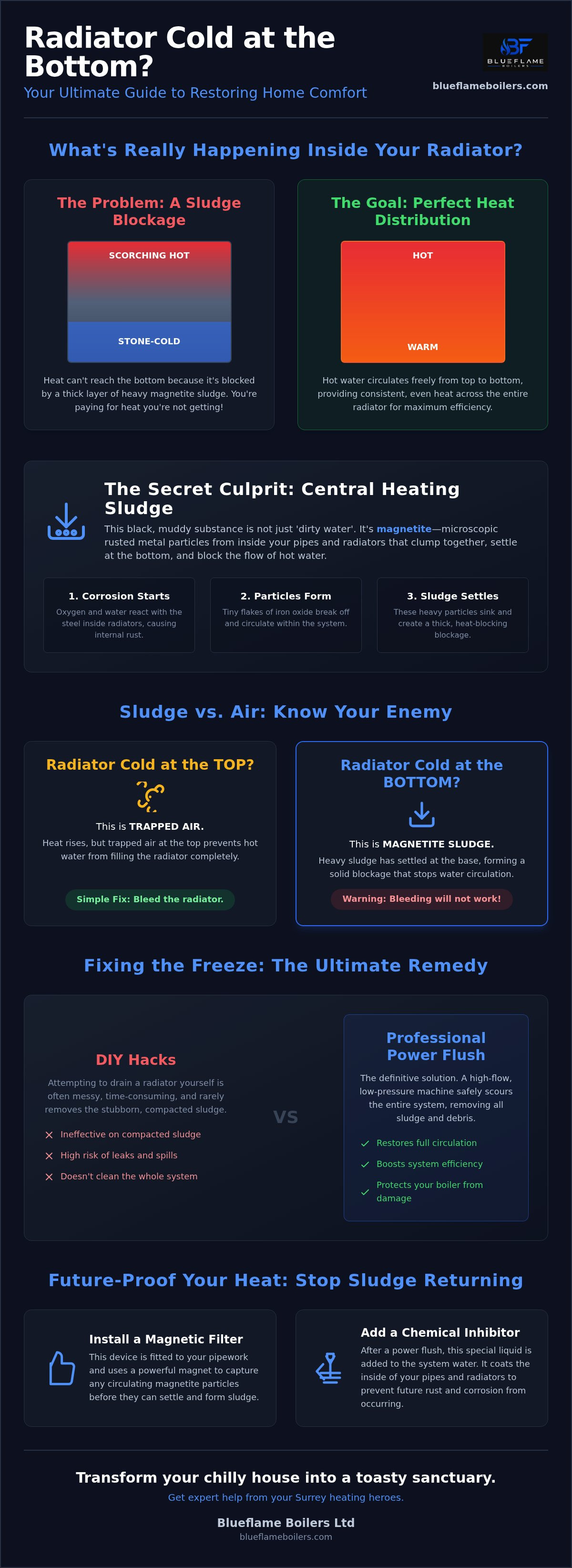
You have probably experienced that confusing moment where you reach out to feel the heat, only to find the top of your radiator is scorching whilst the base is stone-cold. It is a classic symptom that something is wrong deep inside your pipework. Heating sludge is the primary cause of bottom-cold radiators, acting like a heavy, muddy anchor that prevents your heating system from doing its job properly.
Some people assume this is just how physics works because "heat rises," but that is a bit of a myth in the world of plumbing. Whilst heat does indeed rise in the air, your radiator relies on the constant circulation of hot water to stay effective. If the water cannot reach the bottom, the radiator cannot radiate. This leaves you with a half-functioning heater and a house that never quite reaches a comfortable temperature, no matter how high you turn the dial.
The real sting comes when you check your bank balance at the end of the month. You are essentially paying full price for half the heat. Your boiler has to work twice as hard to compensate for those cold spots, leading to higher energy bills and the constant worry of a boiler repair being just around the corner. It is a frustrating situation that many Surrey homeowners face every winter.
Sludge vs. Air: Which One is Your Enemy?
It is vital to know exactly what you are fighting before you grab your toolkit. If your radiator is cold at the top, you are dealing with trapped air. This is a simple fix; you just need to bleed the radiator to let the gas out. However, if you find your radiator cold at bottom, you are facing a much tougher opponent: magnetite sludge. Bleeding a sludge-filled radiator is a total waste of your time because the air valve is at the top, whilst the heavy, metallic mud is settled firmly at the base. No amount of "hissing" air will clear that heavy blockage.
How Your Radiator Should Actually Behave
To see how well your system is performing, try the "Toasty Test." Carefully run your hand across the entire surface of the radiator from top to bottom and side to side. In a healthy, efficient system, the heat should be distributed evenly across the whole panel. This balance is maintained by the flow and return valves, which ensure water moves through the system at the correct rate. Achieving an even temperature is the ultimate goal for modern efficiency. It ensures your Surrey home stays warm without wasting a penny on excess energy costs.
The Secret Culprit: What is Central Heating Sludge?
Meet the villain of our story: magnetite. This black, muddy substance is not just "dirty water"; it is a collection of microscopic metal particles that have rusted off the inside of your pipes and radiators. Over time, these particles clump together to form a thick, heavy sludge that settles at the lowest point of your heating loop. This is exactly why you end up with a radiator cold at bottom whilst the top remains hot. It is essentially a metallic traffic jam sitting inside your home.
In Surrey, particularly in areas like Epsom and Leatherhead, our local water profile can be quite harsh on older systems. Whilst hard water is famous for causing limescale in kettles, the mineral-rich water in our region can also accelerate the internal wear of your heating components if they aren't properly protected. When oxygen enters the system through tiny leaks or an open header tank, it reacts with the steel in your radiators to create iron oxide. This is the raw material that eventually becomes that stubborn, heat-stealing mud.
This sludge is a certified "Boiler Killer." Think of your heating pump as the heart of your home; it is designed to move thin, clear water. When that water turns into a thick, abrasive slurry, the pump has to work twice as hard to keep the system moving. This extra strain leads to premature part failure and expensive emergency callouts. If you are worried about the state of your system, you can speak with our local experts to catch the problem before it stops your boiler in its tracks.
The Science of Magnetite Formation
The process starts with a simple chemical reaction between oxygen, water, and metal. In older, steel radiators, this corrosion happens more rapidly, shedding tiny flakes of rust into the water stream. These flakes eventually grind down into a fine, black powder known as magnetite. Because magnetite is heavier than water, it naturally sinks and gathers in the quietest, slowest-moving parts of your system: the bottom of your radiators. What starts as a few tiny flakes eventually grows into a heavy blockage that completely chokes your heating.
Why Sludge is Costing You a Fortune
Sludge is a fantastic insulator, which is the last thing you want inside a heater. It creates a barrier between the hot water and the metal surface of the radiator, meaning the heat stays trapped in the mud rather than warming your room. This forces your boiler to "cycle" on and off more frequently as it struggles to reach the temperature set on your thermostat. The result? Your gas meter spins faster, your bills soar, and your house stays chilly despite the boiler running at full pelt. To see how professional contractors maintain peak system efficiency and help homeowners avoid these costs, you can check out Wrench It Plumbing and Heating.
When you discover a radiator cold at bottom, the temptation to try a quick DIY fix is often strong. You might see bottles of chemical "sludge remover" in your local DIY shop promising a miracle cure. Whilst these chemicals can help loosen minor debris, they rarely have the power to shift heavy, compacted magnetite on their own. For a system that is truly choked, you need something more robust than a bottle of liquid poured into a header tank. It’s like trying to clear a blocked motorway with a hand-held leaf blower; it just isn't going to get the job done.
The "Take it Outside" DIY Method
Some homeowners attempt to fix the issue by removing the radiator entirely. This involves turning off the valves, disconnecting the pipework, and lugging the heavy, metal unit out to the garden. It is a messy nightmare that often ends in ruined flooring and a very bad mood. To try this, you will need a collection of spanners, plenty of old towels, buckets, and a massive amount of patience. One slip with a valve and you will have jet-black sludge staining your favourite carpet. This black water is notoriously difficult to remove and smells like old metal. Even if you manage to flush it through with a garden hose, you have only cleaned one radiator. The rest of the sludge is still lurking in your pipes, ready to settle right back where it started within weeks.
Why a Professional Power Flush Wins Every Time
A professional power flush is the heavy-duty "detox" your heating system deserves. Unlike a garden hose, a power flushing machine uses high-velocity water at low pressure to scrub the internal walls of your pipes and radiators. It is completely safe for your system but brutal on blockages. Our machines are designed to reverse the flow of water, creating turbulence that dislodges even the most stubborn, "baked-on" sludge that a DIY effort would miss.
During the process, our Gas Safe registered engineers use a powerful magnetic filter to catch every last bit of magnetite as it circulates, ensuring it is removed from your home for good. For Epsom and Surrey residents, choosing a professional service means getting the job done right the first time. It is about more than just clearing one cold spot; it is about restoring the efficiency of your entire system. If you want to dive deeper into how this process works, check out our guide on Power Flushing Surrey. This deep-clean is the most effective way to ensure that radiator cold at bottom becomes a thing of the past, giving you a toasty home and lower bills.
Future-Proof Your Heat: How to Stop Sludge Returning
Clearing a blockage is a fantastic first step, but you don't want to find your radiator cold at bottom again next winter. To keep your Epsom home toasty year-round, you need a proactive defence strategy that stops magnetite in its tracks. It is much easier to prevent rust from forming than it is to scrub it out once it has settled. By using a combination of smart technology and chemical protection, you can keep the water inside your pipes as clear as a Surrey stream and ensure your heating system runs like a dream.
Installing a Magnetic System Filter
These clever devices are a total game-changer for modern heating systems. A magnetic filter is essentially a high-powered magnet encased in a specialized housing that sits on your return pipework. As water circulates through your system, the magnet "grabs" any tiny magnetite particles before they have a chance to clump together and form that heavy mud at the base of your heaters. By 2026, the British Standard BS 7593:2019 has made these filters a code of practice for all domestic systems. Most major boiler manufacturers now require a filter to be fitted to keep your warranty valid. Maintenance is incredibly simple; your engineer just needs to empty the collected "mud" during your annual visit to keep things flowing perfectly.
The Role of Annual Maintenance
Don't wait for a total breakdown before you call in the experts. Consistent Boiler Servicing in Epsom is the best way to spot internal corrosion before it becomes a disaster. During a professional service, we don't just check the boiler's burner; we test the "concentration" of chemical inhibitor in your system water. This inhibitor acts like an anti-freeze for your pipes, creating a microscopic protective layer on the metal surfaces to stop rust from starting. Current standards require this inhibitor to be re-dosed every five years to maintain its strength. A Gas Safety Check (CP12) is also a perfect time to ensure your system is balanced and efficient, protecting both your home and your wallet.
Modern tech can also lend a hand in your fight against sludge. Smart thermostats allow you to monitor your system's behaviour from your phone. If you notice your house is taking thirty minutes longer to reach temperature than it did last month, it is often an early warning sign that your radiators are struggling. Catching these subtle changes early can save you from the frustration of a radiator cold at bottom and the high costs of emergency repairs later down the line.
Ready for a Toasty Home? Meet Your Surrey Heating Heroes!
Imagine waking up on a frosty Surrey morning, clicking your heating on, and feeling your entire home transform into a warm sanctuary in just minutes. No more shivering in the kitchen whilst you wait for the radiators to catch up. No more staring at a radiator cold at bottom whilst your boiler groans in the background. At Blueflame Boilers, we are passionate about making that toasty reality happen for you. We don't just fix pipes; we restore the comfort and heart of your home with speed and precision.
A healthy heating system should be fast, silent, and incredibly efficient. When your radiators are clear of sludge, they reach their peak temperature almost instantly, allowing you to turn down your thermostat and watch your energy bills drop. We specialise in these high-energy transformations, taking systems that are struggling to survive and turning them back into high-performance heating machines. Whether you need urgent Boiler Repairs or a comprehensive system health check, we are the local experts you can rely on to get the job done right.
Why Surrey Trusts Blueflame Boilers
We have built our reputation as the premier choice for homeowners from Weybridge to Reigate and every village in between. Our team knows the local area and the specific challenges of Surrey's water supply like the back of their hands. When we arrive at your door, we bring a "No Mess, No Stress" attitude to every job. We understand that your home is your castle, which is why our power flushing process is designed to be surgical and tidy. You won't find any black splashes on your skirting boards when we are finished.
Our Gas Safe registered engineers are more than just technicians; they are friendly local experts who genuinely love what they do. We take pride in our work and the peace of mind we provide to our neighbours. From the moment we step inside, our goal is to identify why you have a radiator cold at bottom and implement a permanent solution that keeps the heat flowing for years to come. We believe in transparency, hard work, and delivering a service that makes you want to tell your friends about us.
Reclaim Your Warmth Today!
You do not have to settle for a half-cold house or the constant worry of a total winter breakdown. By choosing a professional solution, you are investing in lower monthly bills, hotter radiators, and a much happier boiler. It is time to stop the cycle of frustration and start enjoying the warmth you are paying for. Reclaiming your comfort is just a click away, and our team is ready to jump into action to save your system from the sludge.
Ready to feel the difference? Head over to our Enquiry Page and let us know how we can help. Your toasty, energy-efficient home is waiting, and we can't wait to be your local heating heroes!
Reclaim Your Warmth and Protect Your Home
Don't let a radiator cold at bottom steal your comfort or drain your bank account this winter. We have explored how magnetite sludge acts as a hidden insulator, forcing your boiler to work harder whilst leaving you in the chill. By choosing a professional power flush and installing a magnetic filter, you can restore your system to its peak efficiency and stop internal corrosion from returning.
Our Gas Safe registered engineers are the local Surrey experts you need in Epsom, Leatherhead, and Sutton. We are here to ensure your heating is safe, silent, and scorching hot. With 24/7 emergency support available, you never have to worry about a total breakdown when the temperature drops. It is time to stop paying for heat you aren't feeling and start enjoying a home that stays toasty all night long.
Let’s get your heating system back to its best. You deserve a house that heats up fast and provides total peace of mind for you and your family.
Heating Help: Your Questions Answered
Is a radiator cold at the bottom dangerous for my boiler?
Yes, it puts significant strain on your entire heating system. Sludge acts like an abrasive slurry that wears down the internal pump and the heat exchanger. This leads to premature part failure and eventual boiler breakdown. It is a major cause of emergency callouts across Surrey. Addressing the issue early saves you from the stress of a total failure in the middle of a freezing British winter.
Can I fix a cold radiator bottom by bleeding it?
No, bleeding only removes trapped air from the top of the unit. If you find your radiator cold at bottom, you are dealing with heavy magnetite sludge that has settled at the base. Air is light and rises; sludge is heavy and sinks. Bleeding will just let out water whilst leaving the muddy blockage exactly where it is. You need a professional deep-clean to shift it.
How much does a professional power flush cost in Surrey?
Costs vary depending on the size of your property and the number of radiators involved. Factors like the age of your system and the severity of the blockage also play a role. Whilst we don't provide fixed prices here, industry data suggests larger homes with more complex pipework will require more time and materials. It is always best to request a bespoke quote for an accurate figure for your home.
How long does it take to clear sludge from a heating system?
A professional power flush typically takes between four and eight hours to complete. This depends on how many radiators you have and how stubborn the sludge build-up is. Our engineers work methodically to ensure every pipe is scrubbed clean. We don't rush the process because thoroughness is the key to lasting warmth. You can usually expect us to be finished within a single working day.
Will a magnetic filter fix my already cold radiators?
No, a filter is a preventative tool rather than a cure for existing blockages. It is designed to catch new particles as they circulate through the water. If your radiator cold at bottom is already a problem, the sludge is already "baked" into the base. You must have the system professionally flushed first to clear the current mud. Once the system is clean, the filter will stop the problem returning.
What happens if I ignore the sludge in my radiators?
Ignoring sludge leads to higher bills and eventual system failure. Your boiler will "cycle" more often, wasting gas whilst failing to heat your rooms properly. Eventually, the pump will seize or the heat exchanger will block completely. This often results in a costly emergency repair. It is much cheaper and less stressful to deal with the sludge now than to wait for your heating to pack up entirely.
Can I put chemical cleaner in my radiators myself?
You can, but it is rarely effective for heavy blockages. DIY chemical cleaners can loosen some debris, but they cannot remove it from the system. Without a high-velocity machine to flush the loosened mud out, it will simply settle elsewhere in your pipework. For a proper "No Mess, No Stress" result, a professional deep-clean is the only way to ensure the sludge is actually removed from your Surrey home. Reputable specialists such as Ooink Installaties exemplify this professional approach, ensuring that heating systems are maintained to the highest possible standards.
Most systems benefit from a power flush every five to ten years. However, this depends on the age of your radiators and whether you have a magnetic filter fitted. If you notice cold spots or noisy pipes, it is time for a check-up. Consistent annual servicing helps monitor the health of your system water. This ensures you only pay for a flush when it is truly necessary to maintain efficiency.


