
For landlords arranging a CP12 certificate in Reigate, a gas safety check is required every 12 months, according to The National Archives. Landlords must provide tenants with the certificate within 28 days of the check and give new tenants a copy before they move in.
Keeping track of renewal dates and knowing what the inspection covers can make this responsibility easier to manage. Gas safety checks can help homeowners manage risks, while rental properties may involve additional safety responsibilities.
This guide explains how often a certificate is needed, which gas appliances and parts of the installation are checked, and what to expect from the inspection. You’ll also learn what the gas safety record should include, so you can understand the process and plan the next step with confidence.
Key Takeaways
- A CP12 inspection covers more than appliance operation: gas tightness, ventilation and flues are checked too.
- Make a clear list of the fixed gas appliances, pipework and flues in the rental property to help define the inspection scope.
- The quote depends on the case, including the number of appliances and inspection scope, and is provided after a quote request. Find out how any additional appliances are priced.
- Use the gas safety record to identify any defects and the repair action needed, so you can plan the next steps.
How often do I need a gas safety certificate?
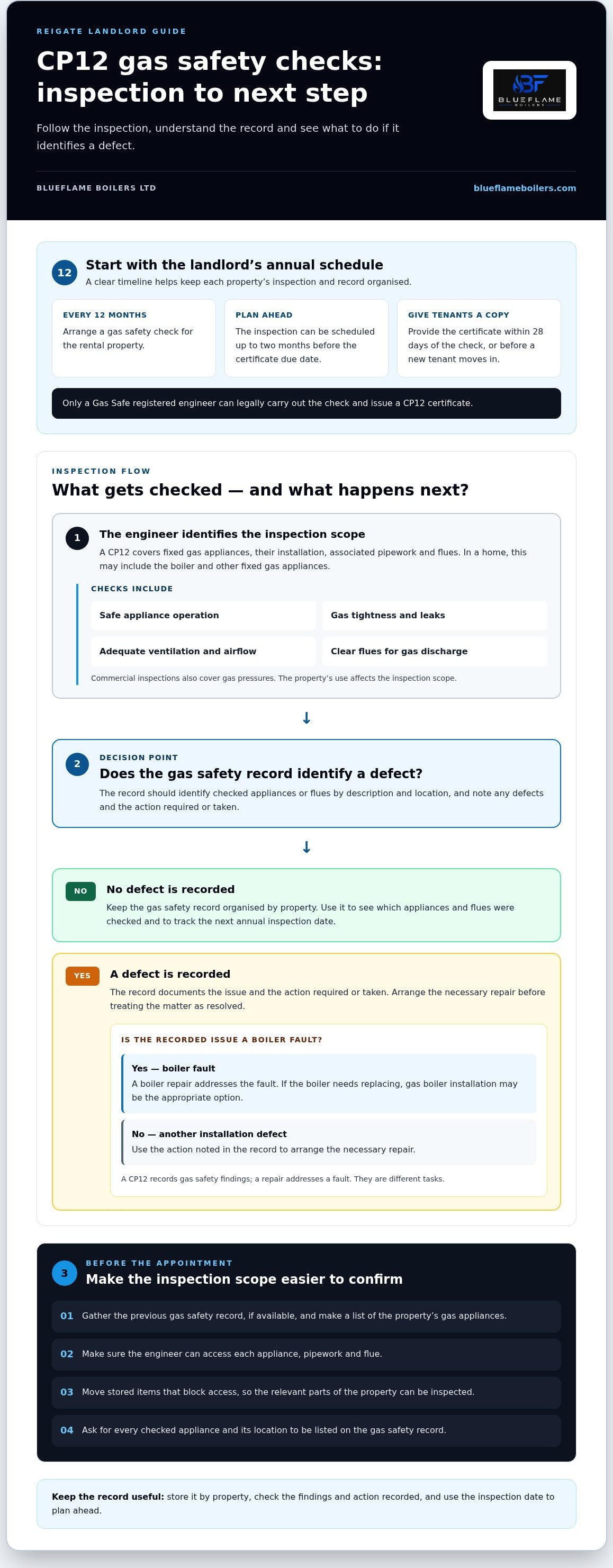
Landlords in Reigate must arrange a gas safety check every 12 months, and only a Gas Safe registered engineer can legally carry out the check and issue a CP12 certificate. The National Archives says landlords must give tenants the gas safety certificate within 28 days of the check.
Regulations and landlord requirements
Gas safety in rental properties is governed by the Gas Safety (Installation and Use) Regulations 1998, according to The National Archives. In England, landlords should track each property’s inspection date and arrange the next safety inspection before the annual deadline. The National Archives says the inspection can be scheduled up to two months before the certificate due date, helping landlords plan ahead.
Certificates for rental properties
A gas safety certificate records the checks carried out at a rental property and should be provided to tenants within 28 days, according to The National Archives. Give a new tenant their certificate before they move in. Keep the record organised by property, so you can identify the latest inspection and arrange renewal without confusion.
For a flat or house in Reigate, arrange checks for the gas appliances and flues covered by the rental property’s inspection. Businesses, hotels and B&Bs also need annual gas safety checks, so the property’s use matters when planning compliance. A CP12 gas safety check in Reigate provides landlords with the inspection and certificate for their rental property.
What appliances are checked during a CP12?
A CP12 inspection covers fixed gas appliances, their installation, associated pipework and flues. The engineer checks safe operation, gas tightness, ventilation and whether flues are clear.
Appliance inspection procedures
The registered engineer identifies each gas appliance and checks how it operates. In a home, this may include the boiler and other fixed gas appliances. The inspection considers whether each appliance operates safely and has adequate ventilation. Ask for every checked appliance and its location to be listed on the gas safety record, so the inspection scope is clear.
Gas tightness, ventilation and flues
Gas tightness checks look for leaks in the installation. Ventilation checks assess whether appliances have adequate airflow, while flue checks confirm that gases can discharge through clear flues. Commercial inspections also cover gas pressures, alongside appliance operation, ventilation and flueing. These checks can identify defects needing action, rather than treating the boiler as the only part of the installation that matters.
Before the appointment, gather the previous gas safety record, if available, and a list of appliances. Make sure the engineer can access each appliance, pipework and flue, and move stored items that block the way. This helps the engineer inspect the relevant parts of the property.
The record should identify checked appliances or flues by description and location, and note any defects and the action required or taken. If an appliance fails a check, the record documents the issue. Arrange the necessary repair before treating the matter as resolved.
There’s no fixed additional-appliance charge stated here: the quote depends on the number of appliances, access and inspection scope, and is given after a quote request. You can request a tailored quote for your inspection.
Blueflame Boilers: Gas Boiler Installation
Blueflame Boilers Ltd can help with the next step if a CP12 inspection identifies a boiler issue. For a fault, arrange a boiler repair; if the boiler needs replacing, gas boiler installation may be the appropriate option.
Regular boiler servicing can help keep your heating system maintained between inspections. If a boiler problem needs urgent attention, Blueflame Boilers Ltd also provides emergency callouts. A CP12 check and boiler repair serve different purposes: the inspection records gas safety findings, while a repair addresses a fault.
After your gas safety inspection, Blueflame Boilers Ltd can help with gas boiler installation, repairs or servicing. Contact the team to discuss the next step for your property.
Plan your next step with confidence
Once the inspection record is in hand, use its findings to decide what needs attention next. A gas safety check and work on a faulty boiler are different tasks, so match the next step to the issue recorded. For landlords arranging a CP12 certificate in Reigate, keeping inspection records together can also make future property management more straightforward.
Blueflame Boilers Ltd provides gas boiler installation, repairs and emergency callouts where these services suit the problem. If the report identifies a boiler fault, a repair may be the right next step; if the boiler needs replacing, consider a new installation. The aim is to turn the inspection findings into practical action for your property in Reigate and nearby areas.
Take the next step at your own pace, with a clearer view of what your property needs.
Frequently Asked Questions
How Long Does a Gas Safety Inspection Take?
A gas safety inspection in Reigate usually takes between 30 minutes and an hour, depending on how many appliances need checking. A property with a boiler and several other fixed gas appliances may take longer than one with a single appliance. Make sure the engineer can reach each appliance and its controls to avoid unnecessary delays.
CP12, CP42 and CP44 - Which Certificate Do You Need?
For a landlord’s gas safety inspection of a rented property, the relevant record is a CP12. CP42 and CP44 are different certificate codes, so don’t treat them as alternatives to a landlord’s CP12. Consider the property’s use and the gas equipment being inspected: a rental home’s requirements differ from a commercial site’s inspection scope.
How quickly can you carry out a Gas Safety in Reigate?
The inspection itself usually takes between 30 minutes and an hour, but that isn’t the same as the wait for an appointment. For a CP12 certificate in Reigate, have the property address, appliance list and access arrangements ready when arranging the visit. This helps establish the scope and plan the inspection without avoidable access issues.
Are There Any Challenges With the Certification Process?
Access can be a practical challenge, especially when stored items block a boiler, gas appliance or flue. An inspection may also uncover a defect: the gas safety record should identify the issue and the action required or taken. Keep the record with the property’s maintenance paperwork to make follow-up work and future inspections easier to organise.


