
A new boiler alone doesn’t make a well-designed heating system. Central heating installation in Reigate starts with choosing a system suited to the property and how you use hot water. Gas appliances should be installed by a Gas Safe registered engineer. Repairs or replacement may also be needed when an existing system no longer heats your home as it should.
It’s reasonable to want clear guidance before committing to work on your heating. This article explains how system design, installation, repairs and replacement fit together, what can affect the work involved, and why Gas Safe registration matters. You’ll also find out how local heating services can support homes in Reigate and nearby Surrey areas.
From comparing combi, system and regular boilers to understanding what happens during installation, this guide sets out the practical details in plain English. The aim is to help you understand your options and take the next step with confidence.
Key Takeaways
- Compare combi, system and regular boilers against your home’s hot-water needs and existing layout before choosing a system.
- Use a Gas Safe registered engineer for gas appliance installation, and understand what the work involves before it begins.
- Look at the whole heating system when diagnosing faults; boiler repairs, servicing and radiator issues can all affect comfort.
- Plan replacement around your property, system design and installation requirements rather than choosing a boiler on its own.
- Blueflame Boilers Ltd offers installation, repairs, emergency callouts and servicing for homeowners who need practical heating support.
Central heating installation and repairs
In Reigate, heating work can range from fixing a boiler fault to replacing a complete system. Start by identifying which rooms, radiators or hot-water outlets are affected.
Heating Type and Cost Comparisons
Gas, electric and heat-pump systems differ in equipment, installation requirements and running costs. Compare the whole setup, not just the main unit: consider the home’s insulation, existing pipework, energy tariff and changes needed to fit the system. A heat pump may involve different installation work from replacing a gas boiler, while electric heating can require attention to the property’s electrical capacity.
For a useful comparison, separate the upfront work from ongoing energy use. Ask what equipment and alterations the design includes, then consider how your household uses heating and hot water. Running costs depend on a system’s efficiency, controls, tariff and demand, so a like-for-like assessment needs those details.
Installation Rules and Home Disruption
Gas appliances should be installed by a Gas Safe registered engineer. Building-regulation and planning requirements depend on the work and property, so include both in the installation plan, especially where external changes are involved. Installation can mean noise, dust, lifted floorboards and temporary loss of heating or hot water. Agree which rooms and access routes are needed before work begins.
Protect belongings near pipe routes and keep access clear for equipment. Replacing radiators, for example, may disturb flooring, while altering boiler pipework can affect a kitchen or utility area. A clear work sequence helps occupants plan around these interruptions.
Repairs should start with a clear description of the fault. Note whether the boiler has stopped, a room stays cold or hot water changes unexpectedly. These clues can help distinguish a boiler issue from a circulation or control problem. A repair may involve identifying the cause, replacing a faulty component and testing the system.
For boiler repair, record any displayed fault code and when the problem occurs. Avoid repeatedly resetting a boiler if the fault returns. A boiler repair service addresses faults in the appliance; problems elsewhere may need a different diagnosis.
General plumbing leaks also need prompt attention. Locate the visible water, such as beneath a sink or beside a heating pipe, and note whether it continues when taps are off. A plumber can trace the source, repair the affected section and check nearby fittings for further seepage.
Radiator leaks often appear around a valve, joint or pipe connection. Water marks beneath one radiator can point to a local fault, while several cold radiators may suggest a wider circulation issue. Keep the area clear and describe which radiators are affected when arranging repairs.
A suspected gas leak is a separate, urgent issue from a water leak. Stop using the affected appliance and arrange attention from a Gas Safe registered engineer. Don’t treat a gas smell as an ordinary boiler fault. An engineer needs to assess the appliance or pipework and carry out the necessary repair checks.
Central heating system design and installation
Installation usually starts with assessing the property and designing the system, followed by fitting and testing its components. For central heating installation in Reigate, the time required depends on the work involved, including whether existing pipework, radiators or a hot-water cylinder need changing.
Heating System Design and Diagnosis
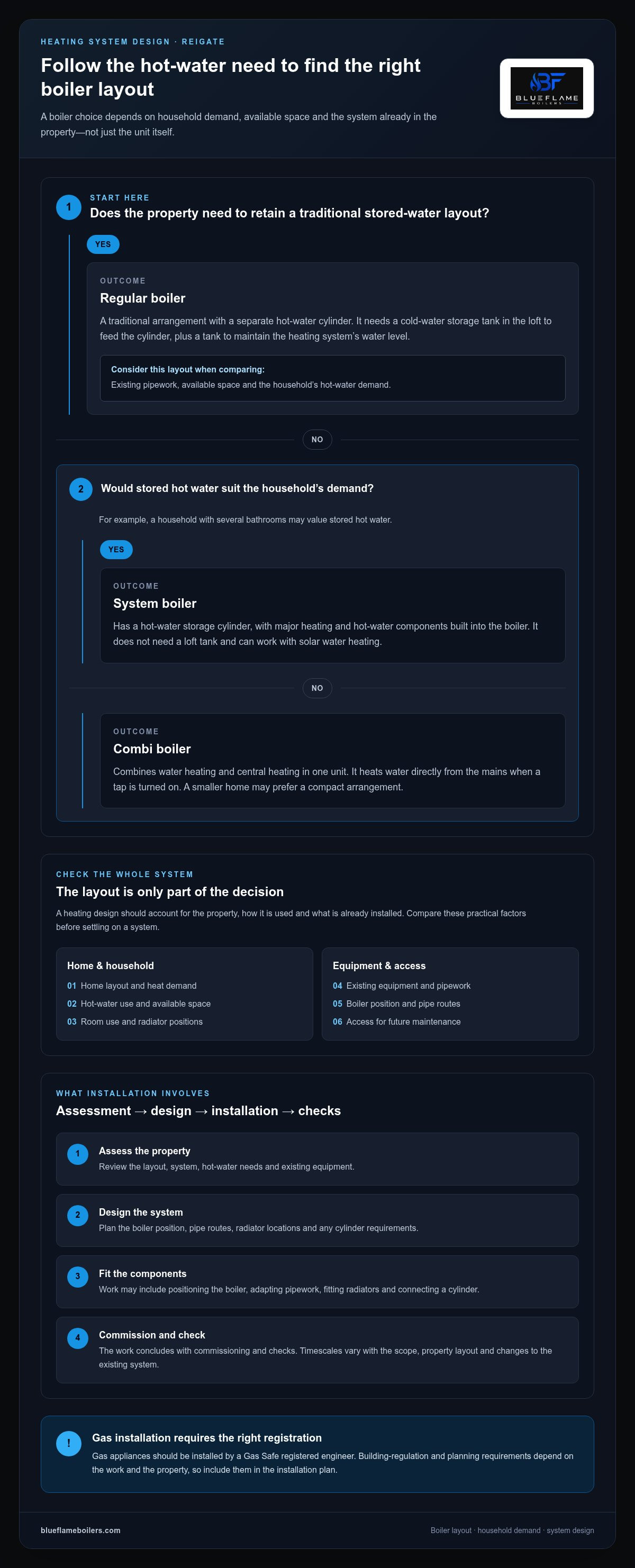
A heating system design considers the home’s layout, heat demand, hot-water use and existing equipment. For example, a household with several bathrooms may value stored hot water, while a smaller home may prefer a compact arrangement. The design should account for boiler position, pipe routes, radiator locations and access for future maintenance.
Diagnosis means matching symptoms to system components. If one radiator stays cold, its valve and pipe connections may need attention; if several rooms are affected, consider circulation, controls or boiler operation. An engineer can assess the system as a whole rather than treating each symptom as an unrelated fault. Explain when the problem occurs and which rooms are affected.
Central Heating System Installation
Boiler choice affects how a central heating system supplies hot water. A combi boiler combines water heating and central heating in one unit, heating water directly from the mains when a tap is turned on. A system boiler has a hot-water storage cylinder, with major heating and hot-water components built into the boiler. It doesn’t need a loft tank and can work with solar water heating.
A regular boiler suits a traditional setup with a separate hot-water cylinder. It needs a cold-water storage tank in the loft to feed the cylinder, plus a tank to maintain the heating system’s water level. Compare these layouts against available space, household demand and existing pipework. For central heating installation in Reigate, radiator positions and room use also influence how heat reaches different parts of the home.
Installation Steps and Timescales
The usual sequence is a property assessment, system design, installation, then commissioning and checks. The work may include positioning the boiler, adapting pipework, fitting radiators and connecting a cylinder. The time required varies with the scope, property layout and extent of any changes to the existing system. Ask for the work stages and practical arrangements to be explained before installation starts.
Before work begins, clear access to the boiler, radiators and pipe routes. Protect nearby furniture and discuss which rooms may be affected. At completion, the engineer should explain the controls and show how to operate the heating and hot water. For a Reigate home needing a planned system layout, discuss heating system design as a practical next step.
Gas Safe registration
Gas appliances should be installed by a Gas Safe registered engineer. For a Reigate homeowner planning a boiler installation, checking registration is a practical first step. It helps establish the required competence for gas work, alongside relevant heating experience. Discuss the planned work before it begins, including the appliance and any connected gas pipework.
What registration means for your installation
Gas Safe registration matters because the work involves a gas appliance, not simply radiators or water pipes. Explain whether the job is a new boiler, a replacement or a repair. The engineer can clarify how their registration relates to the work planned. This conversation helps you understand who is carrying out each part.
Before work starts, agree the scope in plain language. Replacing a boiler, for example, may involve disconnecting the old appliance, fitting its replacement and checking its operation. Ask which parts of the heating system are included, such as controls or connected pipework. Clear boundaries make it easier to understand what the installation covers.
Registration and experience are related but different considerations. Registration addresses competence for gas work, while experience can show familiarity with particular property layouts or heating problems. A Reigate home with an older system may need a different assessment from a recently modernised property. Discuss the specific features that could affect the job.
Experience and the questions to ask
Local experience figures vary between engineers and companies. Reigate listings include a plumbing and heating engineer reporting 14 years in the trade, and a gas service company reporting more than 18 years. Those figures describe different businesses. They aren’t a substitute for checking whether an engineer is registered for the gas work involved.
Use a short discussion to understand the proposed approach. Ask who will complete the gas work, what the installation includes and how the system will be tested afterwards. If a boiler fault is involved, describe its symptoms and any displayed message. These details give the engineer a clearer starting point.
For a new installation, ask how the engineer will account for the home’s heating needs and existing setup. A boiler replacement may be straightforward, while a changed system layout can involve extra design decisions. Understanding the plan helps you prepare rooms and access before work starts.
- Identify the work: explain whether you need installation, replacement or repair.
- Discuss responsibility: clarify who will perform the gas work.
- Understand the scope: agree which appliances and system components are included.
- Review the plan: ask how the completed system will be tested.
These steps keep the conversation focused on the property and the work required. A boiler installation in a Reigate home, for example, is a specific gas-appliance project, not general plumbing. Registration, a clear scope and relevant experience each help you assess the proposed work.
Heating services across Reigate and nearby Surrey areas
Heating and plumbing needs can overlap, from a boiler fault to a leaking pipe. In Reigate and nearby Surrey areas, start by describing the affected appliance, room or fitting.
Heating and Plumbing Services
A clear description helps distinguish a heating fault from a plumbing issue. No hot water, for example, could involve the boiler, controls or cylinder, while a damp patch beneath a sink points towards plumbing. Note when the problem began and whether it changes when heating or taps are used. These details give an engineer a useful starting point.
For a boiler service, explain whether the appliance heats rooms and supplies hot water as expected. Routine servicing checks whether the boiler operates safely and correctly, and can identify developing issues. Describe plumbing concerns, such as dripping taps or visible pipe leaks, separately. Be clear about each issue, especially when several symptoms appear together.
Installation and Servicing
Central heating system installation involves planning how the boiler, radiators, pipework and controls work together. A property assessment helps identify the existing layout and the household’s heating and hot-water needs. Adding a radiator, for instance, may require changes to pipe routes, while replacing a boiler focuses on connecting the new appliance to the system.
Servicing has a different purpose from installation. A routine boiler service checks operation and can reveal developing faults before they interrupt heating. Describe any unusual behaviour, such as inconsistent hot water or a radiator that remains cool. Keeping a clear record of symptoms helps relate service findings to changes in system performance.
Service Areas Around Reigate
Local coverage matters whether your property is in Reigate or another nearby Surrey location. Give the town or neighbourhood, property type and issue when arranging heating work. A request for a boiler repair, for example, differs from a planned central heating replacement. Clear location details help establish the job and its practical requirements.
Nearby Surrey homes can have different layouts and heating arrangements. A property with a separate hot-water cylinder has different access and system requirements from one with a compact combi boiler. Describe the appliance and any affected rooms when discussing work. This helps keep the conversation focused on the right installation, repair or servicing need.
Grants and incentives aren’t automatic for every heating installation in Reigate or Surrey. Eligibility depends on the particular scheme, household circumstances and proposed heating measure, so consider funding separately from the installation plan.
Before arranging work, note the boiler type, heating symptoms and property location. If a routine service is due, describe how the system has been operating; if installation is planned, outline the rooms and hot-water arrangements involved. These practical details help focus discussions about heating and plumbing in Reigate and nearby Surrey areas.
Central heating installation and replacement
Replacing a boiler doesn’t always mean replacing the whole heating system. In Reigate, the right scope depends on the existing pipework, radiators, controls, hot-water arrangement and property layout. The key decision is whether the system can support a new boiler effectively or needs broader changes.
A boiler replacement may suit a system that otherwise heats rooms evenly and supplies hot water reliably. Full replacement becomes more relevant when several parts need attention, such as corroded pipework, repeated radiator problems or an unsuitable system layout. Compare likely repair work with the benefits of redesigning connected components. The boiler is only one part of the system.
Before choosing, consider how your household uses heating and hot water. A home with several bathrooms may need a different hot-water arrangement from a smaller property with one bathroom. Existing cylinder space, loft tanks, boiler position and radiator locations also affect the design. These details help shape the installation plan rather than simply matching a new appliance to the old one.
Ask for the proposed work to distinguish essential changes from optional improvements. A boiler installation could retain serviceable radiators, for example, while a wider replacement might alter pipe routes or add radiators to rooms that struggle to warm. Check that the plan explains which components will be replaced, where access is needed and how the completed system will be tested.
Installation costs depend on the system and work required. Key factors include system type, property layout, boiler position, pipework changes and the number of components being replaced. A like-for-like boiler change and a complete central heating replacement involve different materials and labour. Compare quotes by scope, not just the headline total, and check whether controls, radiators and making good are included.
Preparation makes the work easier to manage. Clear access to the boiler, radiators and pipe routes, and move furniture away from work areas. If installation affects a kitchen or hallway, plan around restricted access. Ask when heating and hot water will be unavailable, and how the engineer will commission the system before handing it back.
After installation, learn how to use the controls and identify the main system components. Keep the installation paperwork with the boiler details, and arrange annual servicing to check operation and identify developing issues. For a Reigate property, the practical takeaway is simple: replace only what the system needs, but assess the whole setup before deciding.
Blueflame Boilers: Gas Boiler Installation
Blueflame Boilers Ltd can help when a Reigate home needs a new gas boiler, a heating fault diagnosed or routine servicing. Its services include gas boiler installation, boiler repair, emergency callouts and boiler servicing. The existing heating system can be considered alongside an installation, helping the boiler suit the home’s layout and heating needs.
If the current boiler has stopped working, a repair can address the fault; if replacement is needed, installation is the next step. Regular servicing checks that a boiler is operating safely and correctly. Gas appliances should be installed by a Gas Safe registered engineer.
To discuss a boiler installation, repair or service, contact Blueflame Boilers Ltd through the online enquiry page or visit blueflameboilers.com.
Take the next step towards a better-planned system
For central heating installation in Reigate, start with the details that will shape your decision: your current setup, the rooms you want to heat and how your household uses hot water. Note recurring problems and what you’d like your heating system to do differently. This gives you a practical brief for discussing the work, whether you’re considering a new boiler or a wider system change.
It also helps to think beyond the equipment itself. Consider where controls would be useful, whether radiators suit each room and how installation work might fit around your household routine. A clear set of priorities makes it easier to discuss options without losing sight of what matters at home.
When you’re ready to discuss your heating requirements, contact Blueflame Boilers Ltd for a free, no-obligation quote.
A well-considered plan is a positive first step towards a more comfortable home.
Frequently Asked Questions
How much does central heating installation cost in Reigate?
The cost depends on the system and work required at your property. Replacing a boiler using existing pipework differs from installing a complete system with new radiators or a hot-water cylinder. Property layout, access, equipment choice and changes to existing components all affect the scope. For a useful estimate, describe your current setup and whether you need a boiler change or wider system replacement.
What factors affect the cost of installing central heating?
The main factors are system type, property layout and how much existing equipment can be retained. Adding radiators or changing pipe routes, for example, involves different work from replacing a boiler in its current position. Cylinder arrangements, access to installation areas and the heating controls selected can also affect the job. A clear breakdown helps you see which parts relate to equipment and which involve installation work.
What types of central heating systems are suitable for Reigate homes?
Combi, system and regular boilers suit different household layouts and hot-water requirements. A combi heats water directly from the mains when a tap is turned on, while a system boiler works with a hot-water cylinder. A regular boiler suits a traditional setup with a separate cylinder and loft tanks. Consider available space, existing pipework and how many hot-water outlets your household uses.
Do heating installers in Reigate need Gas Safe registration or other certifications?
Gas appliances should be installed by a Gas Safe registered engineer. This is the key requirement to look for when the job involves a gas boiler or gas pipework. Other paperwork depends on the work: for example, landlords’ gas safety checks result in CP12 certificates. Keep installation documents with your appliance information, so you can refer to them when arranging future servicing or discussing a fault.
How can I compare Reigate heating installers, quotes, warranties, and reviews?
Compare quotes by checking that each describes the same work, equipment and system changes. Note whether radiators, controls, pipework alterations and commissioning are included. Read warranty terms to understand what they cover and any servicing conditions, rather than comparing headline lengths alone. Reviews can offer context about communication and workmanship; look for comments about installations or repairs similar to your project.
What maintenance and servicing will a newly installed central heating system need?
Arrange annual boiler servicing to check that the appliance operates safely and correctly and to identify developing issues. Between visits, note changes such as unusual boiler behaviour, inconsistent hot water or a radiator that stops heating properly. Keep the boiler details and installation paperwork together, and make sure everyone at home knows how to use the controls. These habits make it easier to explain concerns during a service.


